.JPG)

"Your source for standard gauge modeling in 1:20.3"
|
|
|
"Your source for standard gauge modeling in 1:20.3" |
|
|

|
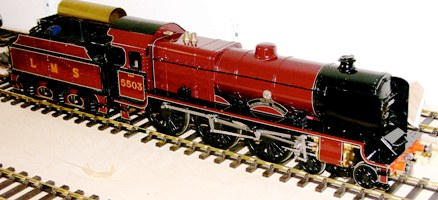
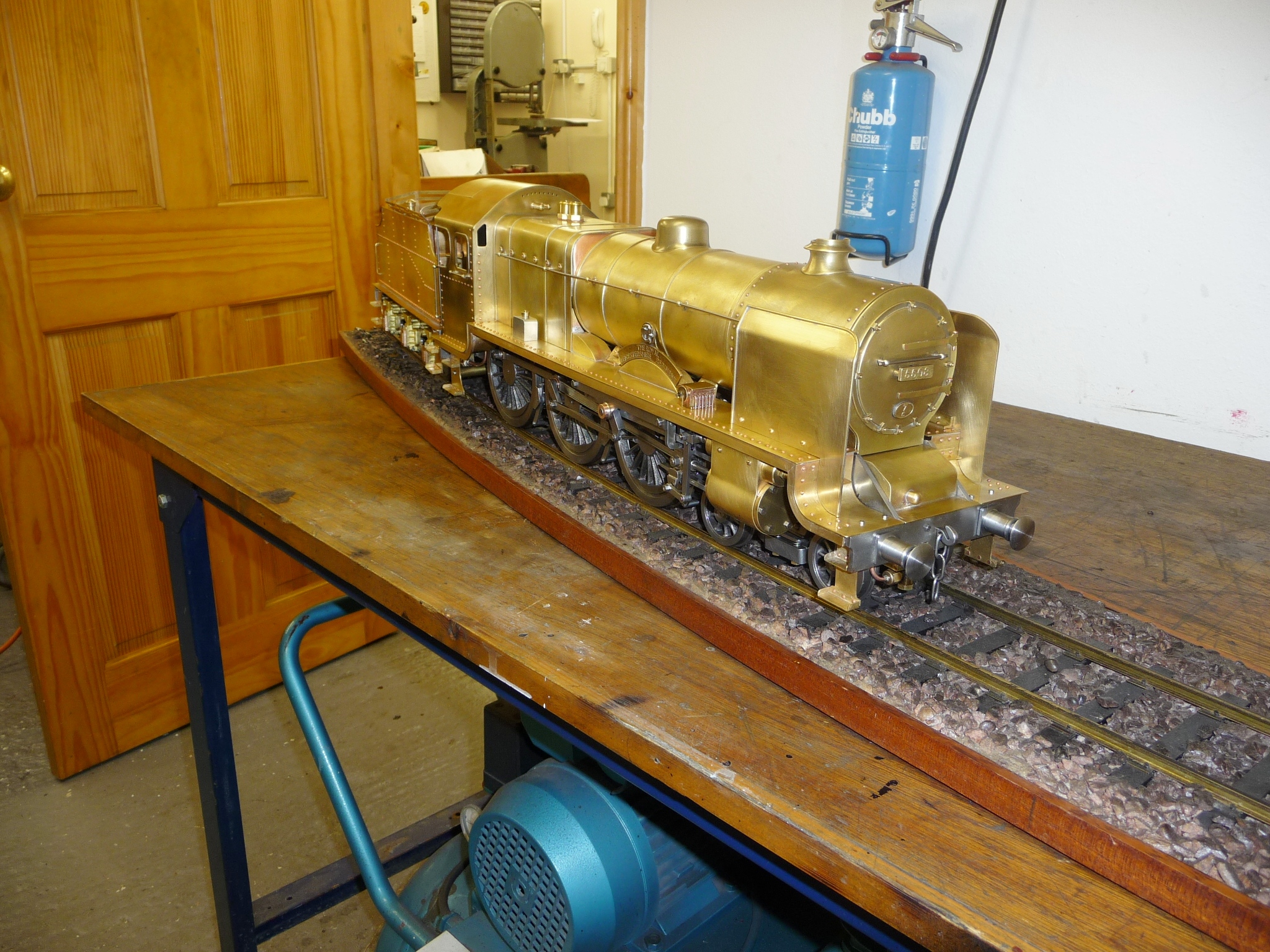
The first Gauge 3 live steamer which Mike built was an LMS Patriot class 4-6-0. Since that time he has maintained a prodigious output of model locomotives. I seriously doubt that anyone in either the UK or North America has built as many, at least not since the days of commercial builders such as Basset-Lowke. Mike, writing for the model press about 2006, describes how his locomotives differ from that of Basset-Lowke and other venerable manufacturers:
In the early part of the last century,
Gauge 3 garden railways were predominantly supported by Bing, Bassett Lowke,
Carette and Jubb. These fairly basic spirit fired locomotives were ideal for
gauge 3. They would run sedately with a few coaches without requiring too
much attention. In the early 1920’s a young man called Lillian Lawrence
began to modify these commercial locomotives producing much more powerful
machines which could pull an adult along. Ultimately Mr. Lawrence began to
write for many model magazines under the pen name LBSC. His brilliant
designs transformed 2½" gauge locomotives from weak commercial toys to
powerful coal fired passenger haulers.
My recent batch of LNER
locomotives consisted of 3 Gresley A3’s and a Peppercorn A1. The engines are
built to a scale of 17/32 in to 1foot, which is true scale for 2 ½ inch
gauge. These are 3 cylinder machines 11/16inch bore x 1 1/8 in stroke. The
A3’s being fitted with Gresley/Holcroft conjugated valve gear for the inside
cylinder and Walschearts gear outside.The Peppercorn engine has Walschearts
gear outside and the inside cylinder has slip eccentric gear in order to
reduce the number of inaccessible working parts inside the frames. Cylinder
lubrication is taken care of using a simple displacement lubricator fitted
behind the front buffer beam. The forward footplate lifts off to facilitate
oil servicing. With the A3’s project behind me I recently designed and built a Gauge 3 Hunslet Austerity 0-6-0 saddle tank for "Stuart" models of Guernsey. This loco will eventually be produced and marketed as a kit similar to Aster products. The production is eagerly awaited by Gauge 3 members, many of whom have indicated they would like a Hunslet kit themselves.
(June 2008 Update)
"The next lot is four
Great Western Kings and 4 LMS Jubilees (no retirement yet)!"
(A complete list of Mike's locomotives, with pics, is
charted below--Dave) |
|||||||||||
|
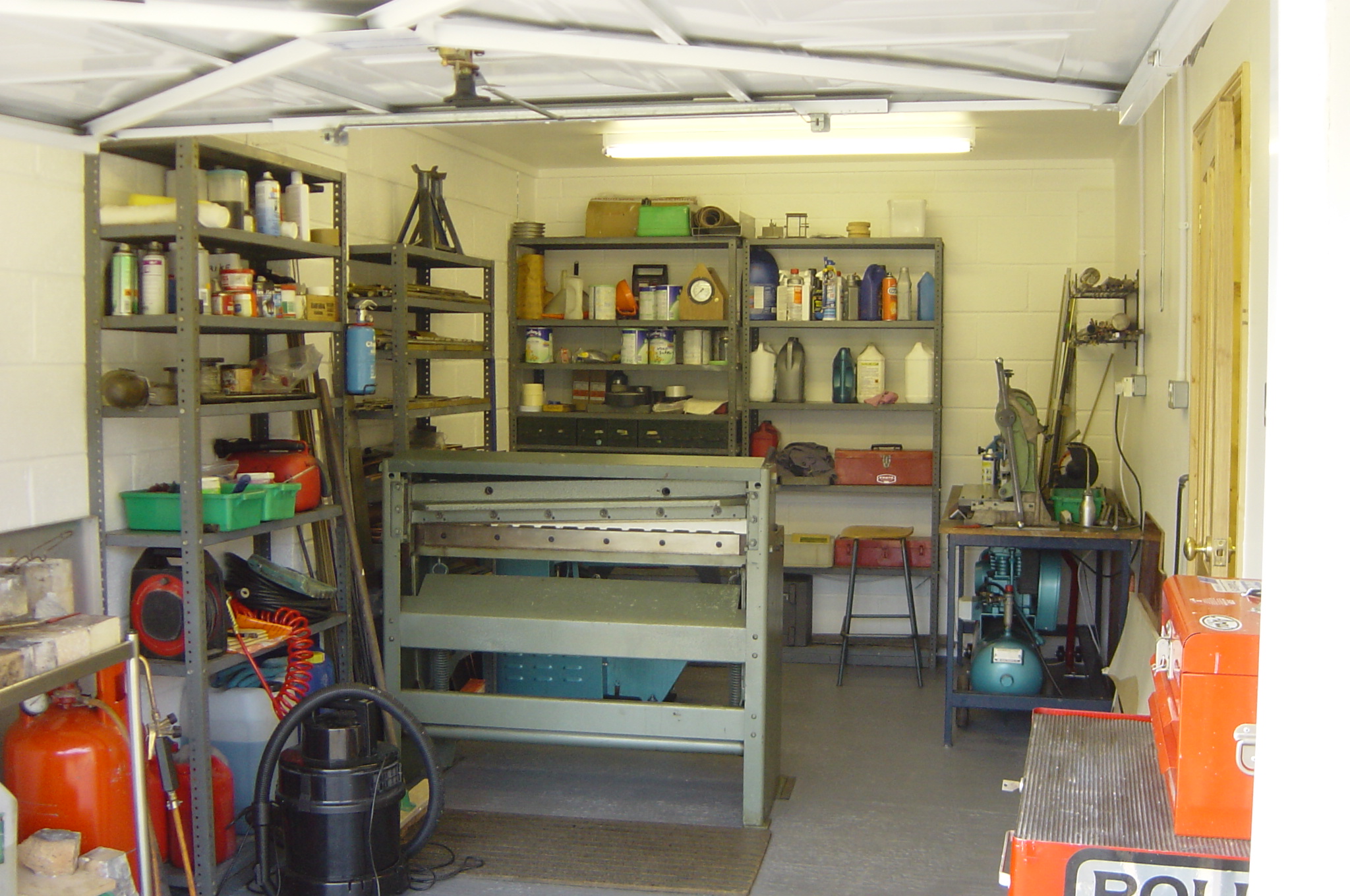
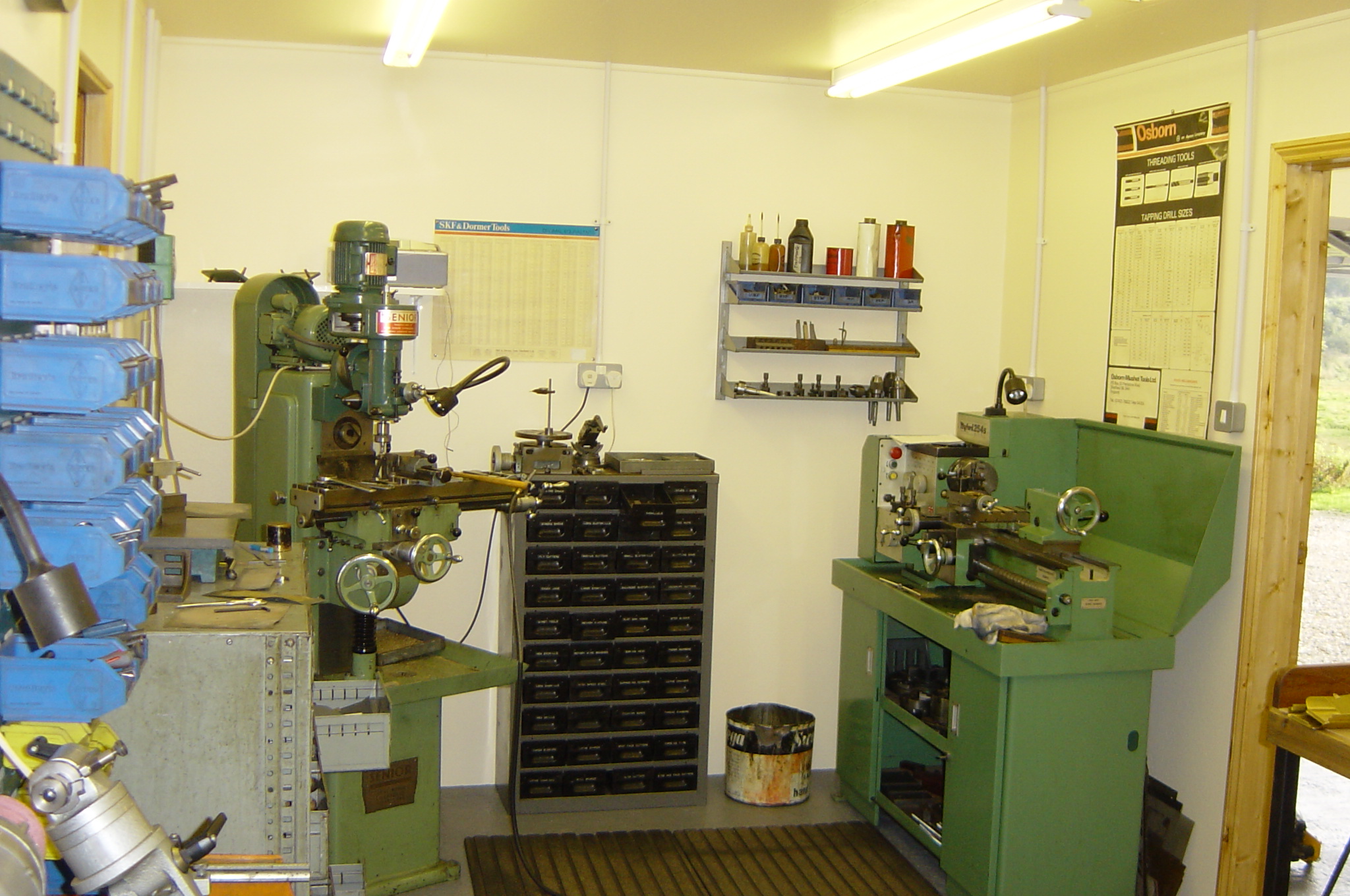
I am consistently amazed by the way some men
can do so much, with a minimum of tools, in a minimum of space. Mike Pavie
is one of those men. His workshop is located in a detached double car garage
next door to his home (a deconsecrated Methodist chapel). The garage is
divided into two halves, one half being the workshop proper (heated for
those -5° C winters), the other half housing his material stores and
guillotine. Surprisingly, the machine tools which call Mike's workshop home
are all manual machines. He summarizes his equipment:
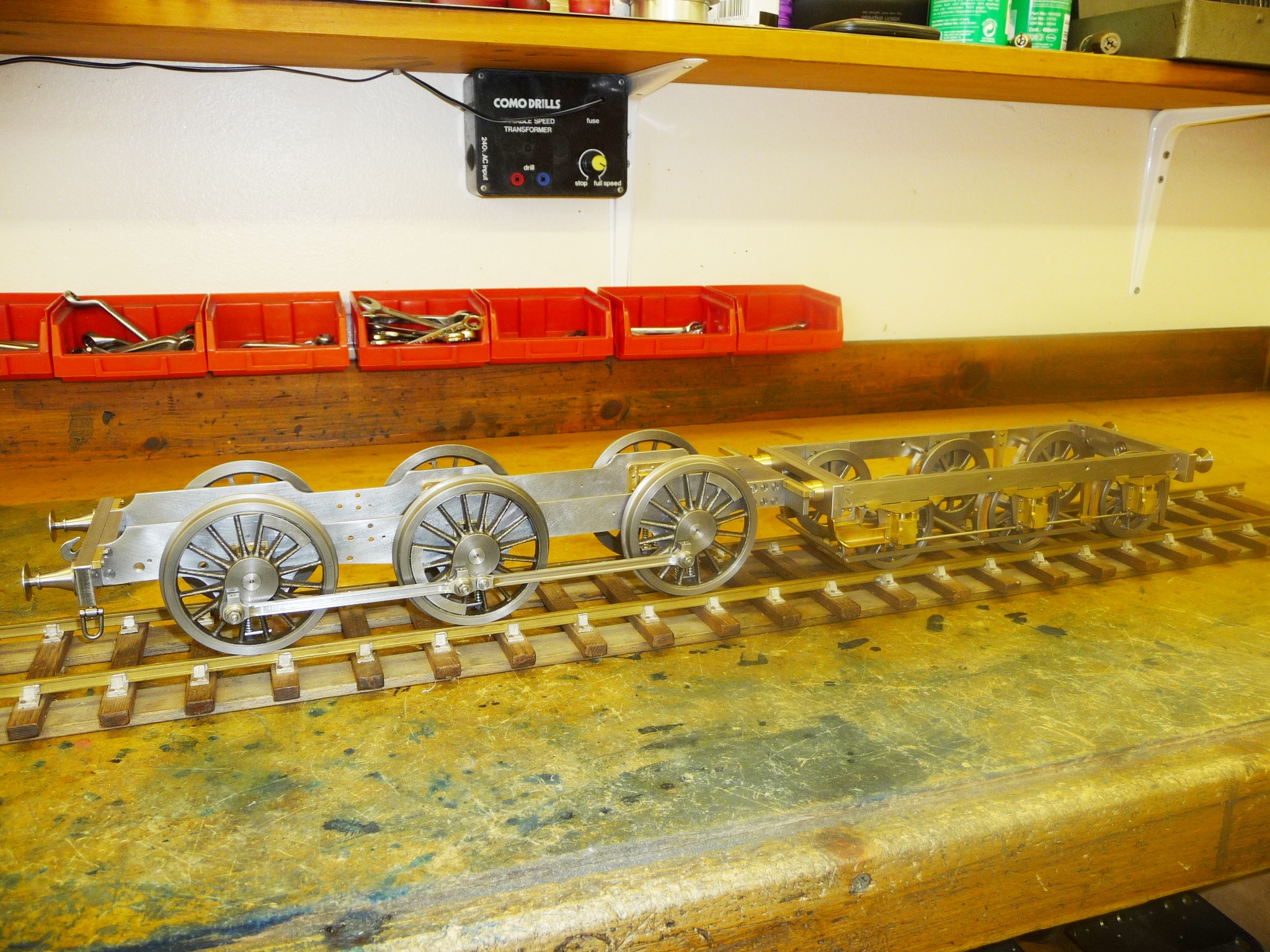
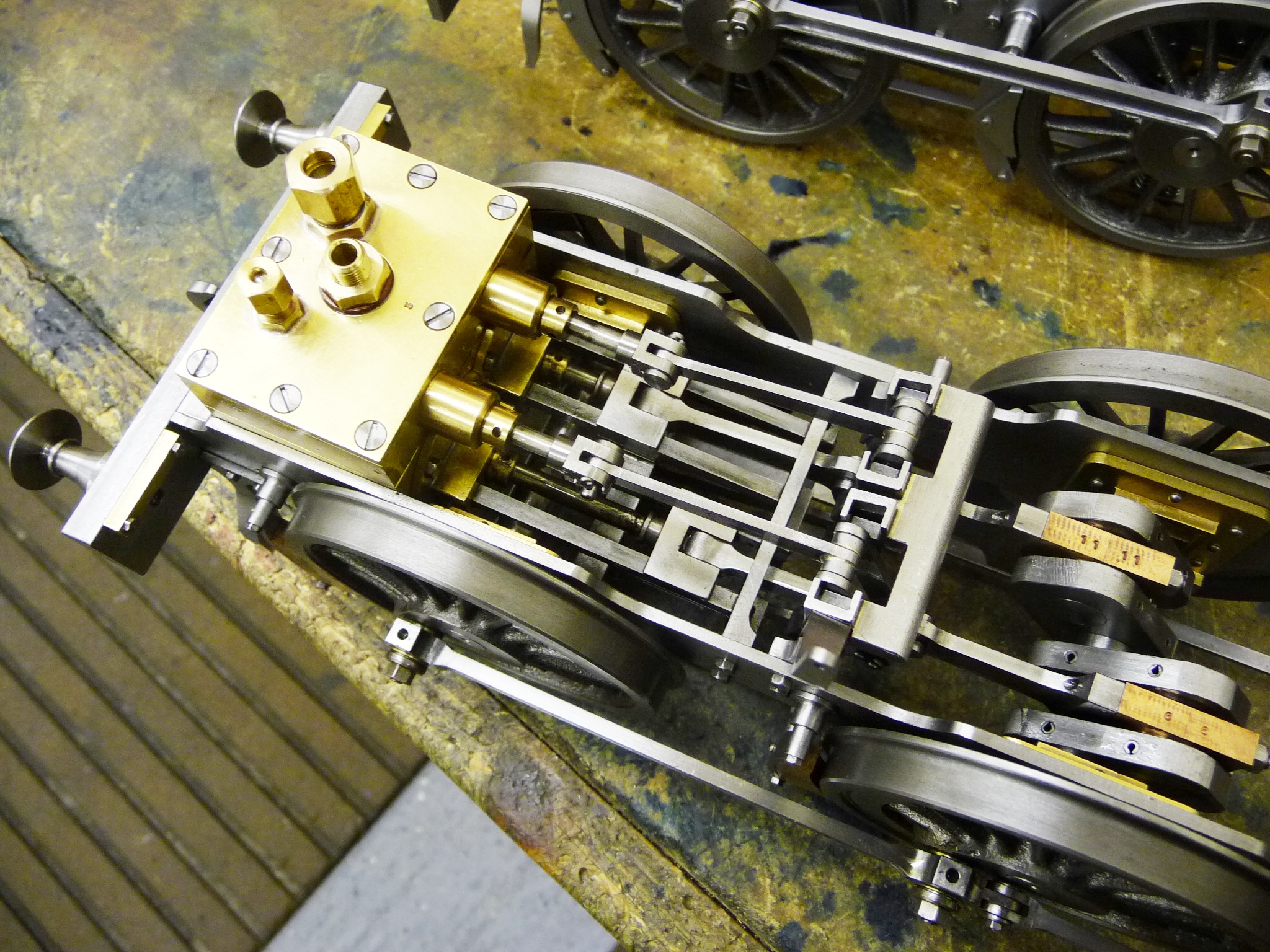
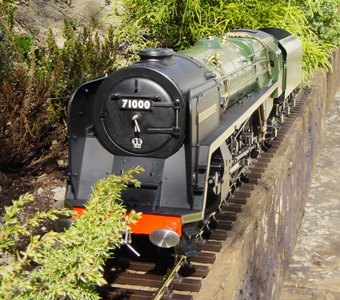
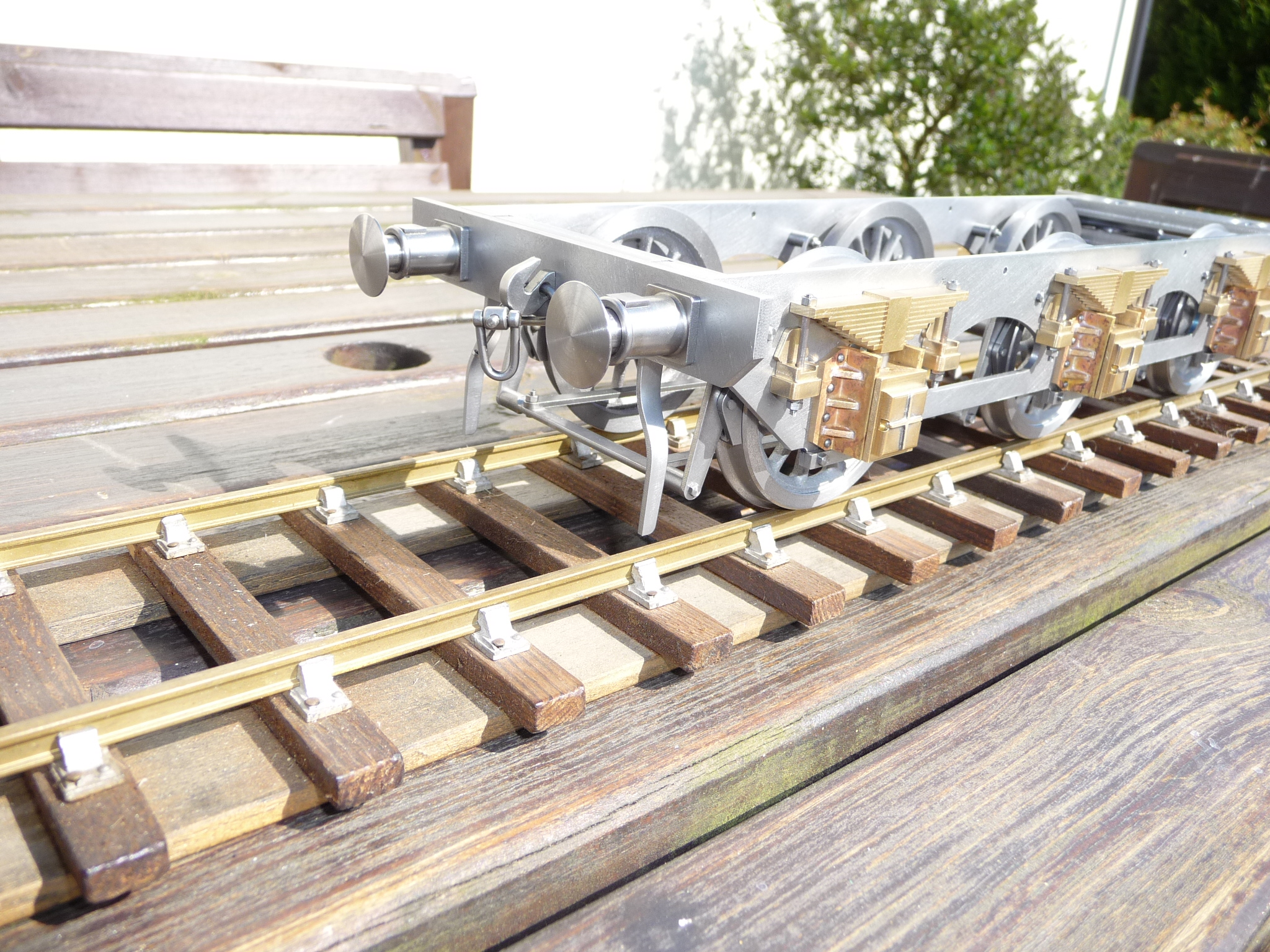
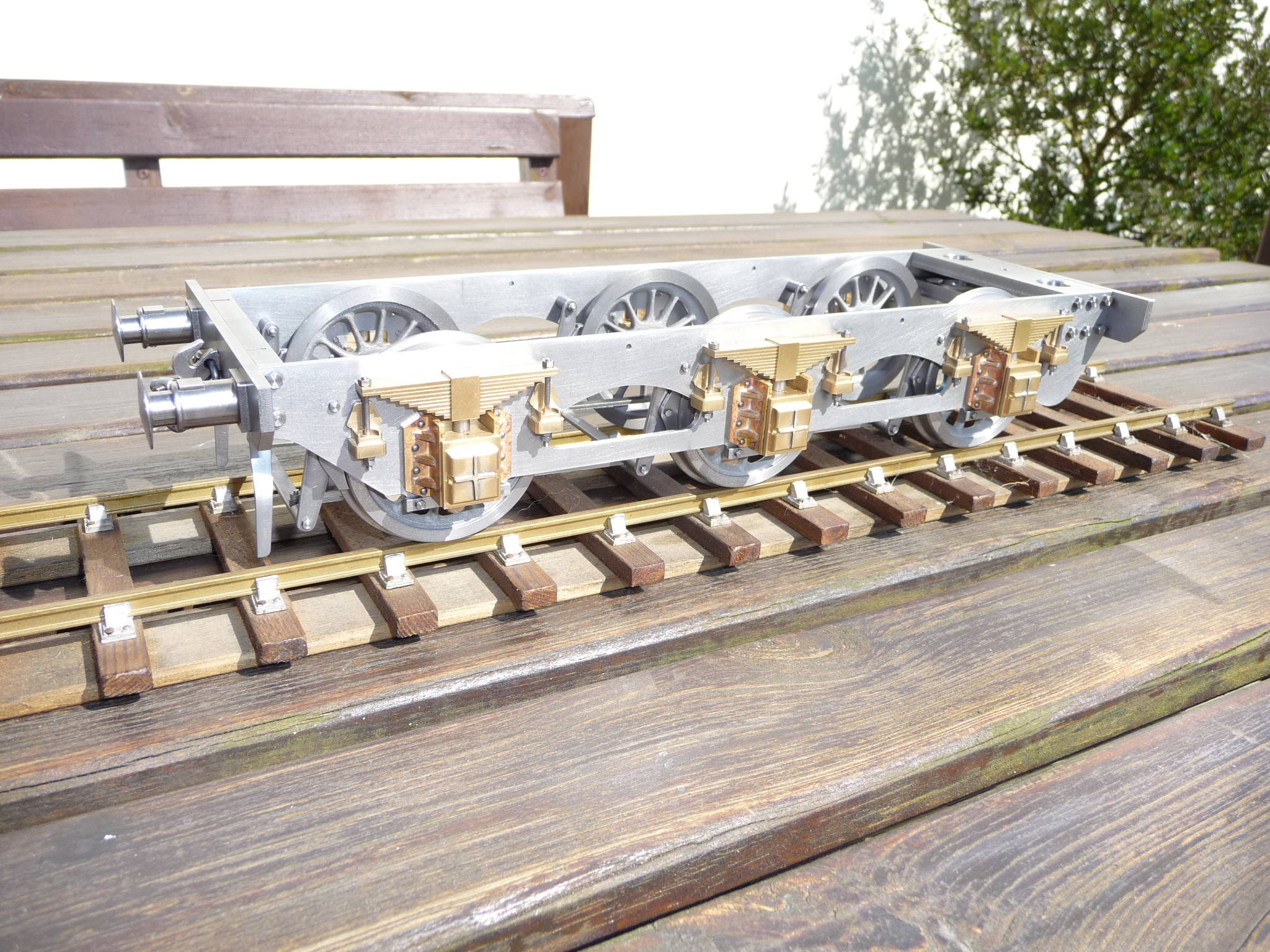
Considering that Mike has not entered the age of CAD and CNC machining, it is remarkable just how prolific he is in building scale live steam locomotives in Gauge 3. Most all of Mike's work is done on either a manual lathe or a manual mill--no Wire EDM's or CNC machining centers here! Admittedly his main frames are farmed out to a job shop where they are stamped, but Mike does the rest. And manual machine work of the quality necessary to build the Britannia 4-6-2 chassis at right takes time. Here are two examples:
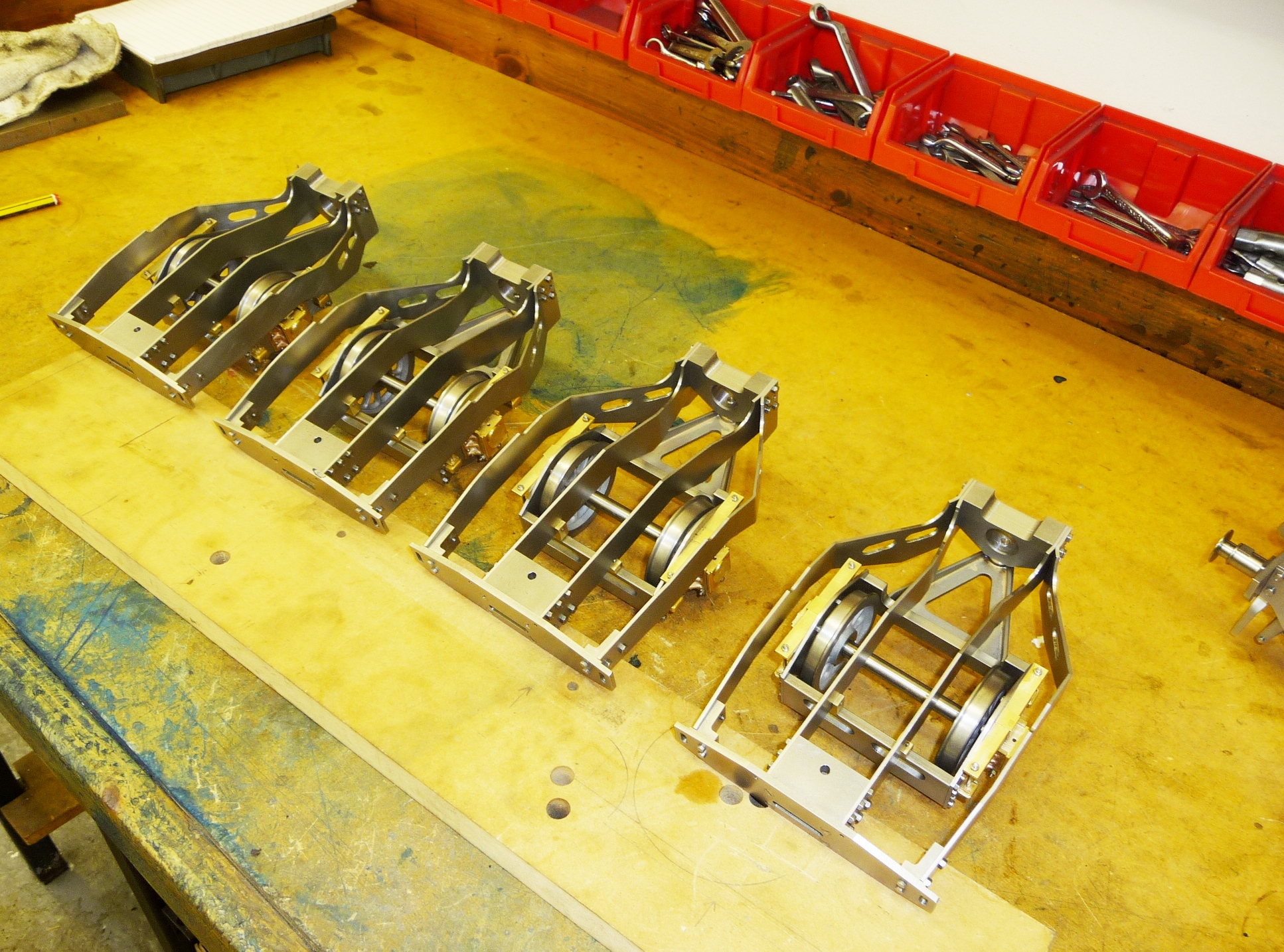
Punched Frames: British style plate frames are just odd to an American's eyes, but they seem to be imminently more user friendly from a model maker's perspective; plus, they can be punched with a die, or cut out with either a laser or a water jet. Mike's frames are 2mm steel, as one would expect for a live steam model. These particular frames, above, are for several models of the LMS Coronation Princess class 4-6-2, now nearing completion.
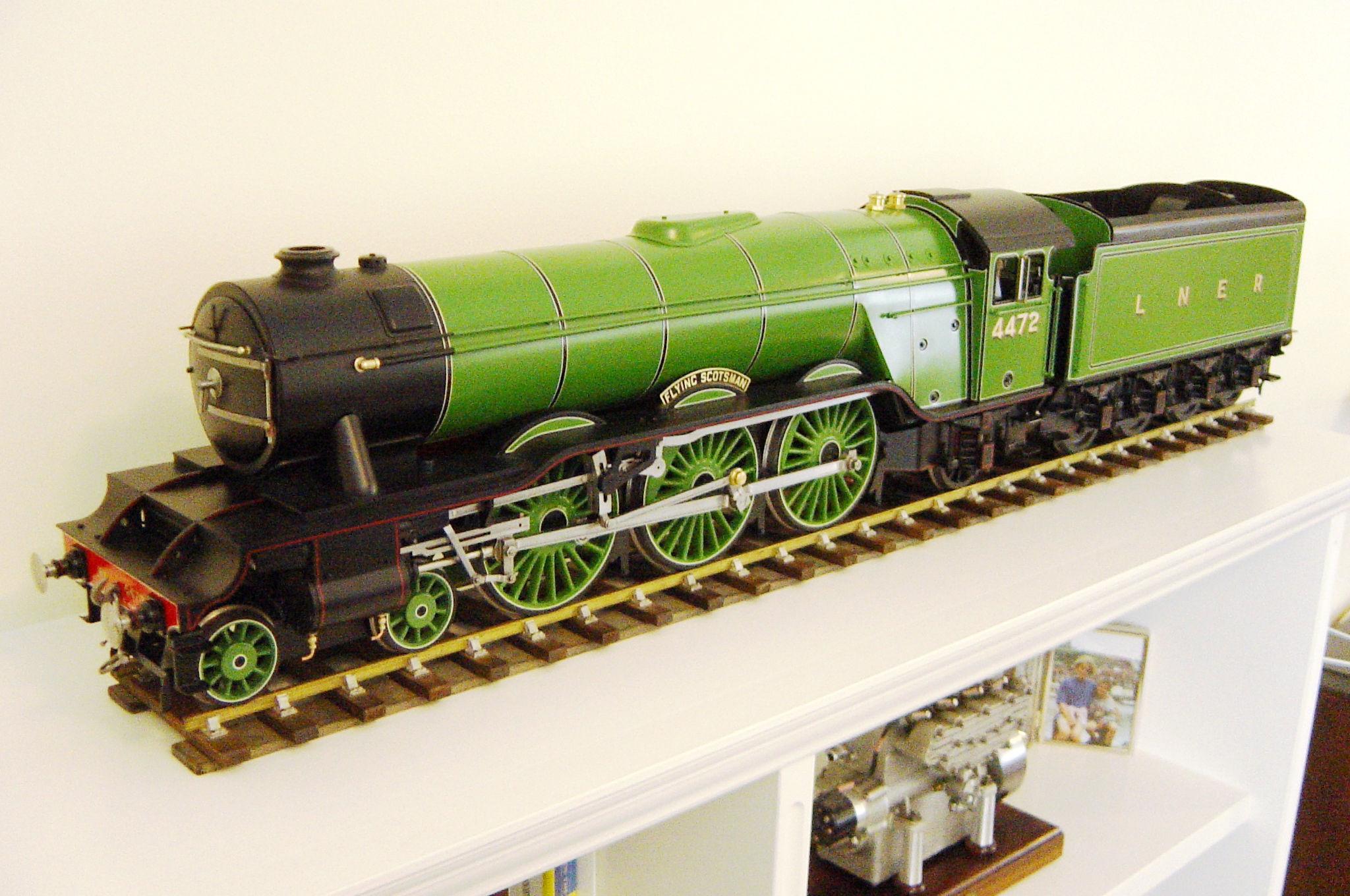
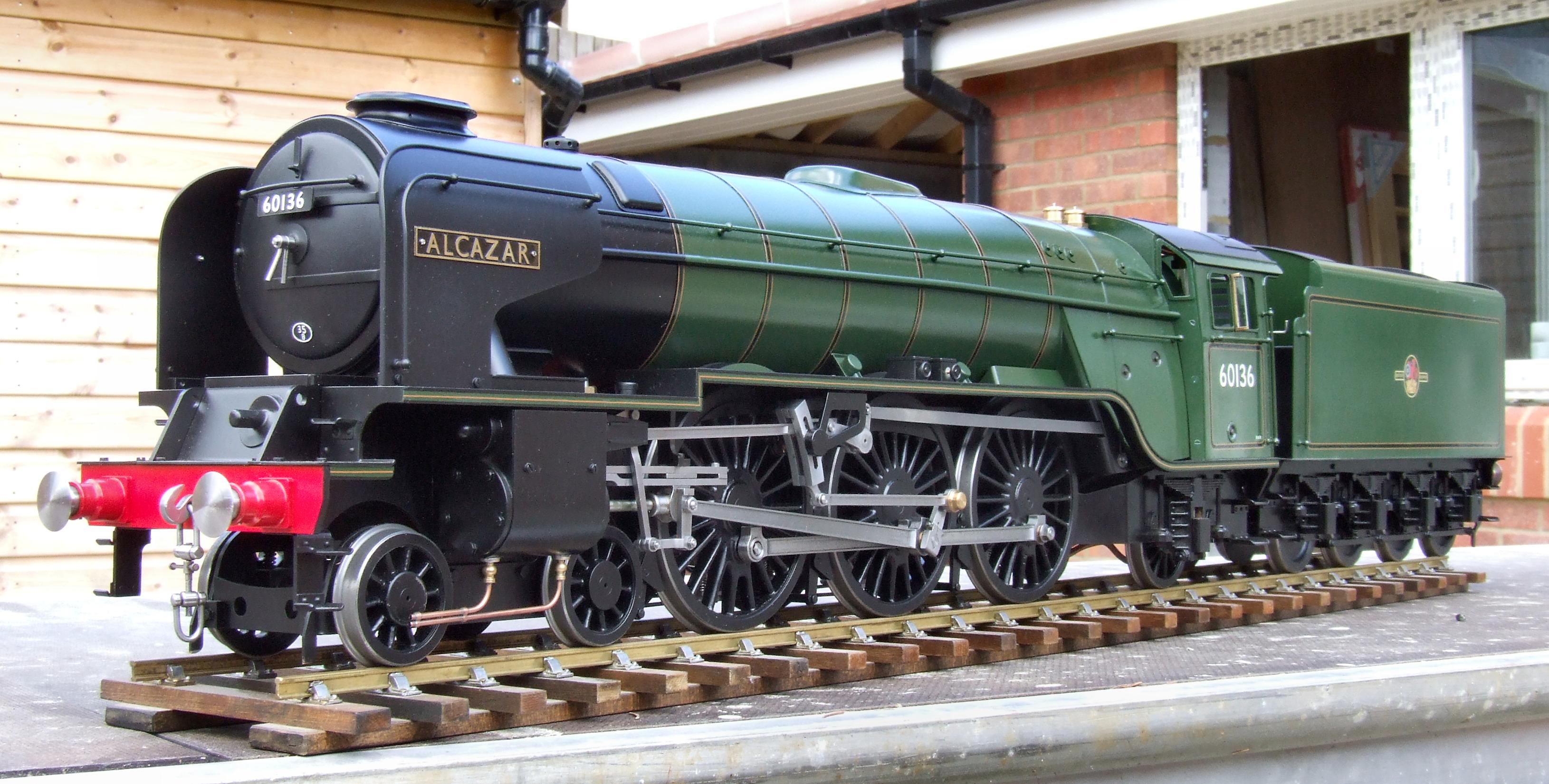
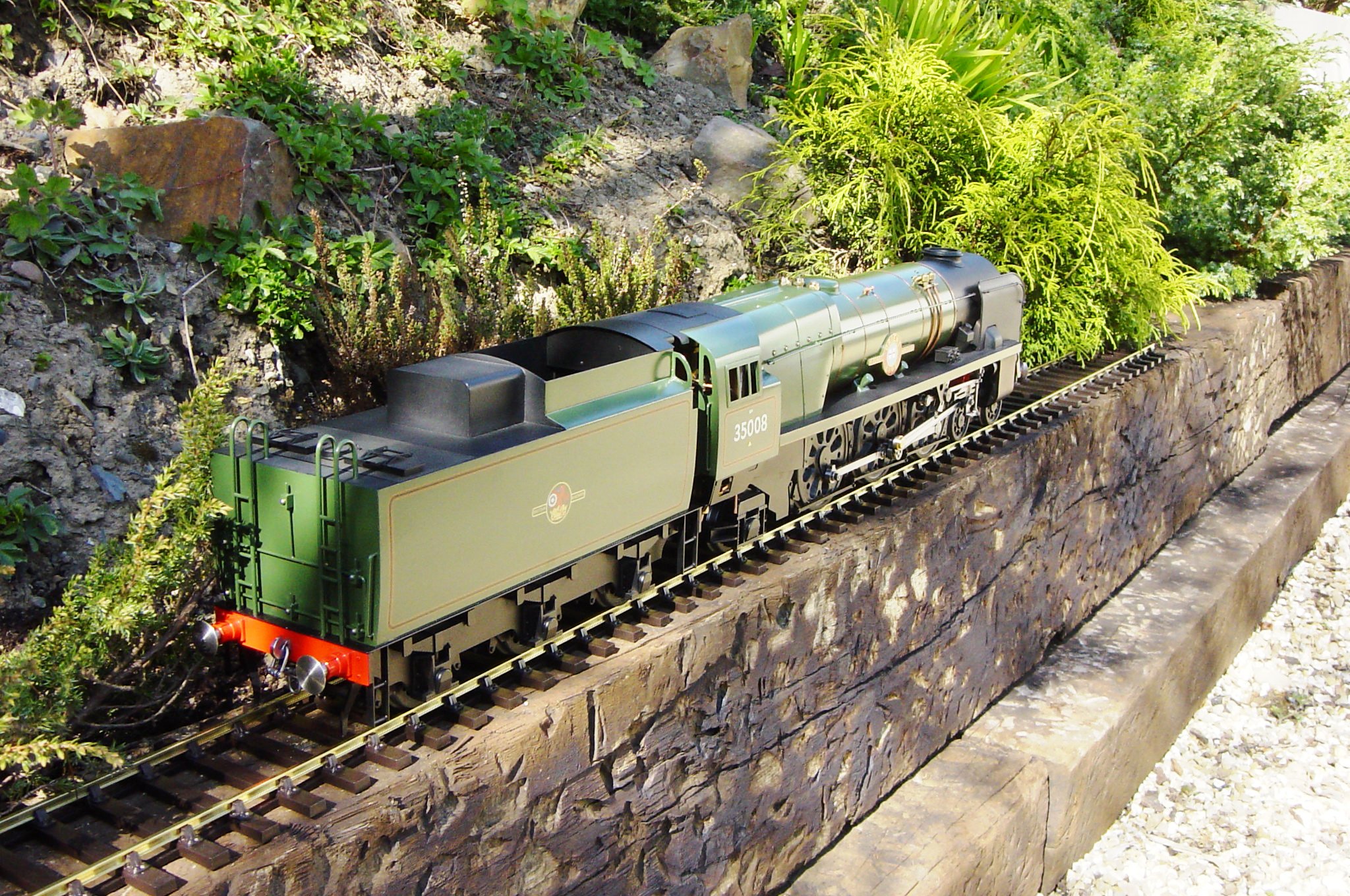
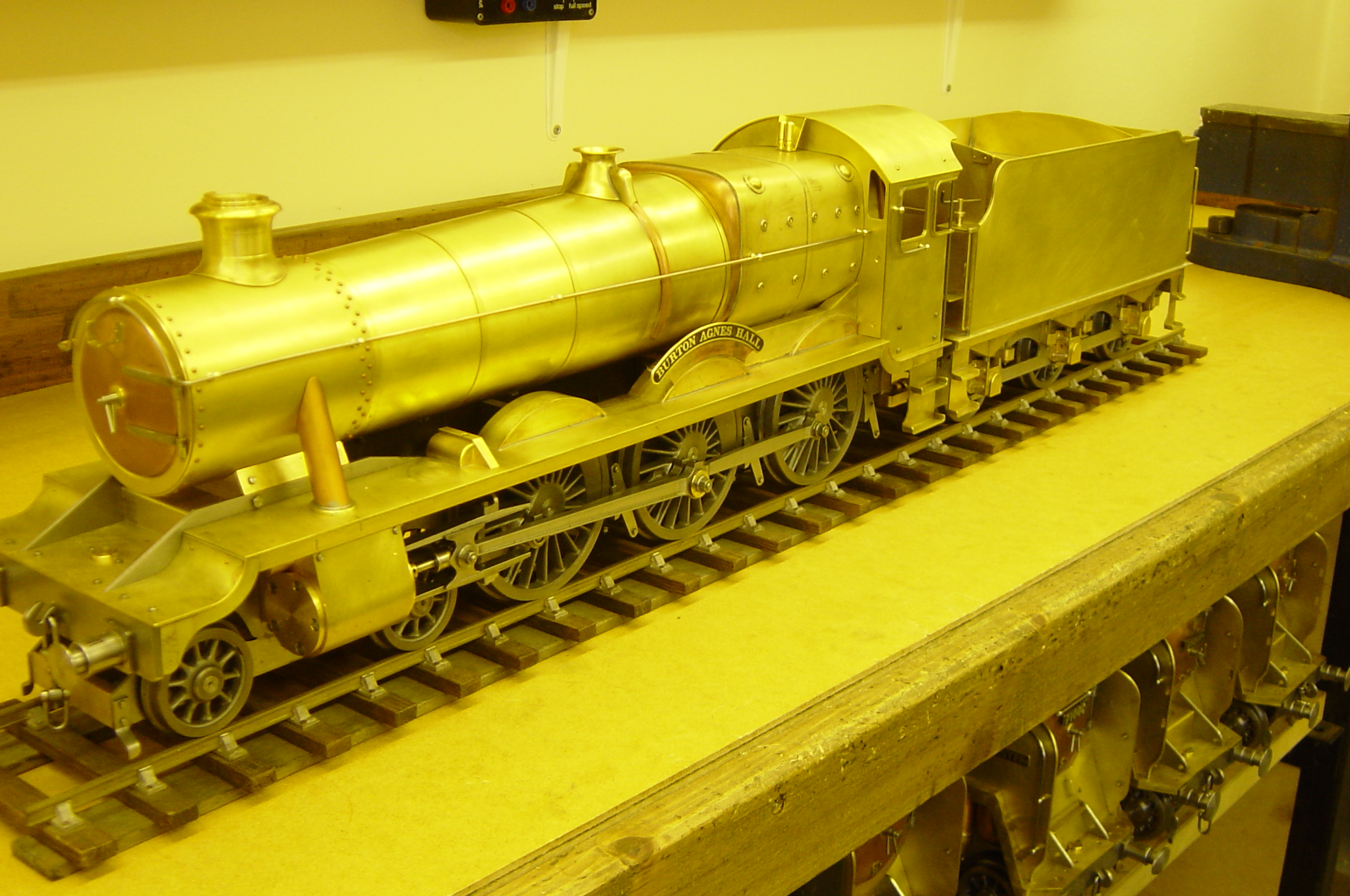
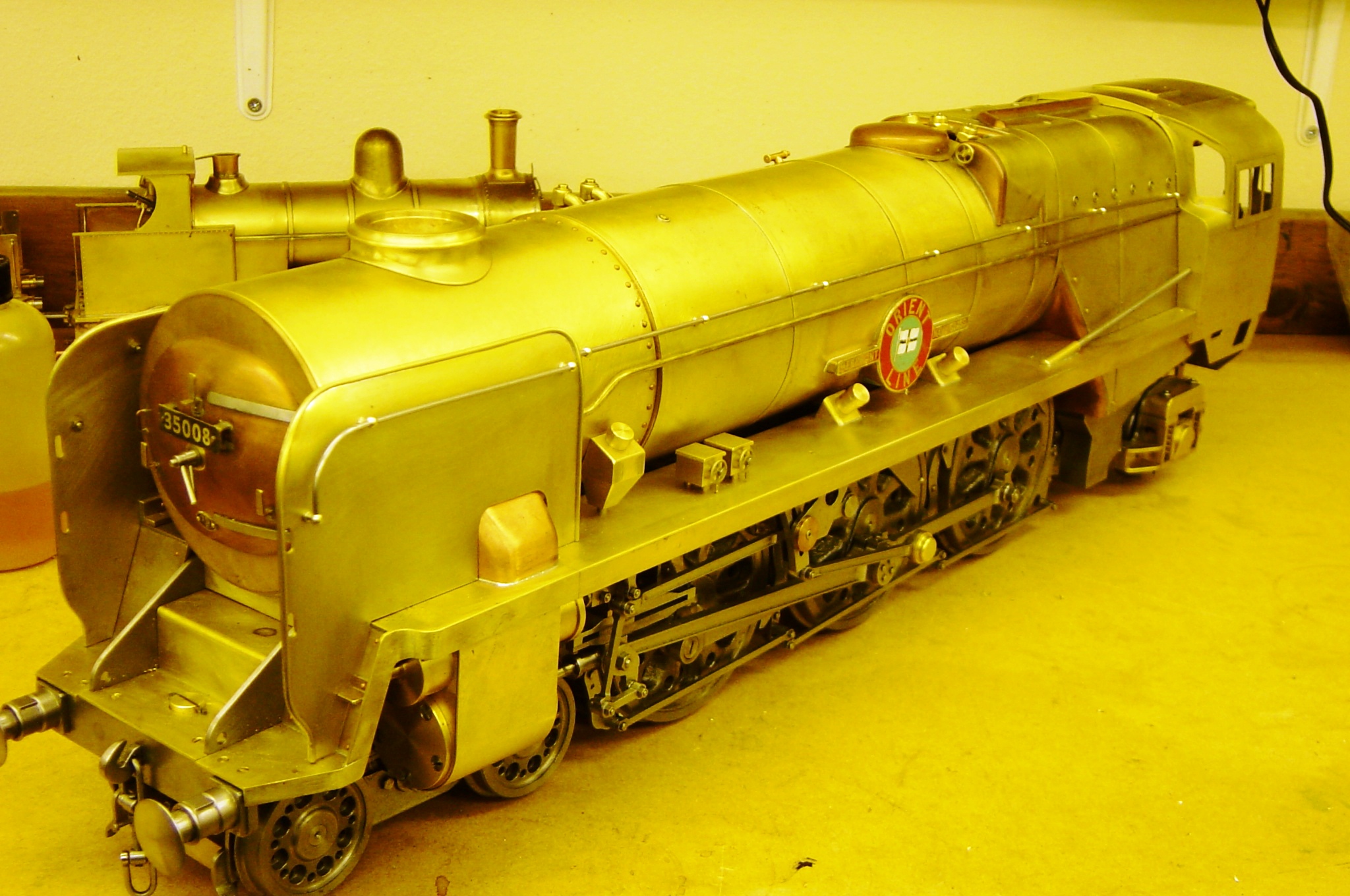
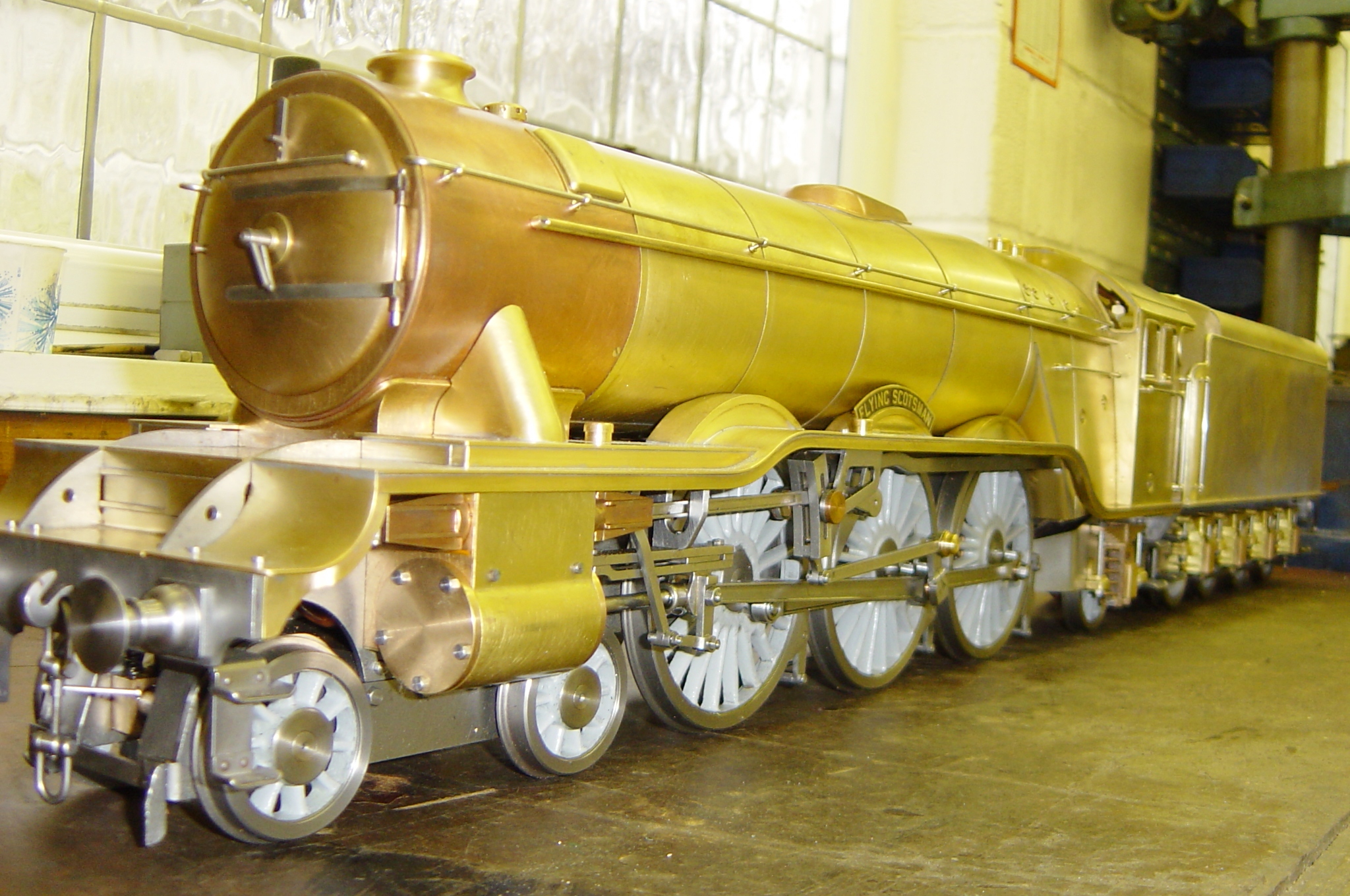
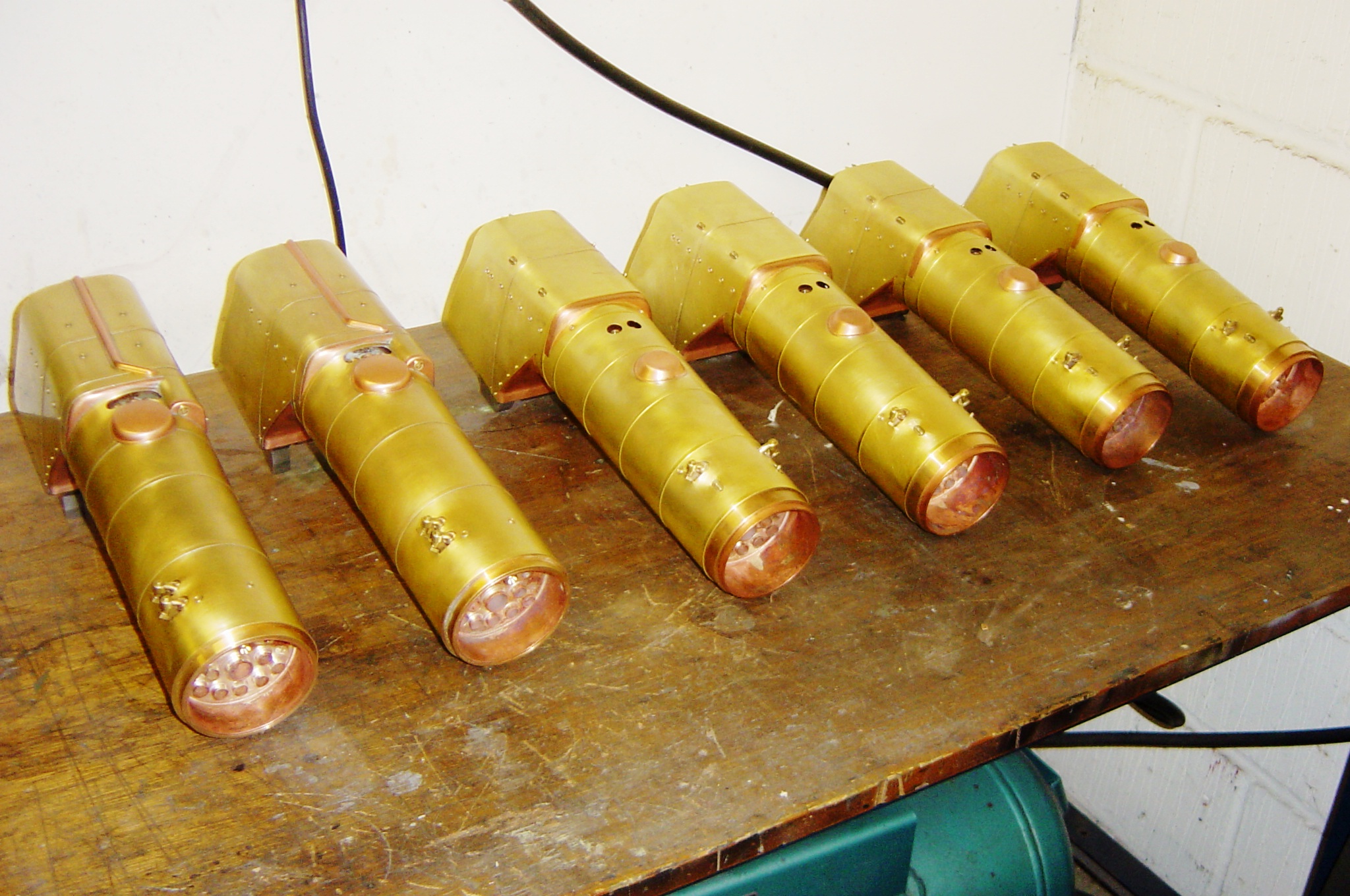
There's gold in that there cabinet (or four years worth of work)! Some of Mike's projects from 2004-2008 are represented below: The thumnails below show from left to right (1) a Britannia class 4-6-2 chassis (2) Britannia #70046 Anzac (3) Bulleid Rebuilt Merchant Navy class 4-6-2 Orient Line (4) Peppercorn A1 class 4-6-2 Alcazar (5) Gresley A3 class 4-6-2 Flying Scotsman (6) Great Western Railway Hall class 4-6-0 Burton Agnes Hall (7) and a grab bag of boilers for the same. The locos in the cabinet are several Britannias, Duke of Gloucesters, rebuilt Merchant Navies & two Halls.
2008-2011 Construction Photographs
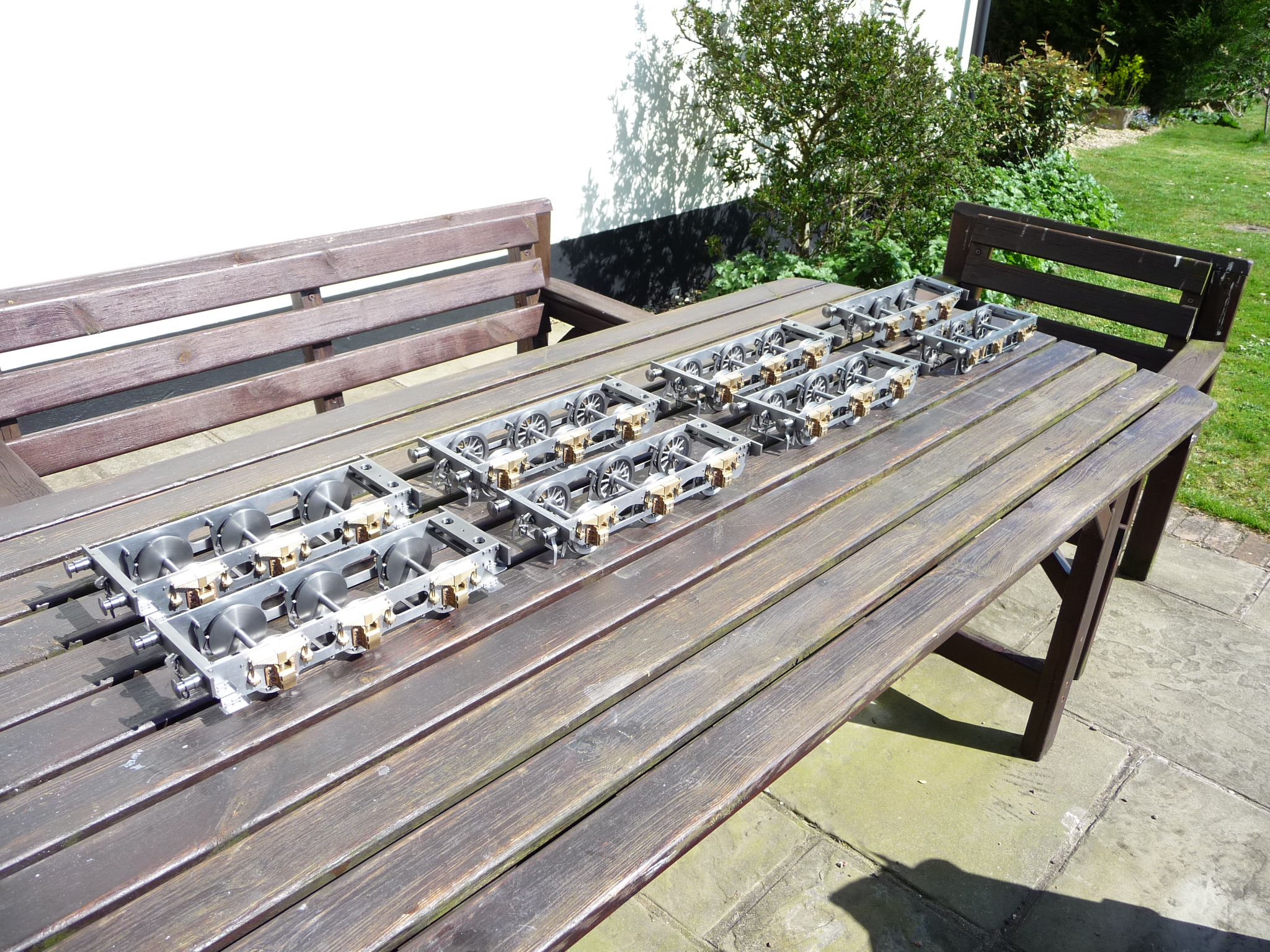
The Tenders: When Mike builds a tender, he does so several at a time. These frames were assembled in Spring 2009.
|
|||||||||||
|
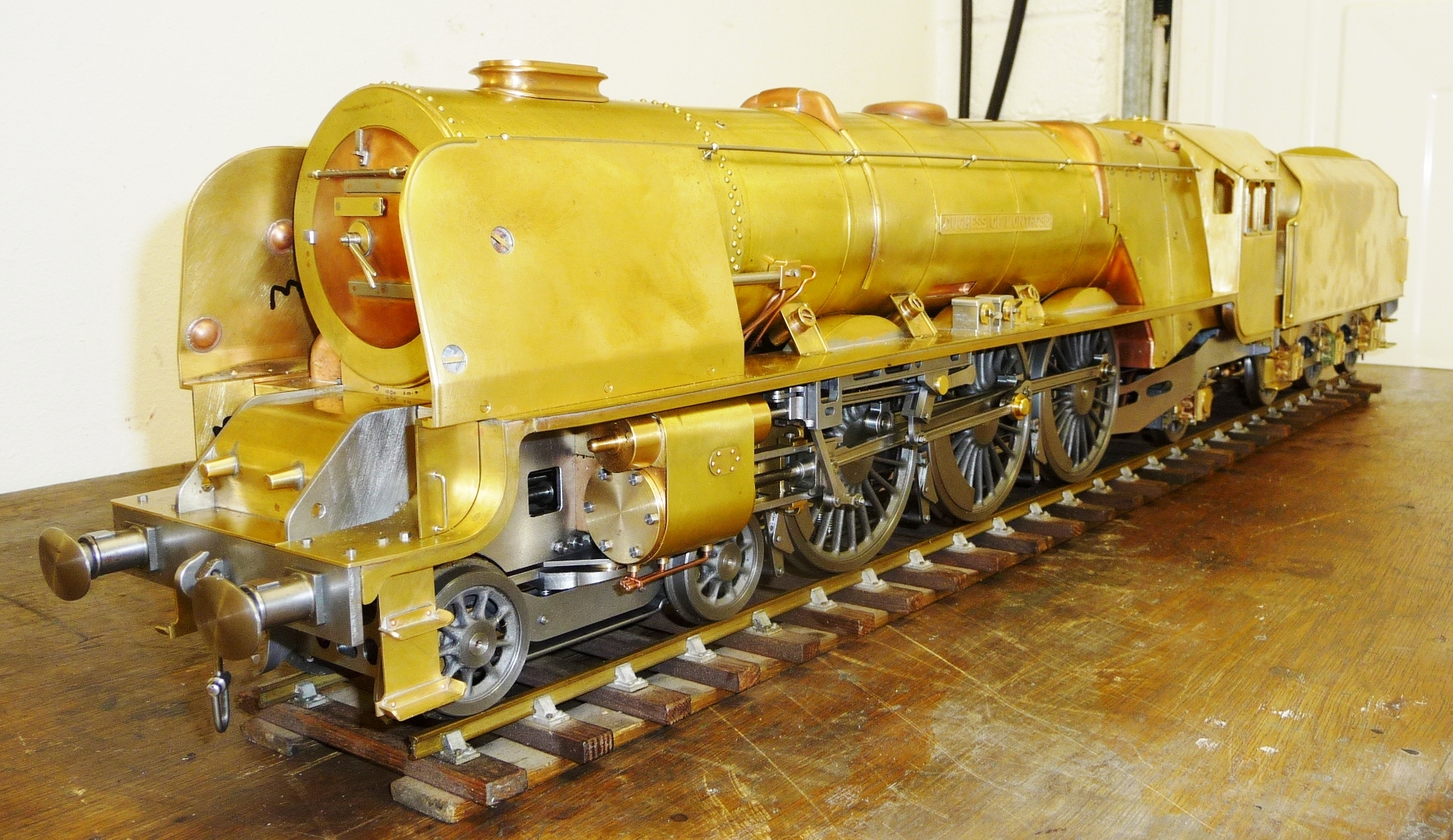
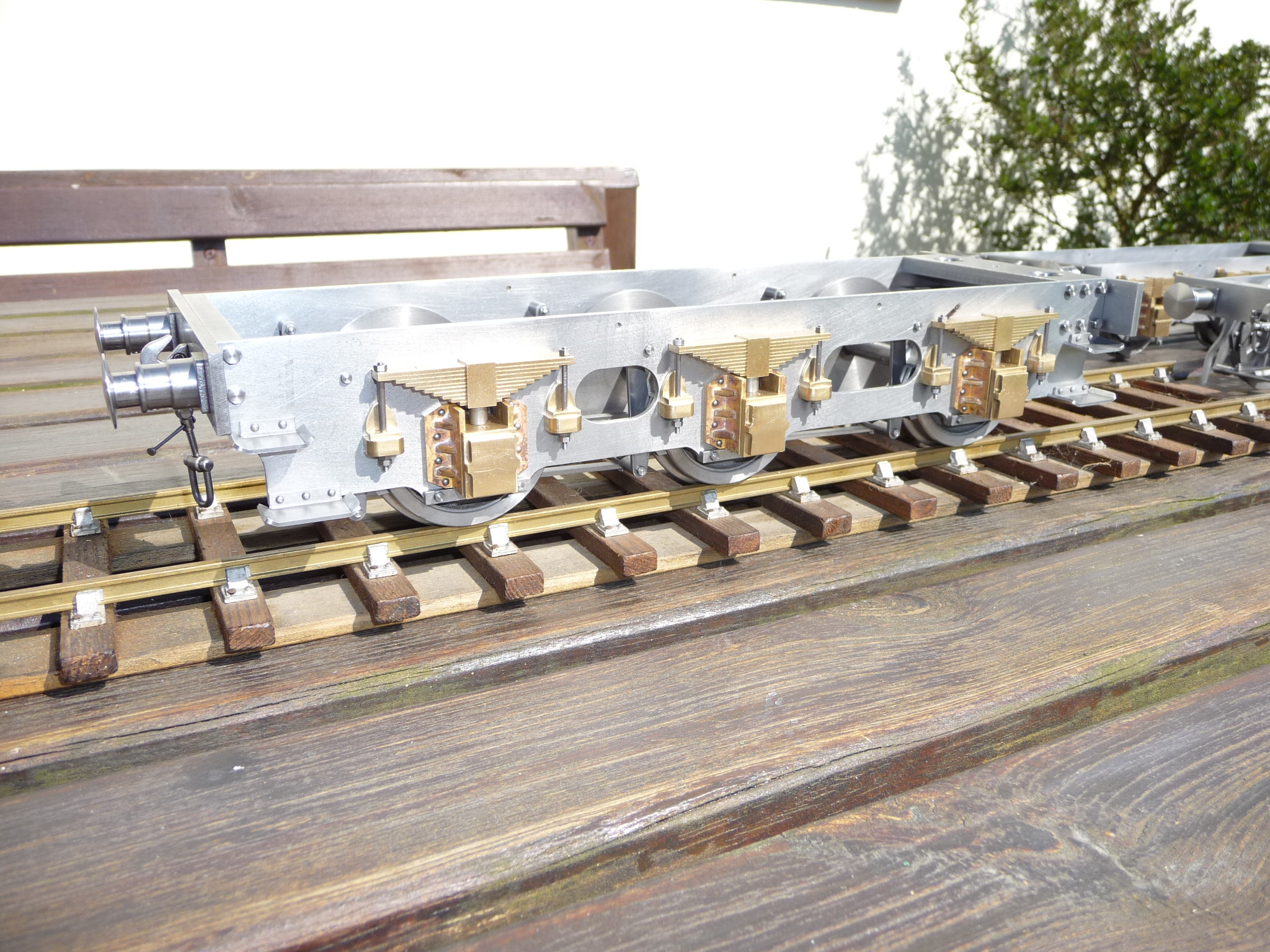
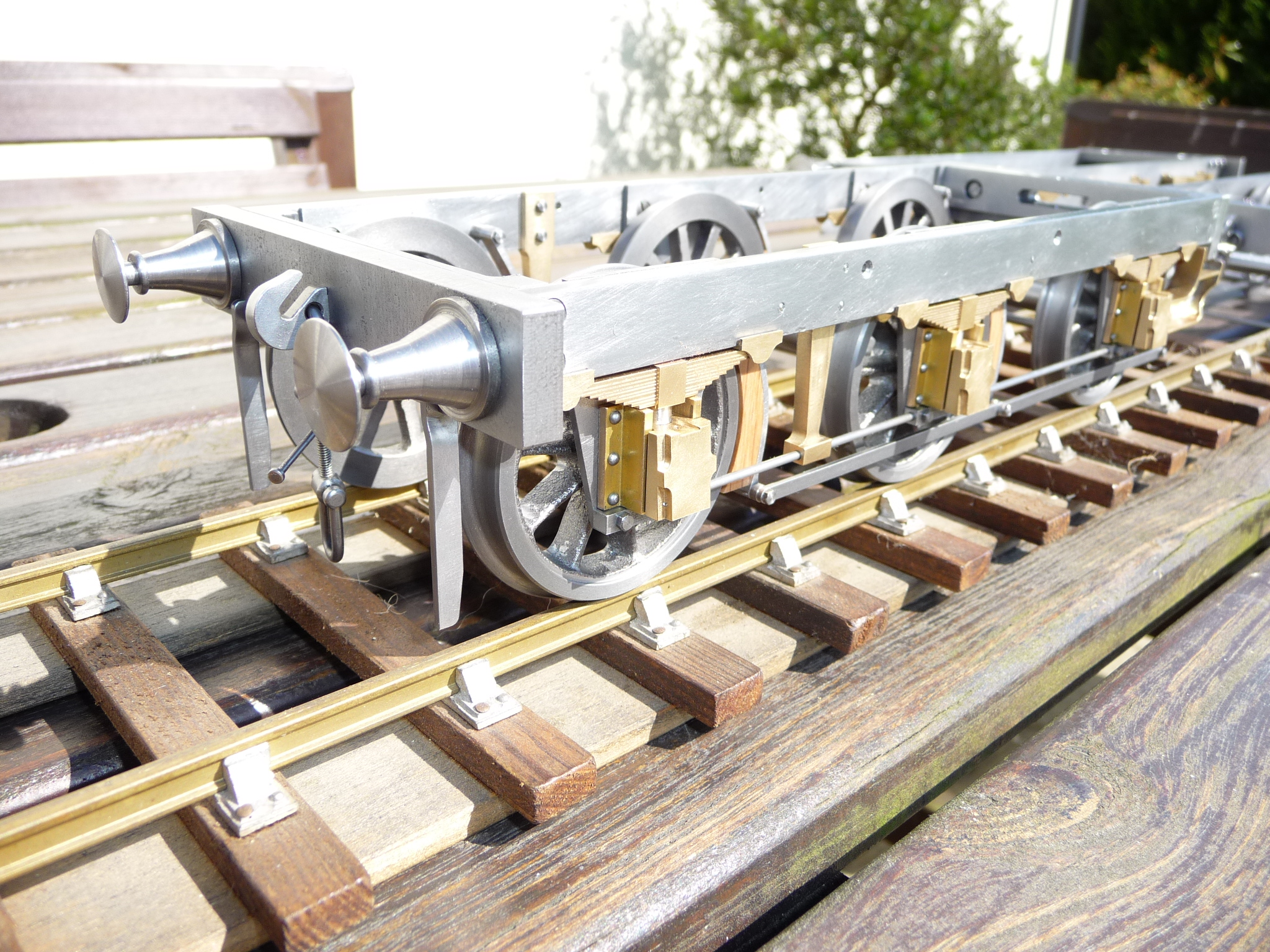
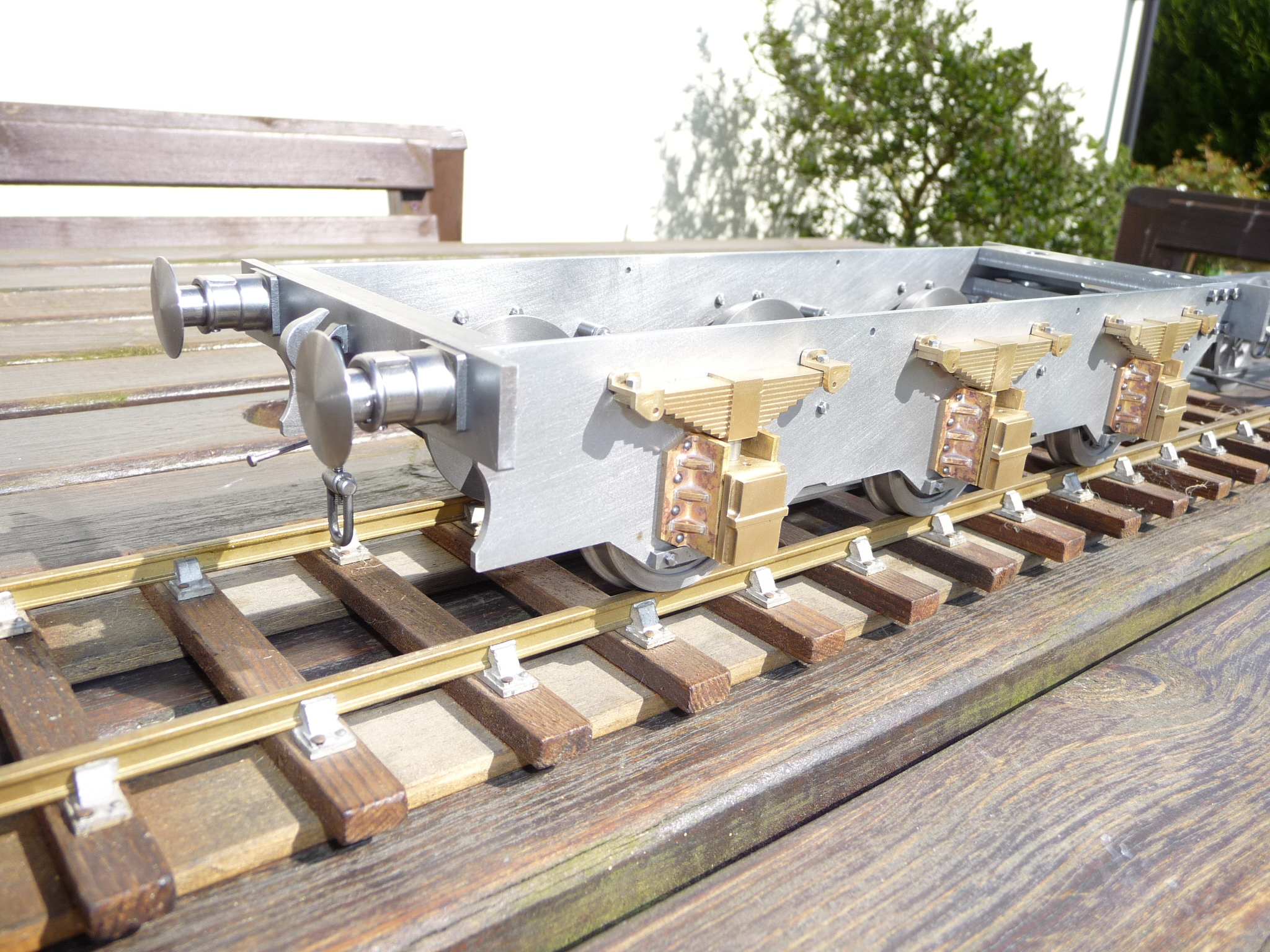
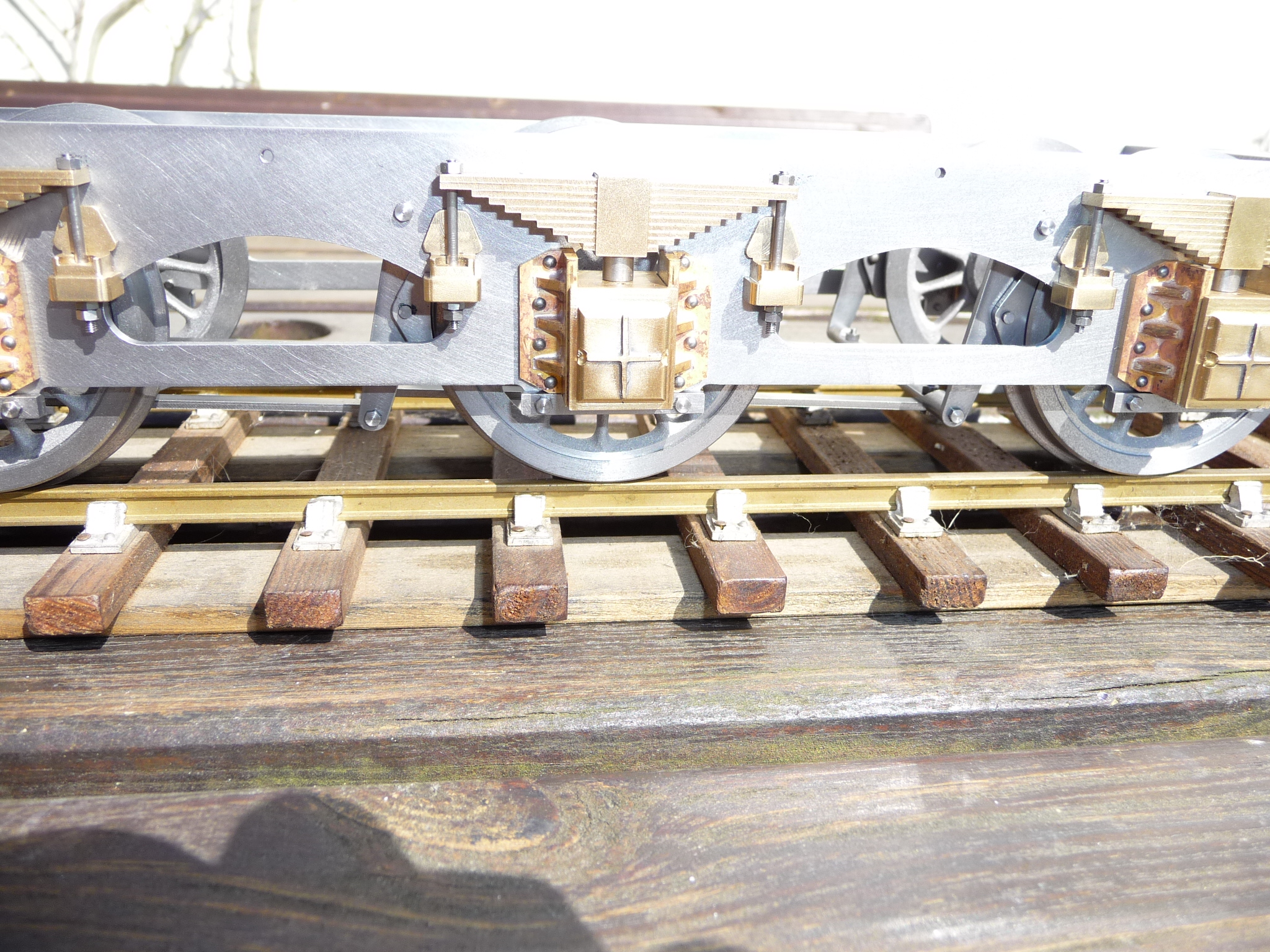
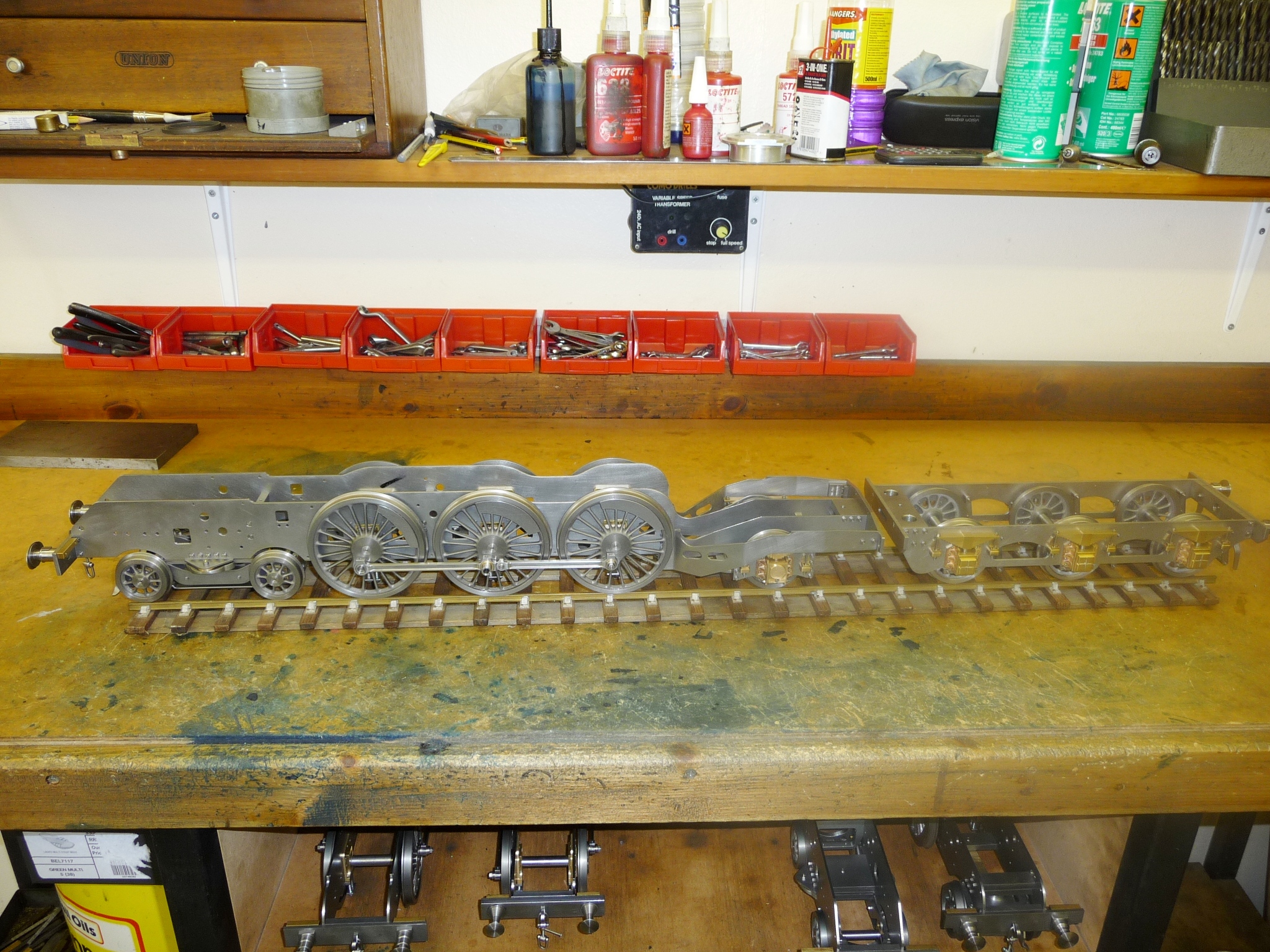
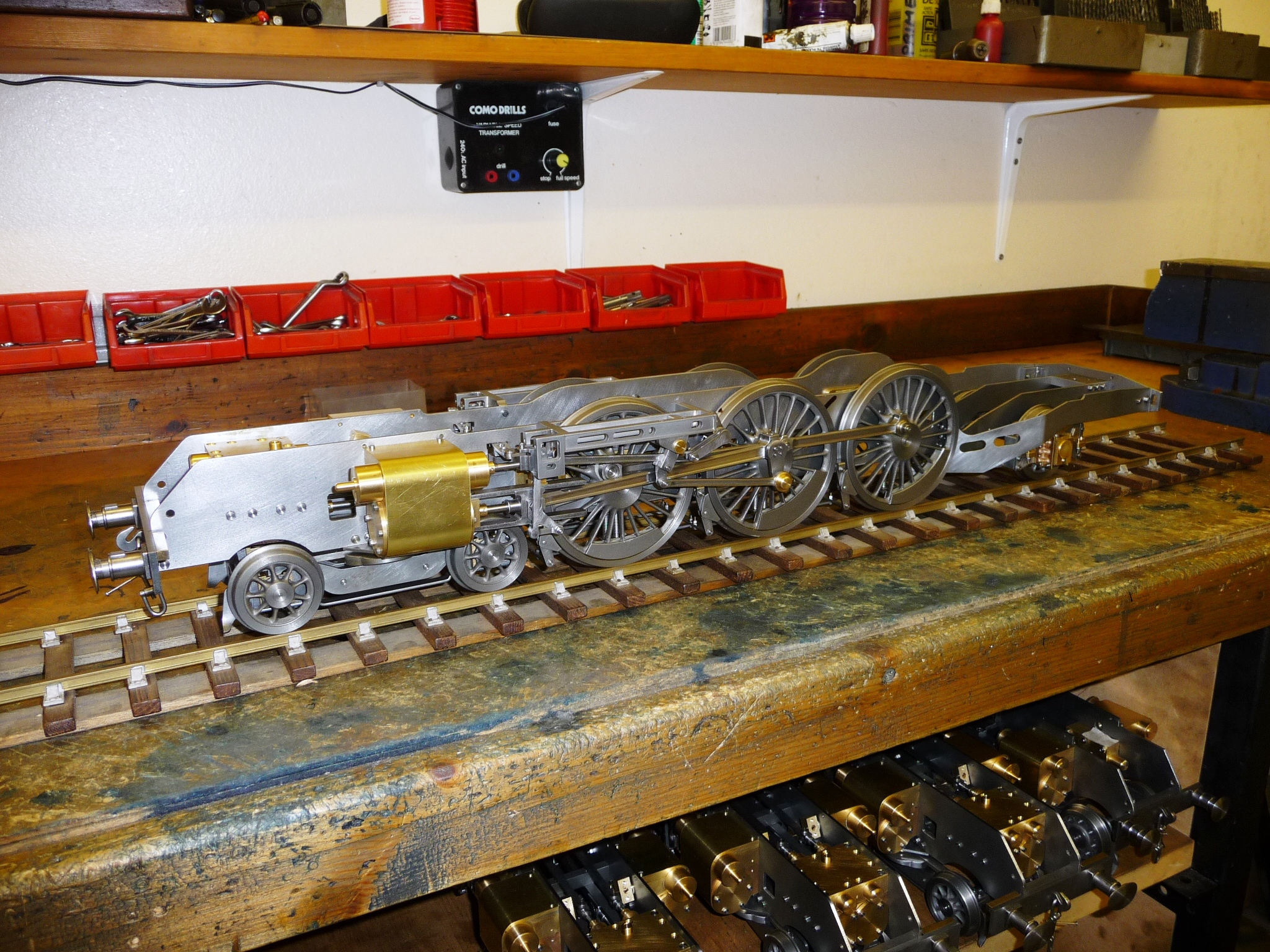
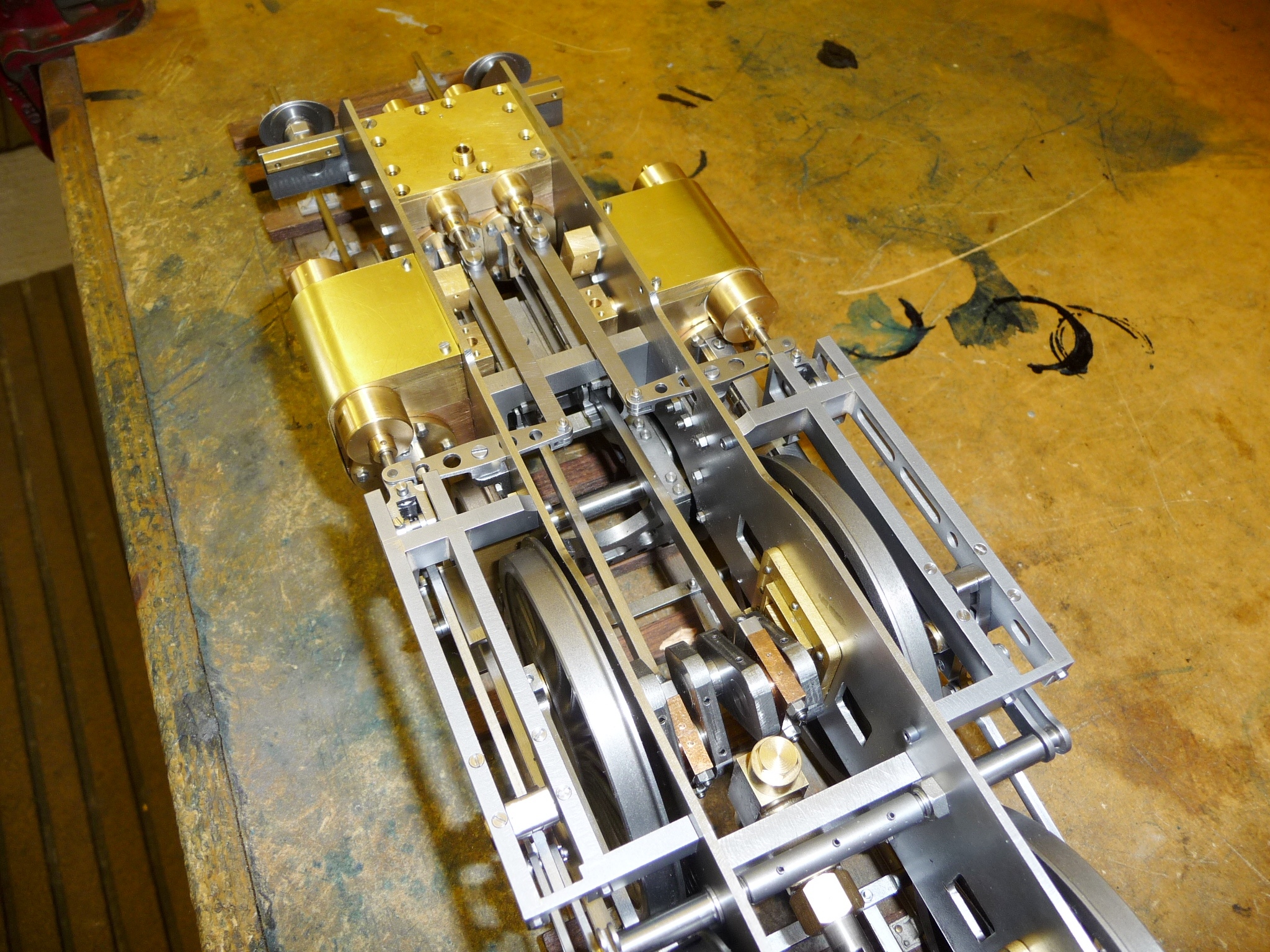
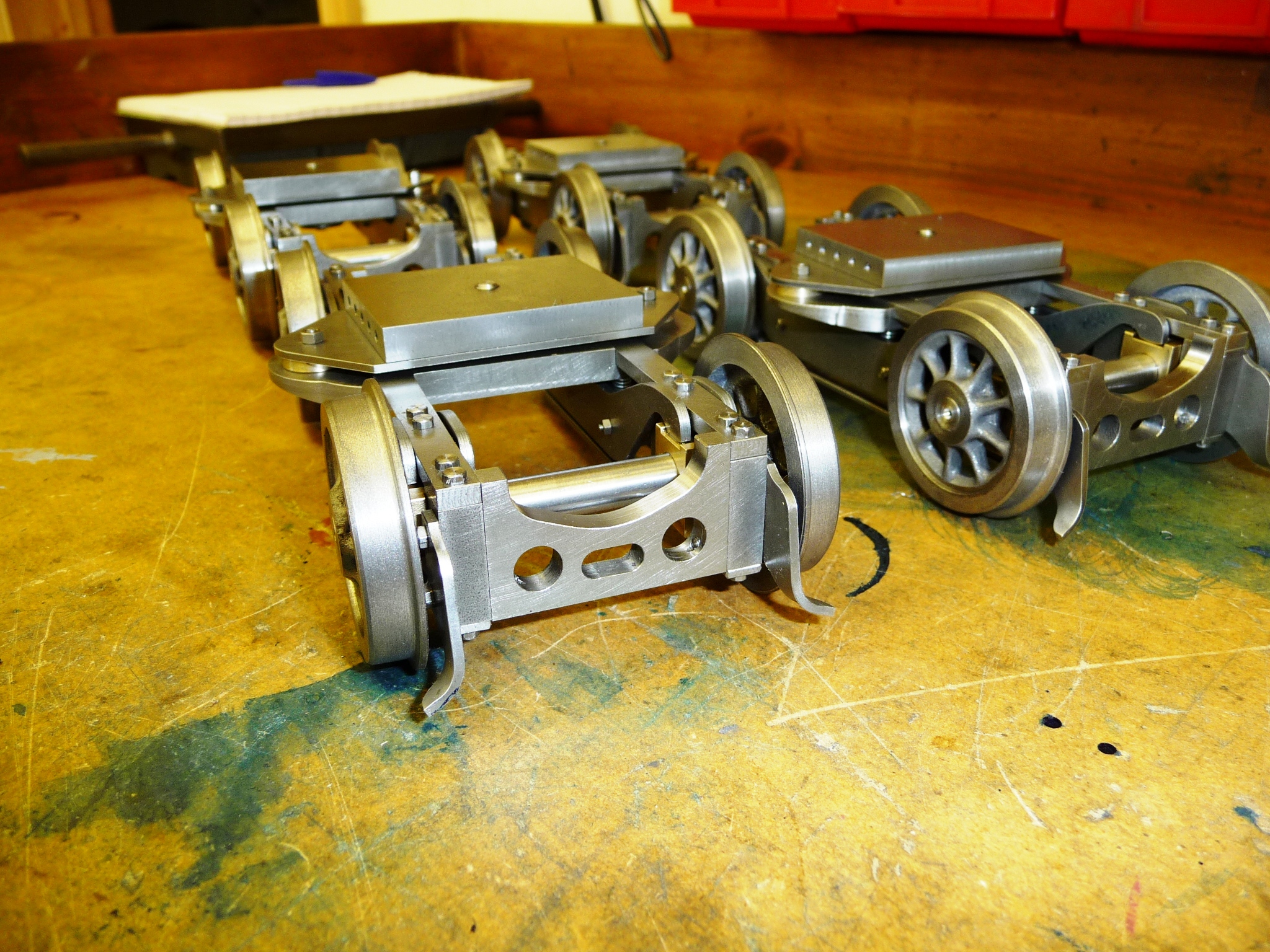
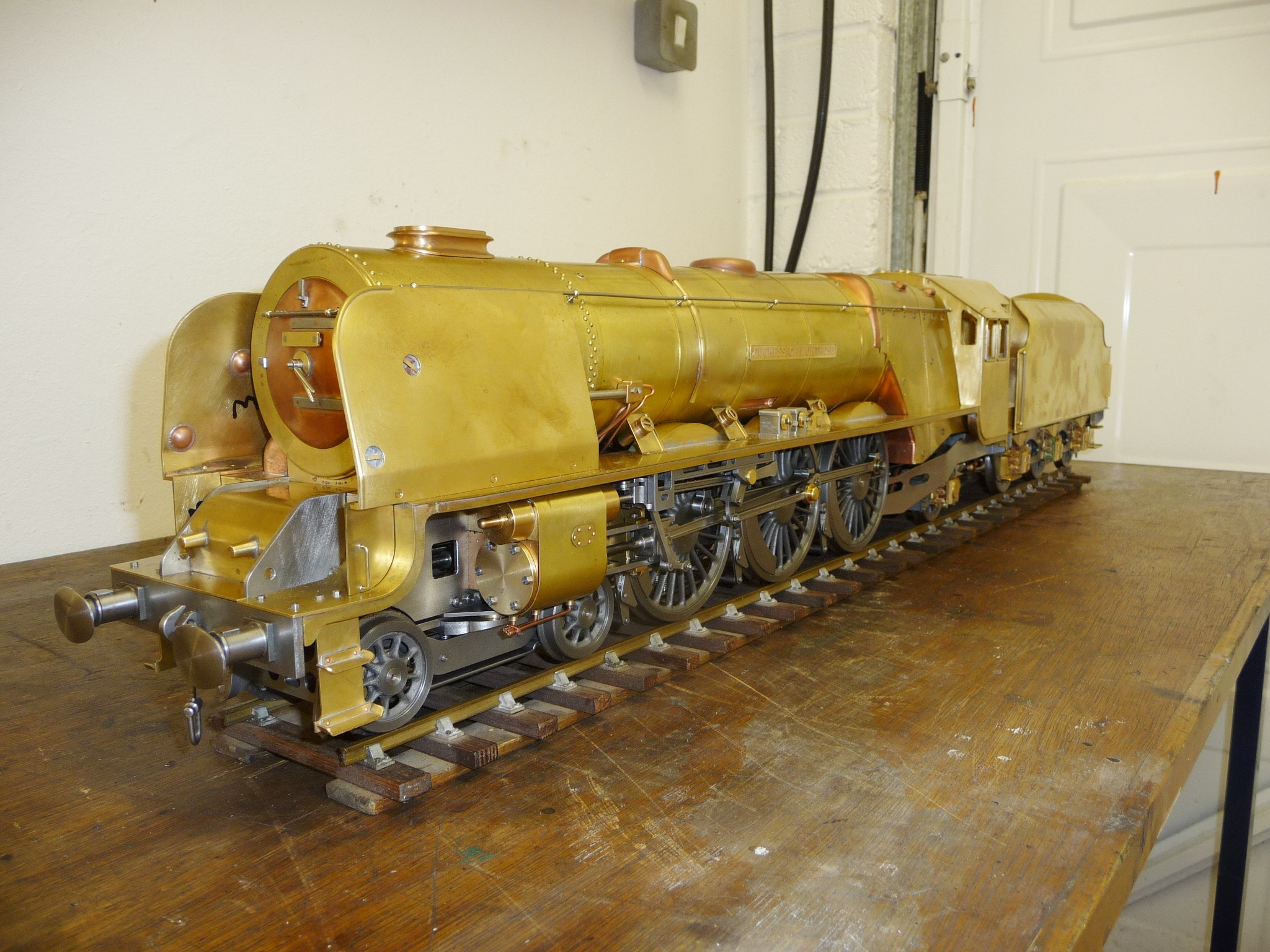
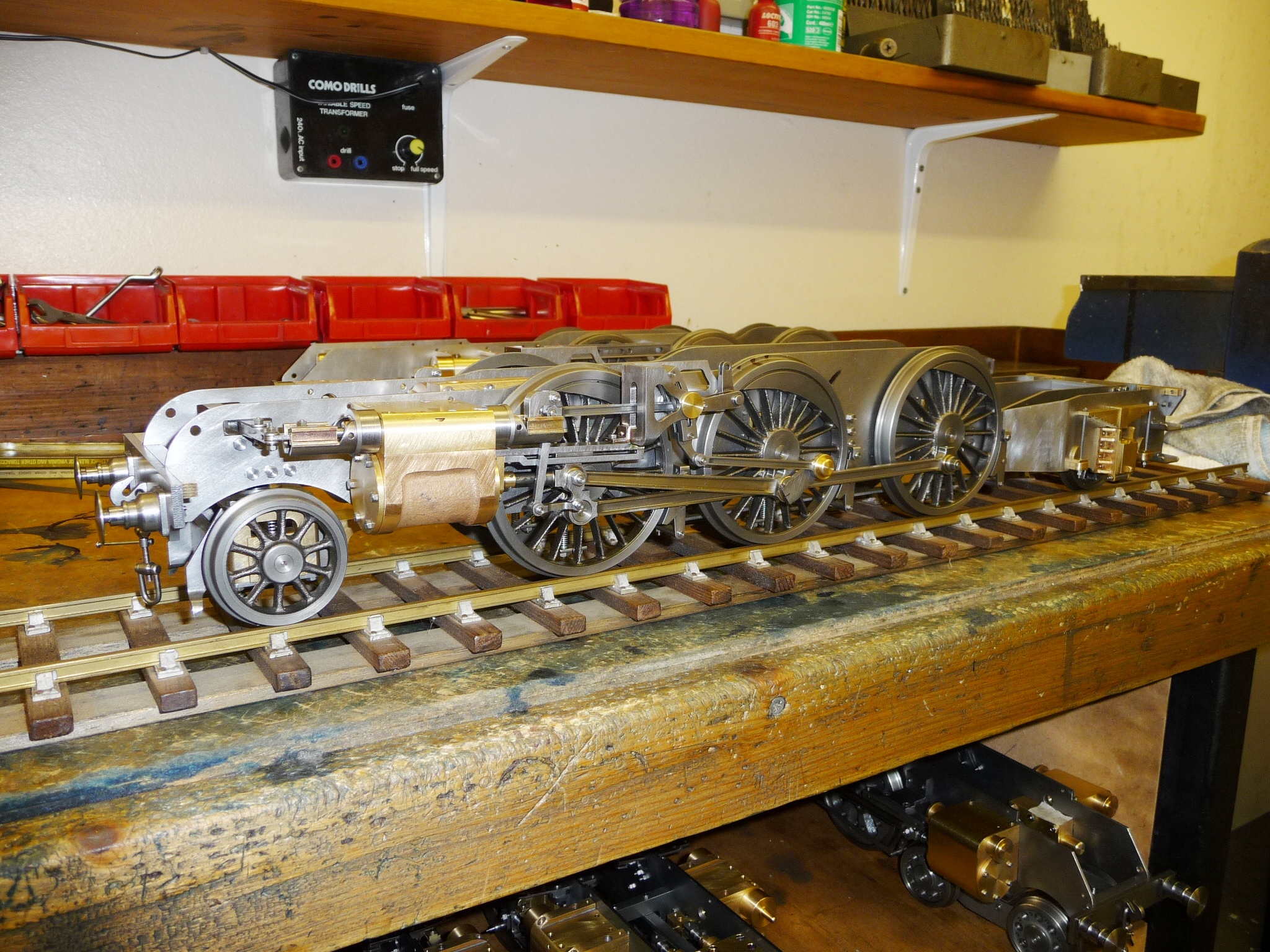
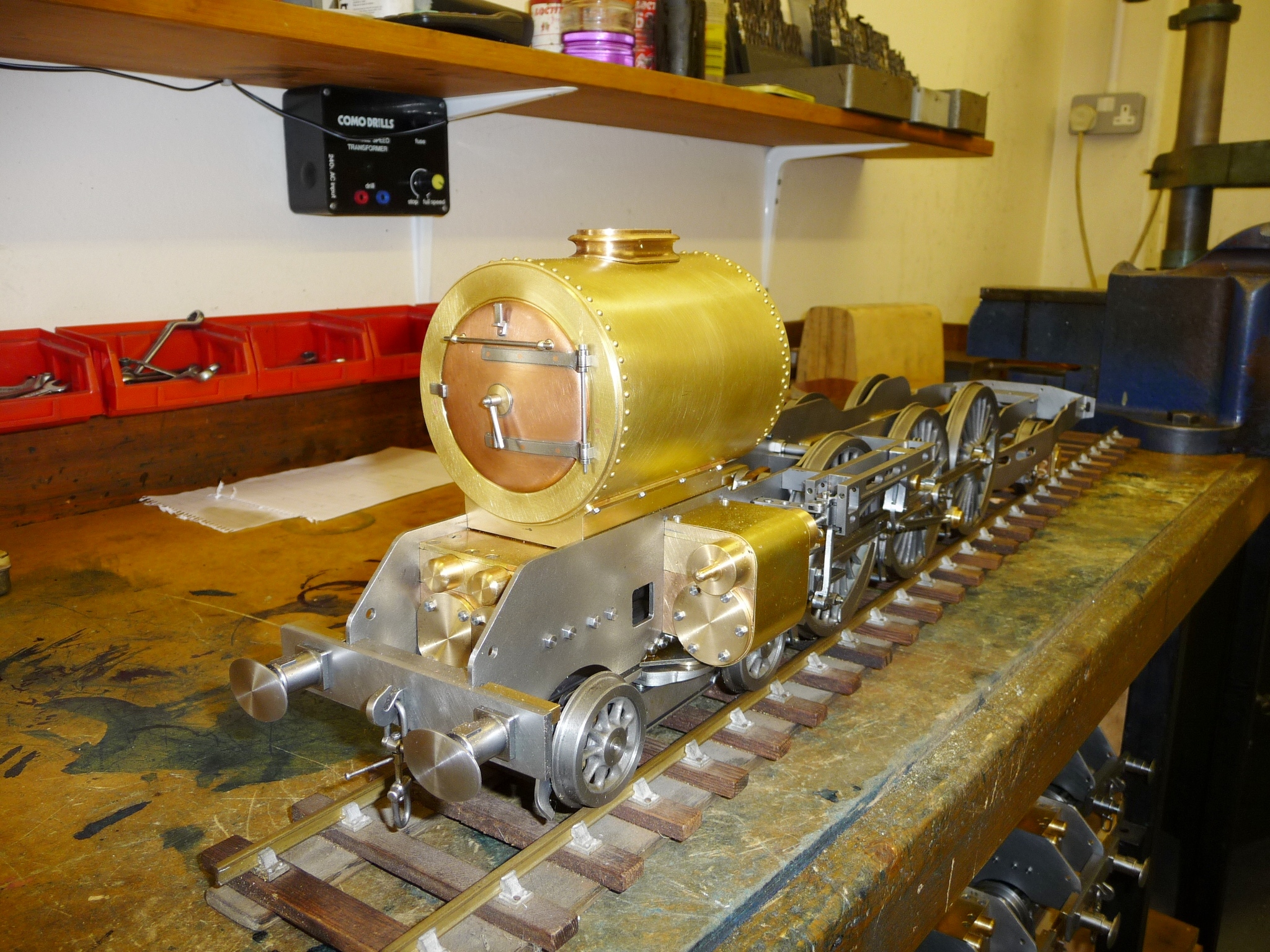
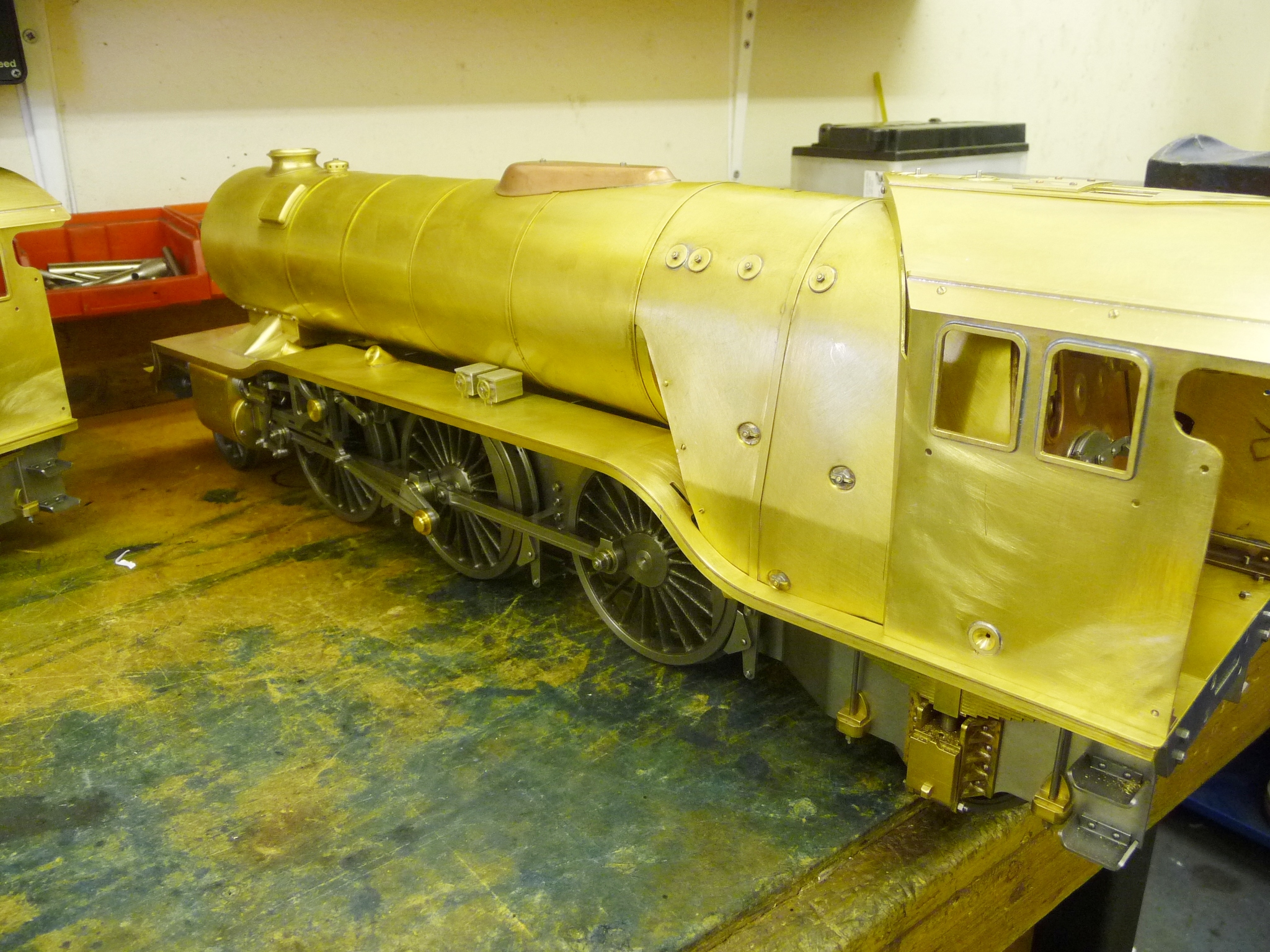
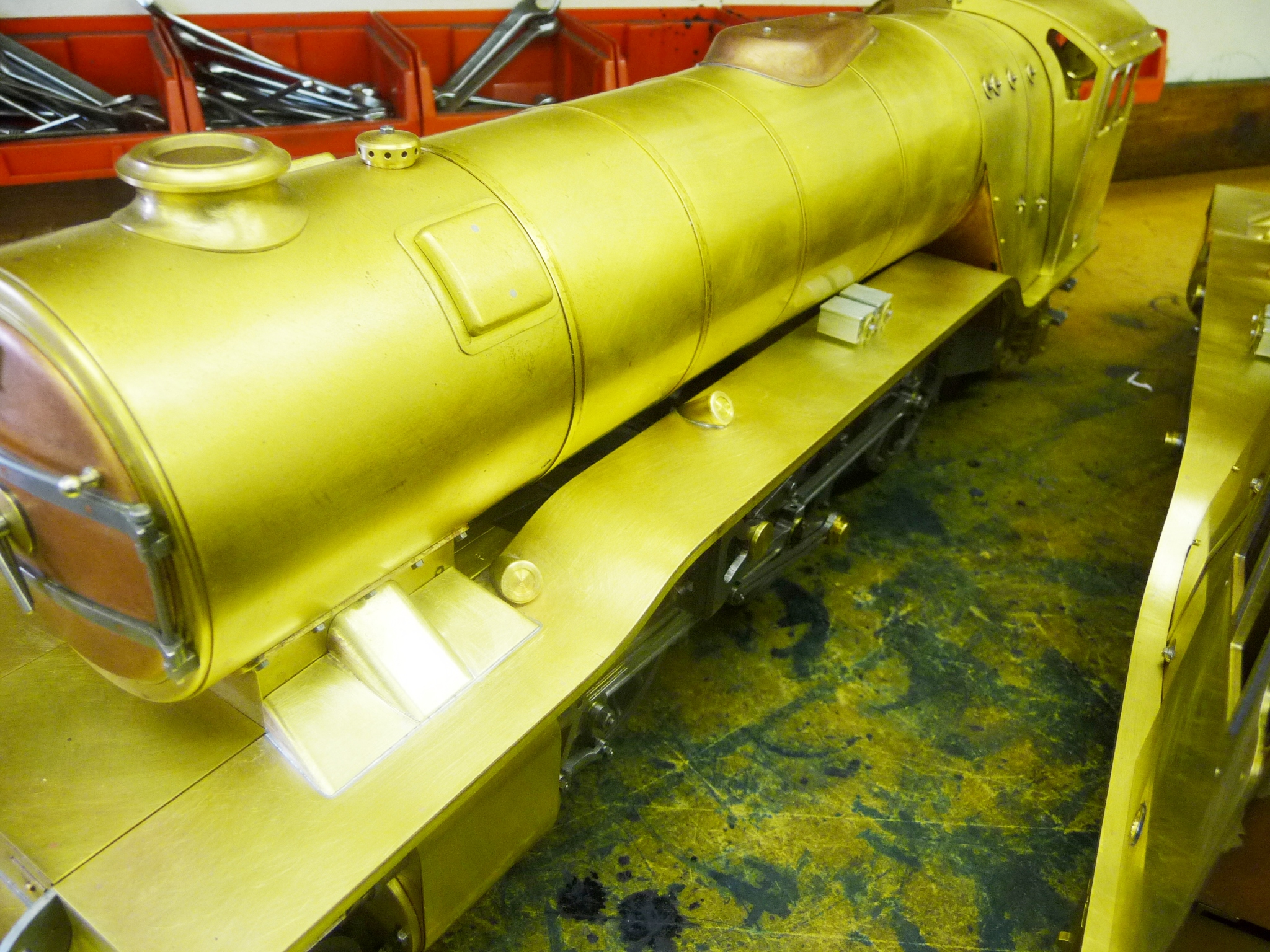
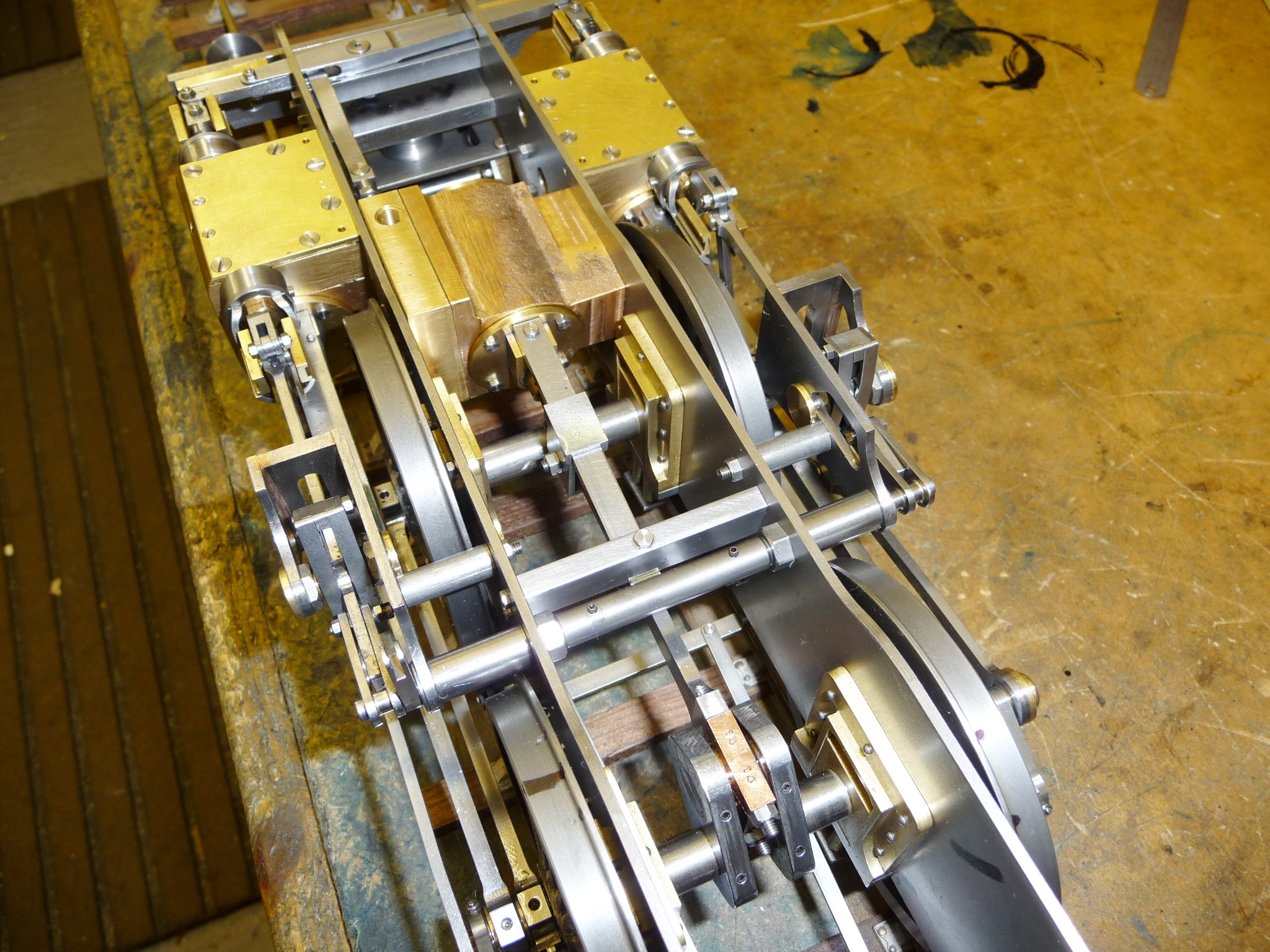
Here are a few pics of Mike's four Duchess class Pacifics in various stages
of construction. These are four cylinder locomotives but are not compound.
Like the prototype, Mike uses a unique variation of Walschaerts valve gear.
To the best of my knowledge, no multi-cylinder locomotives, save for one or
two simple articulated types, were ever built in even the halcyon days of
2½" gauge in America. Well done! |
|||||||||||
|
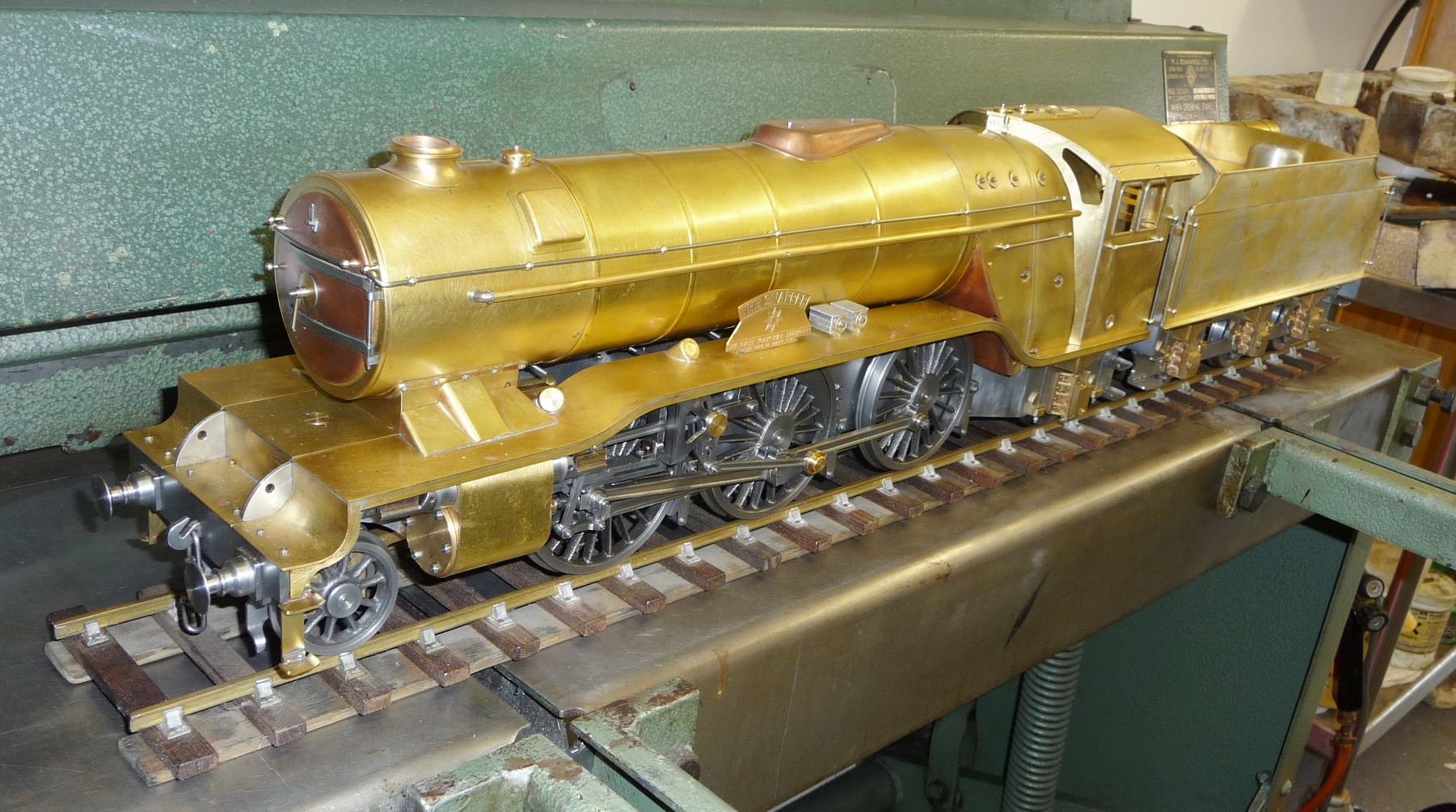
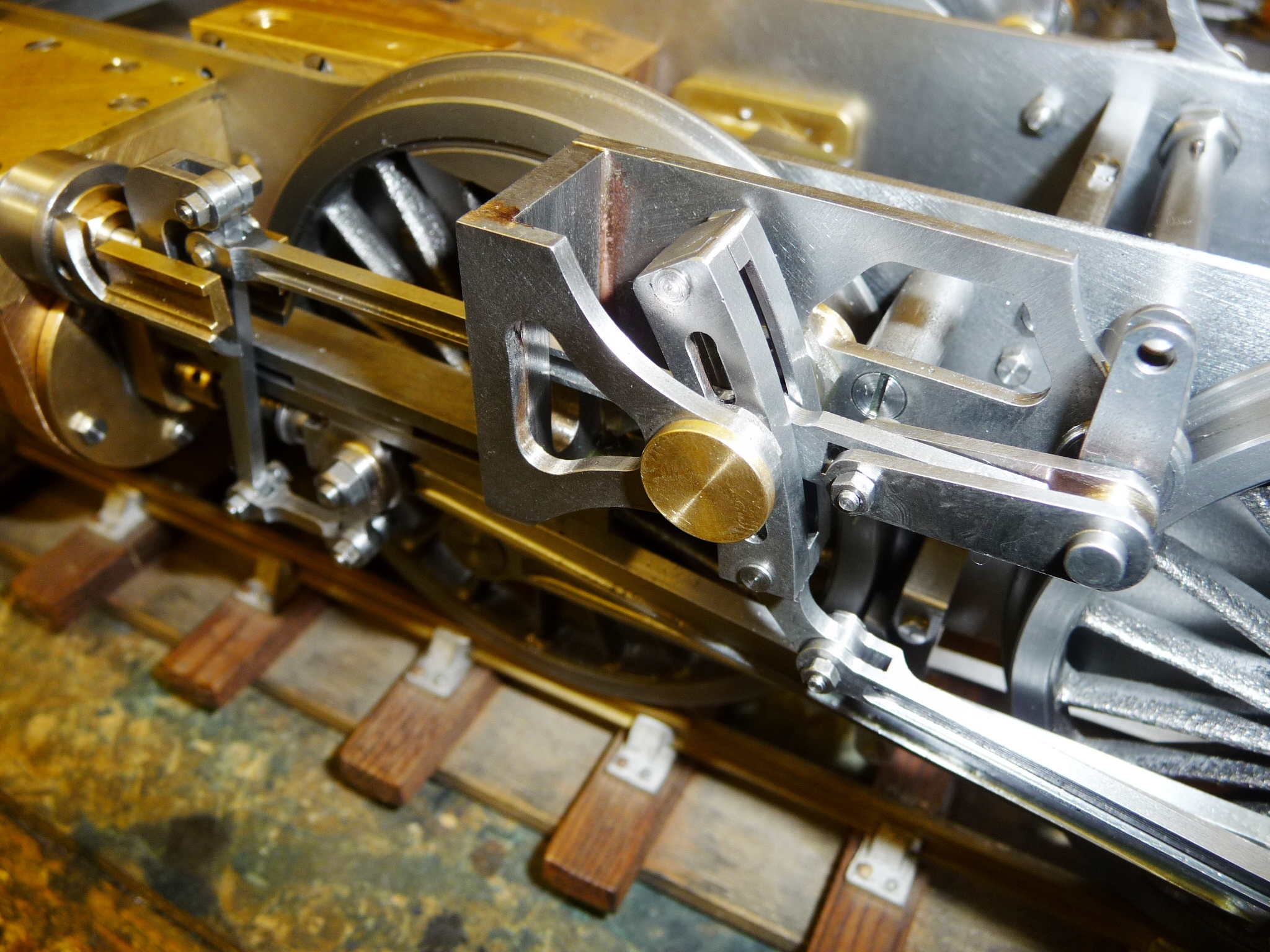
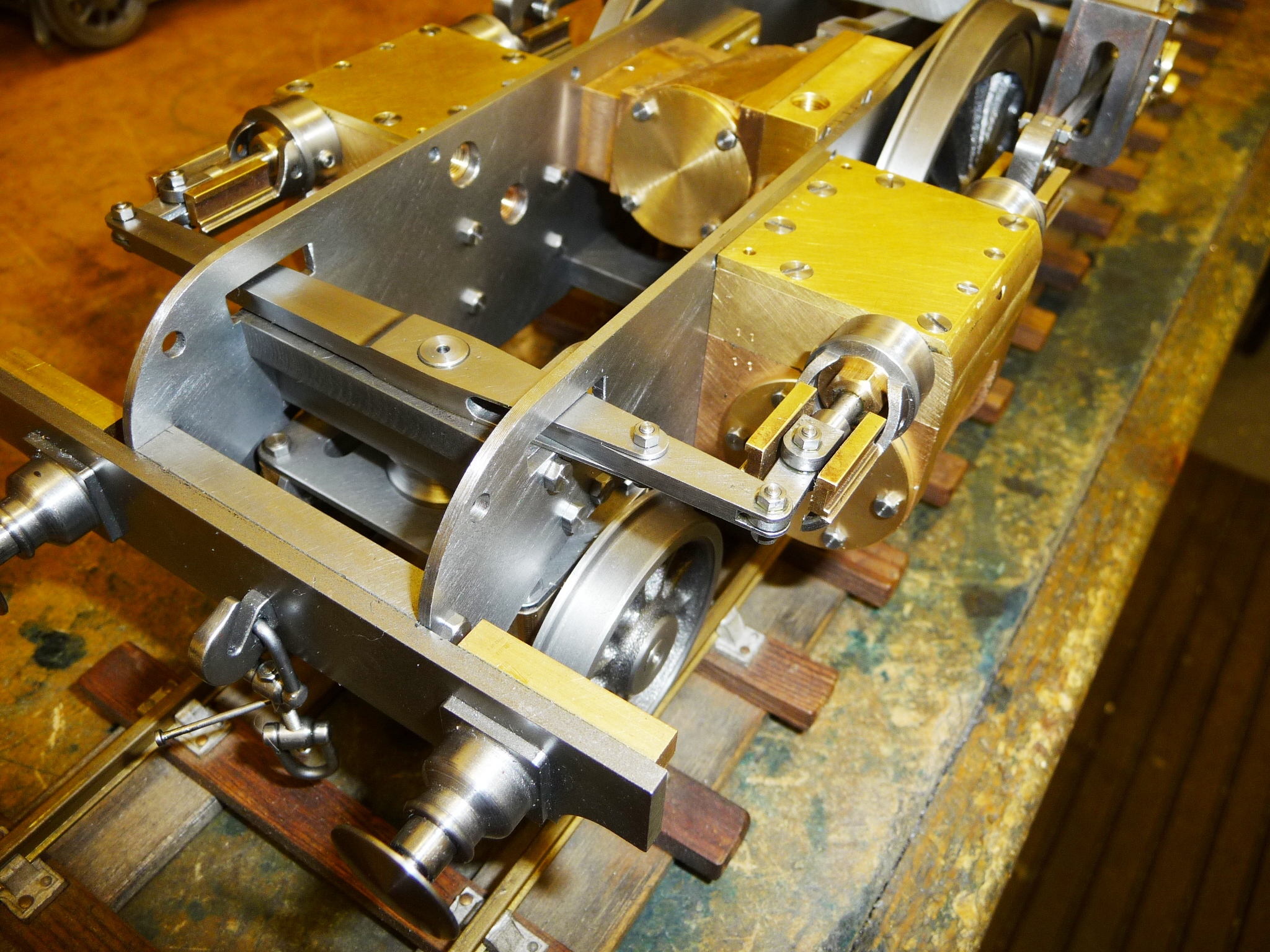
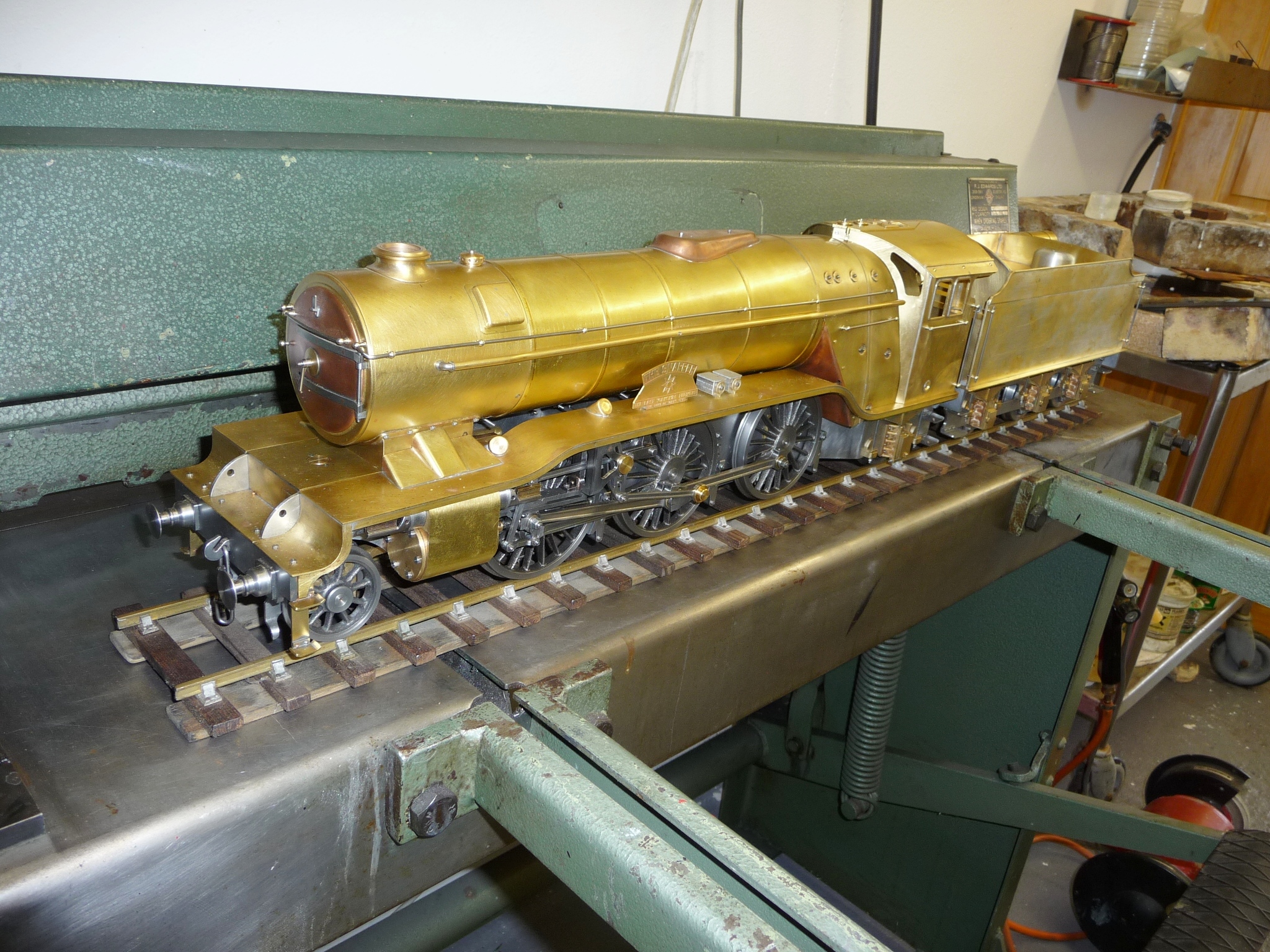
Mike's model of the well-known LNER V2 is built with three cylinders and
functional Gresley conjugated valve gear!
Gresley Conjugated Valve Gear:
The Completed Loco: |
|||||||||||
|
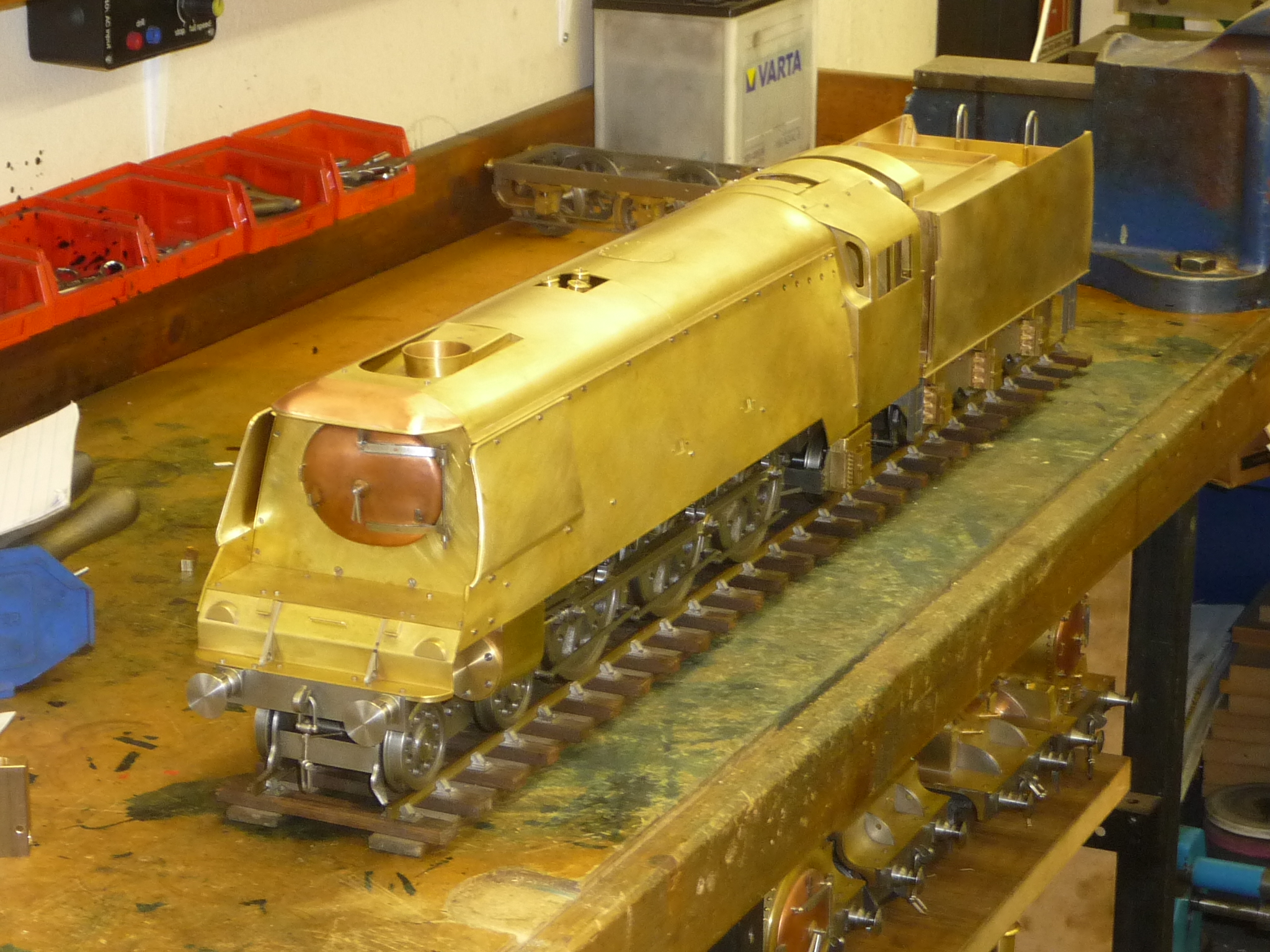
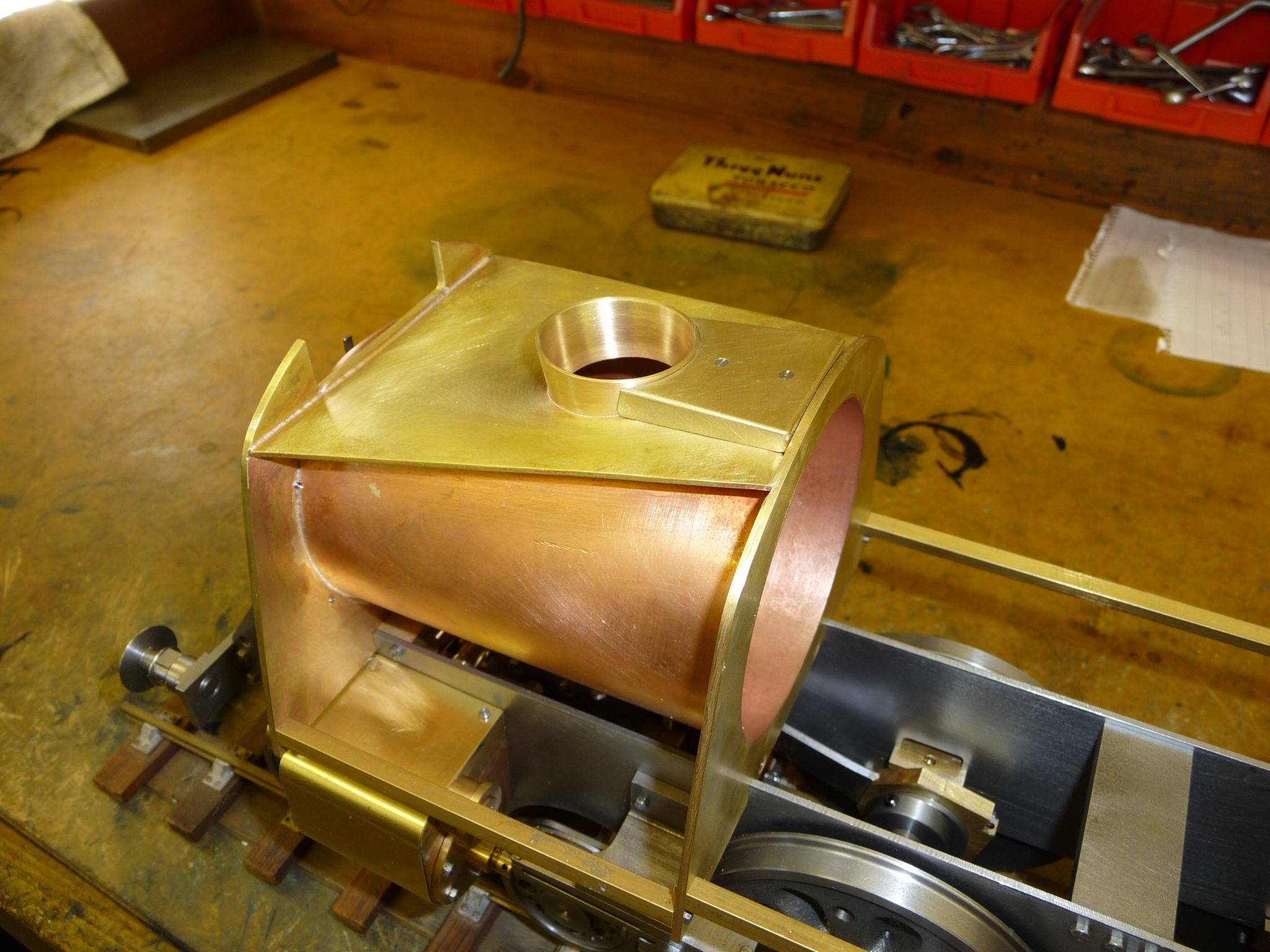
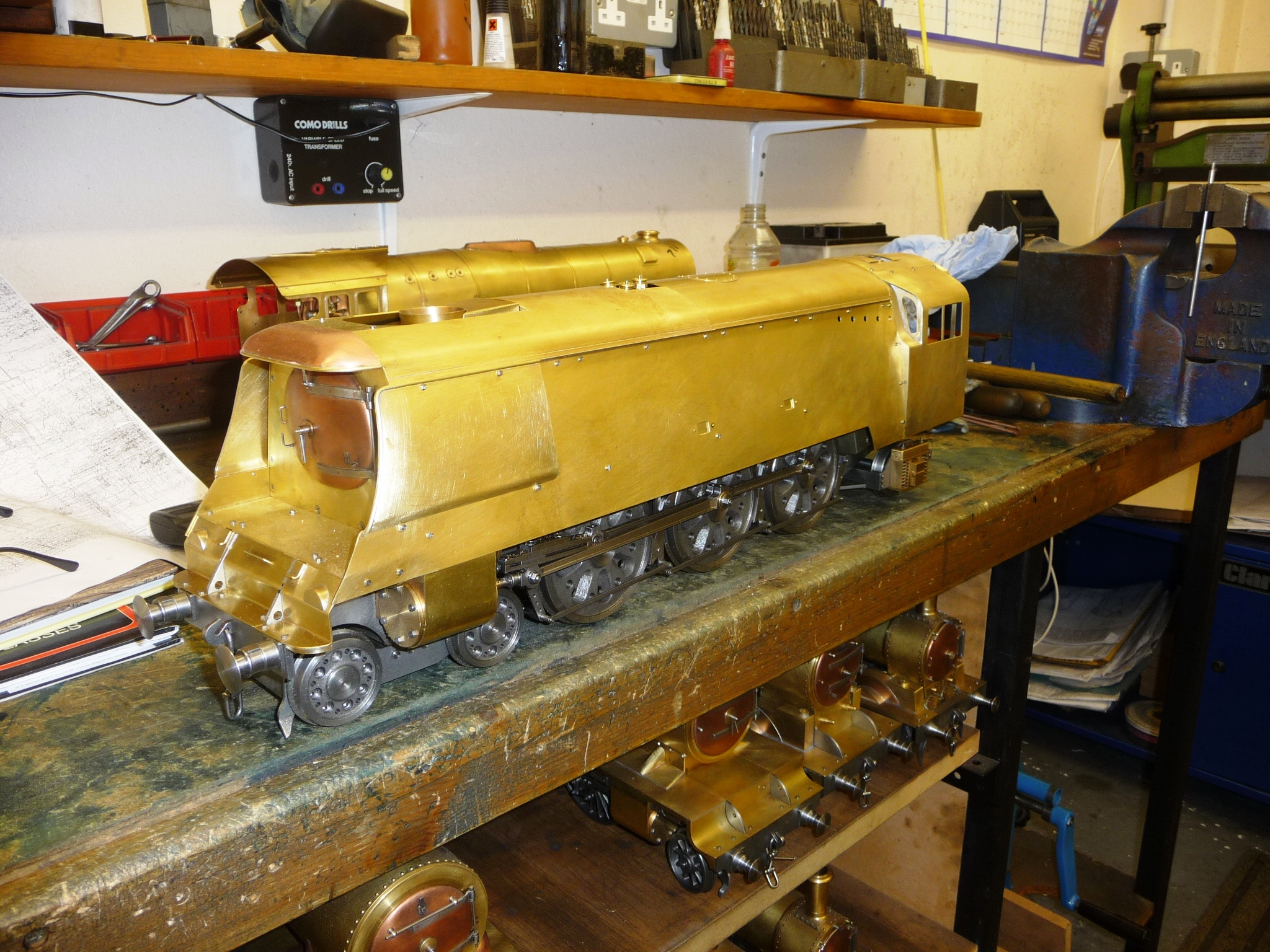
Mike's model of Oliver Bulleid's lighter version of his idiosyncratic Merchant Navy class, the West Country, features two cylinders and slip eccentric valve gear between the frames so as to externally mimic the look of the Bulleid chain drive valve gear--and yet with much more reliable performance! The streamlined, or "air-smoothed" casing is itself worthy of comment.
|
|||||||||||
|
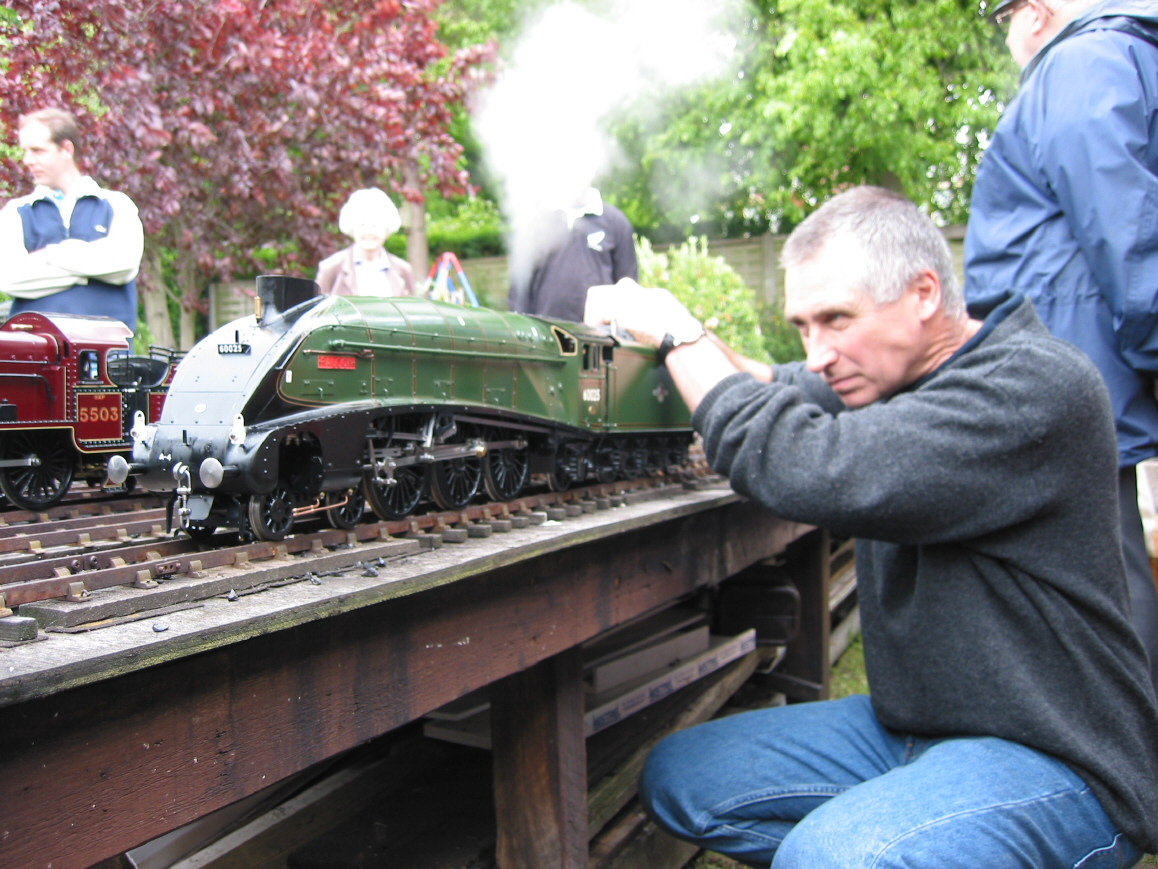
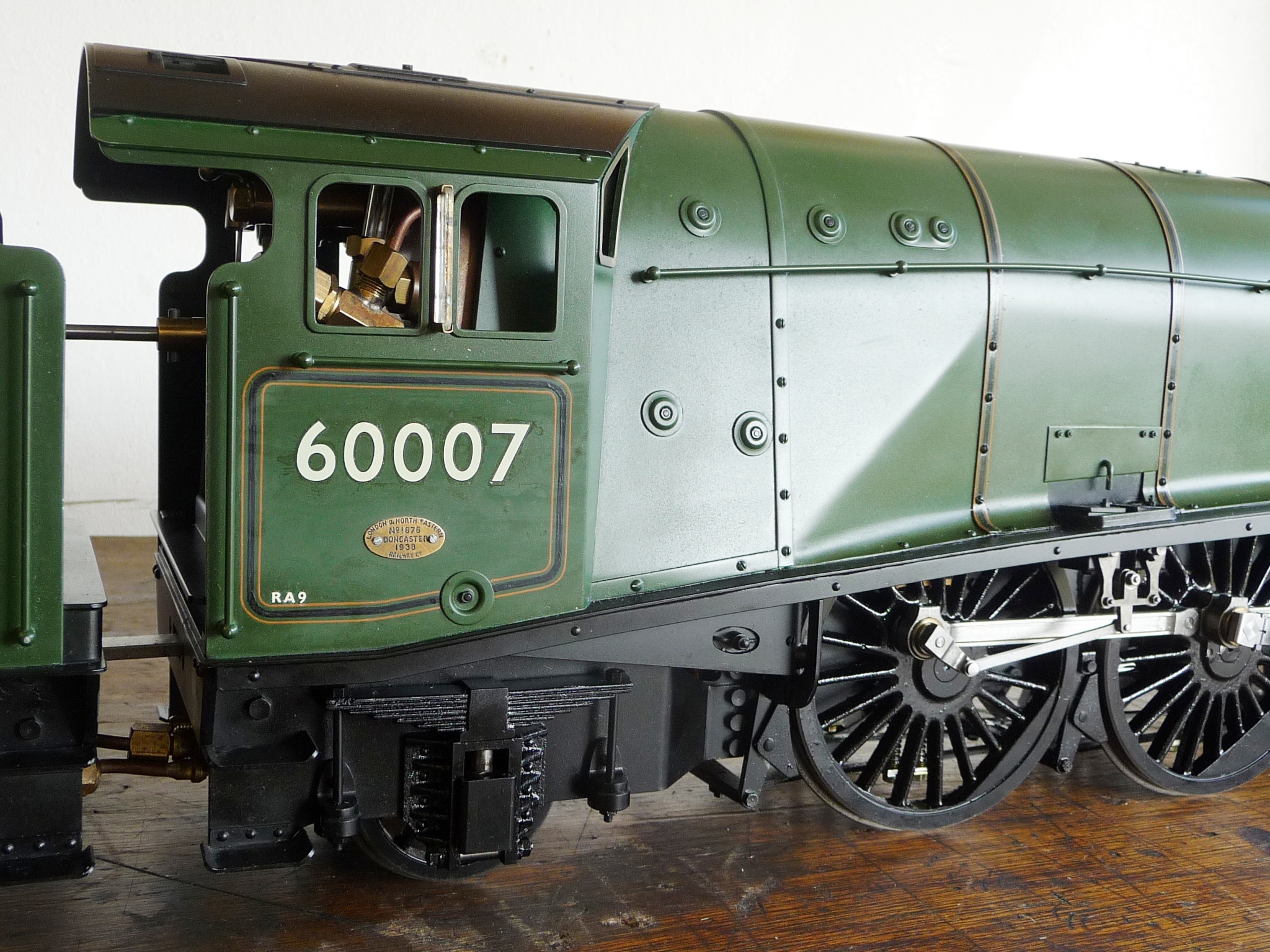
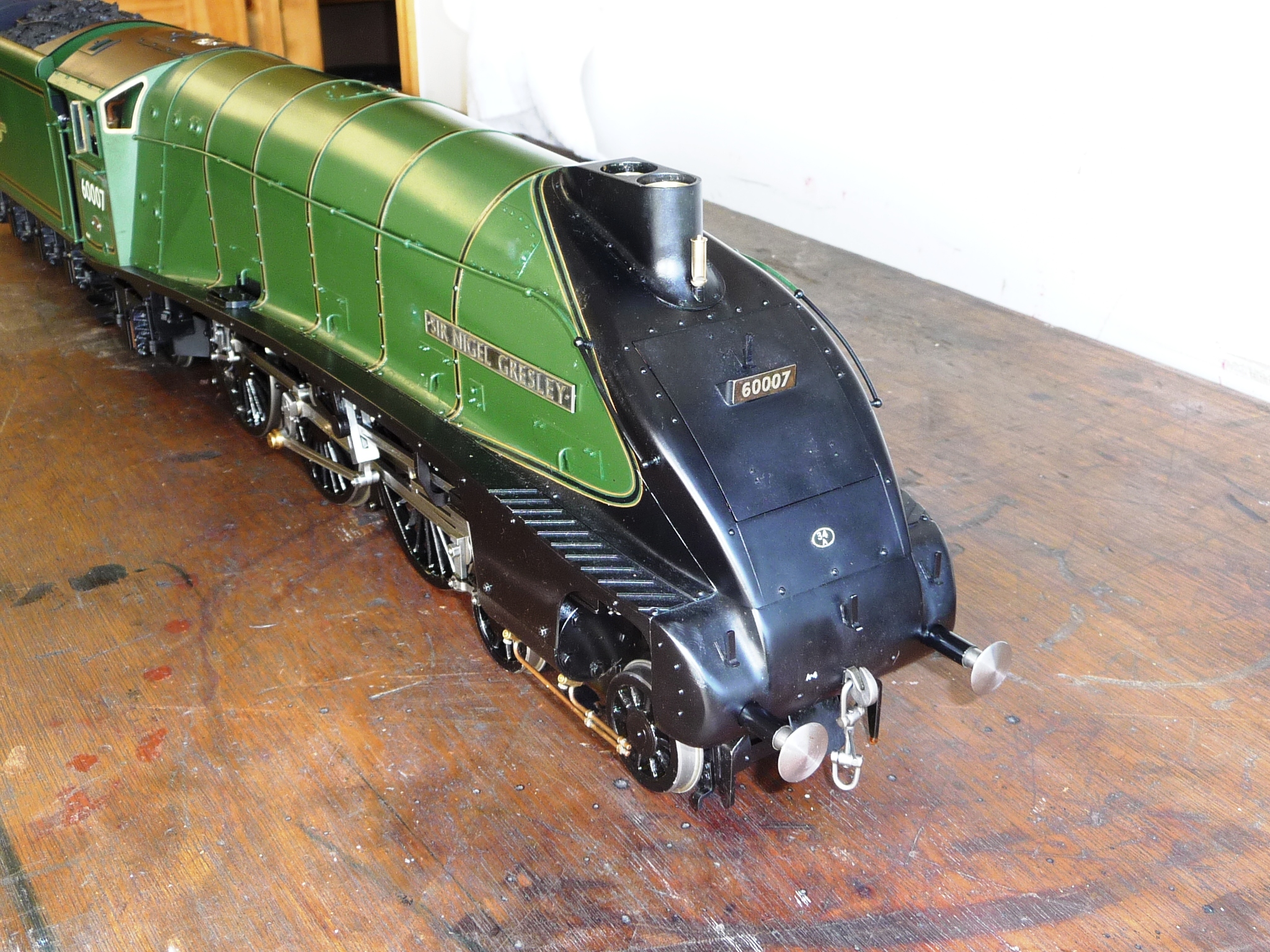
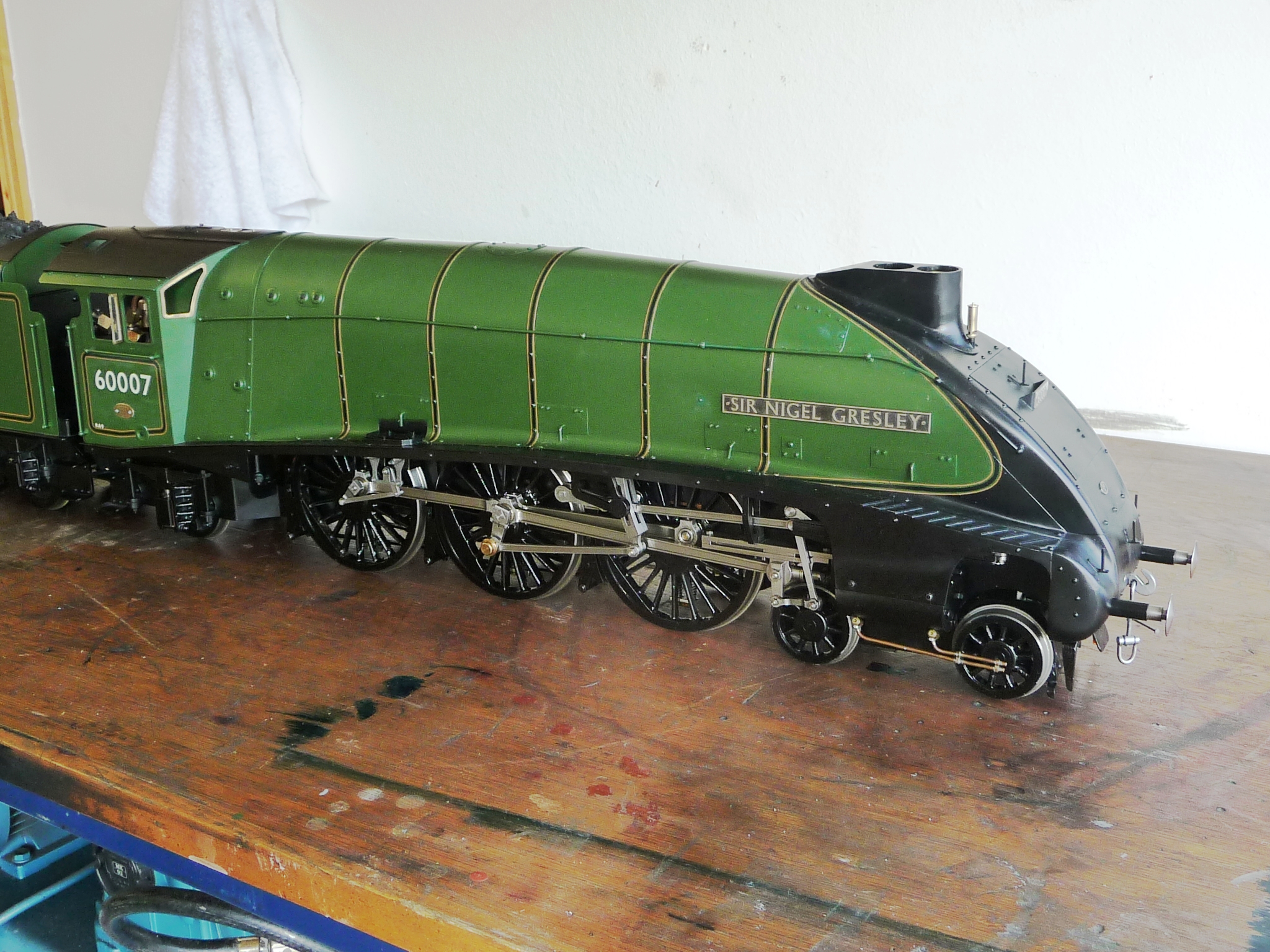
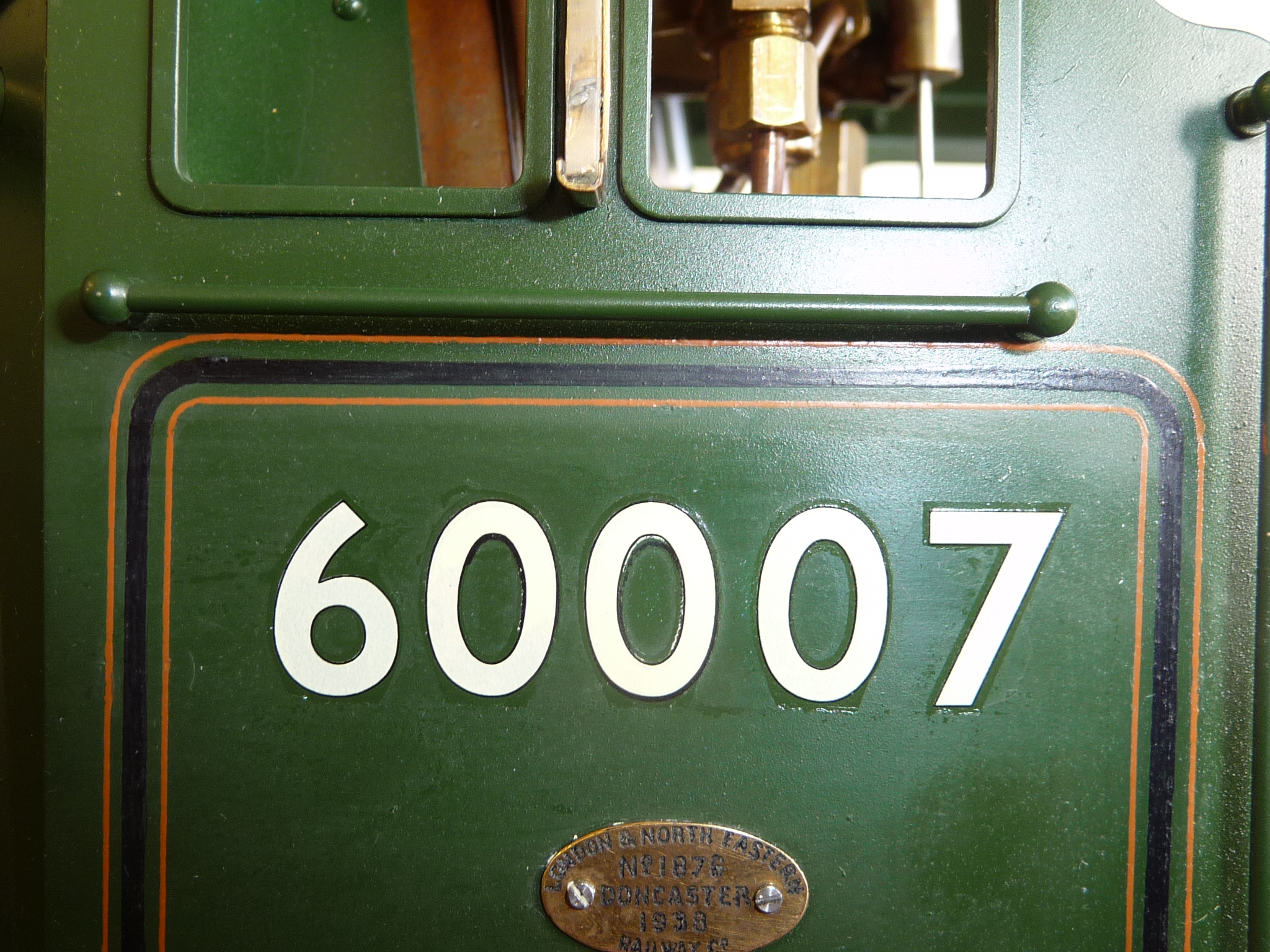
Strictly speaking Mike's model of the Gresley 3 cylinder up-side-down-bathtub streamlined A4 pacific was not part of his 2008-2011 projects. However in 2011 one came back for a servicing, and so here is Sir Nigel Gresley in all his emerald green glory.
|
|||||||||||
|
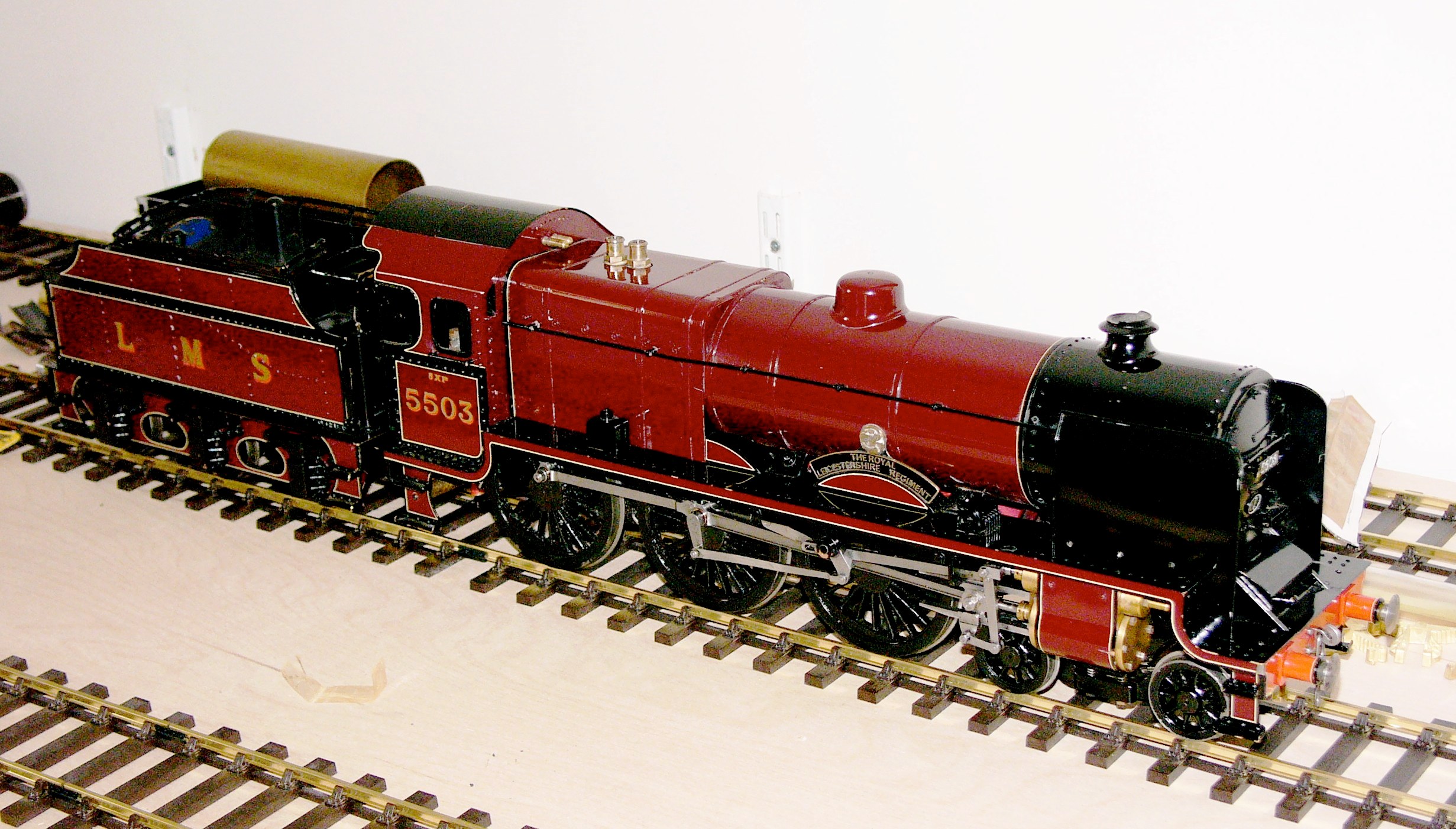
A second engine that returned for servicing in 2011 after 17 years of hard work was the LMS Patriot 4-6-0 that Mike had built in 1994. Here are a few pics of the locomotive with and without its scarlet paint.
|
|||||||||||
|
Three Smaller Locomotives: |
|||||||||||
|
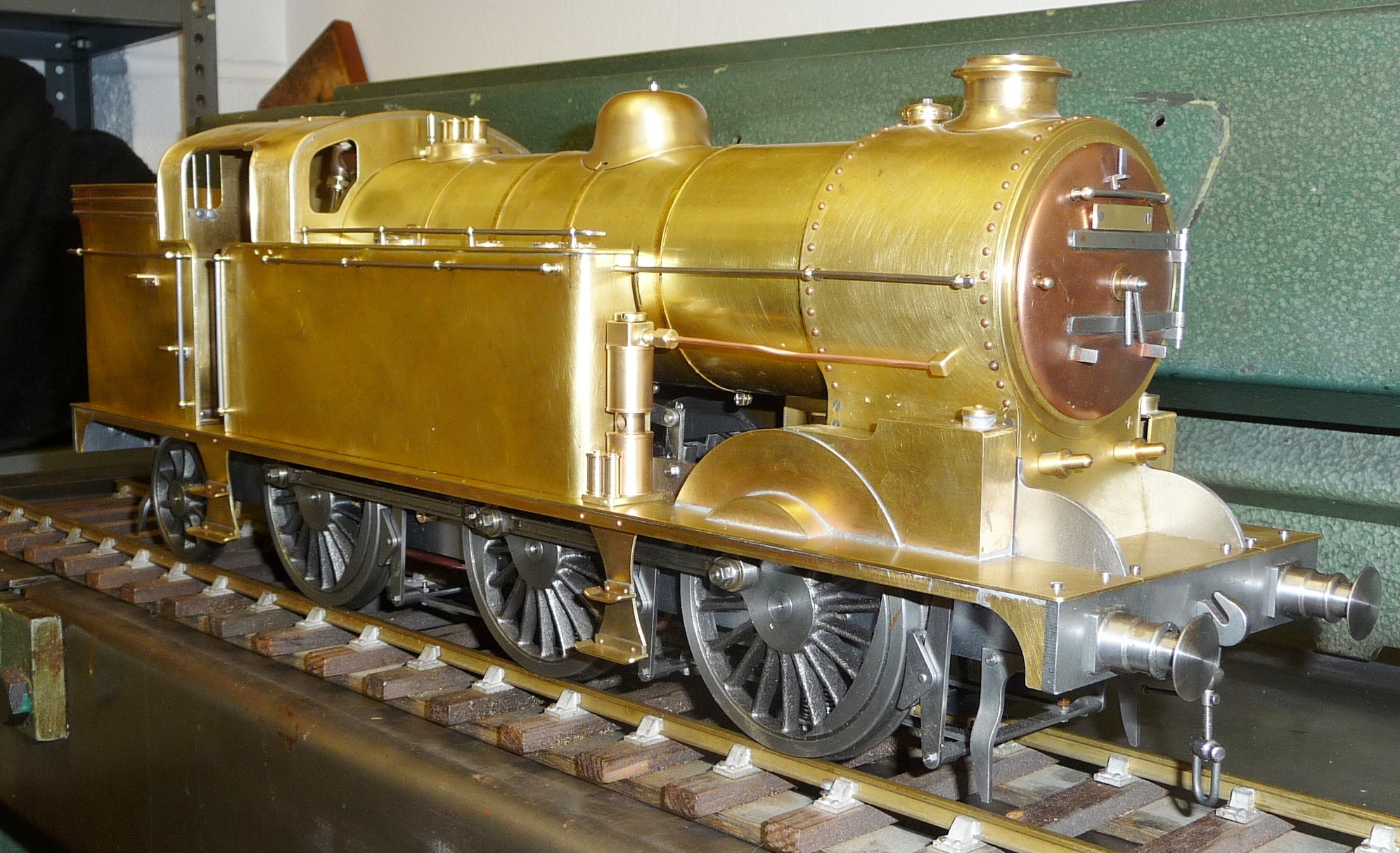
LNER N2 tank 0-6-2
|
LNWR Watford tank 0-6-2
|
LNWR Cauliflower 0-6-0
|
|||||||||
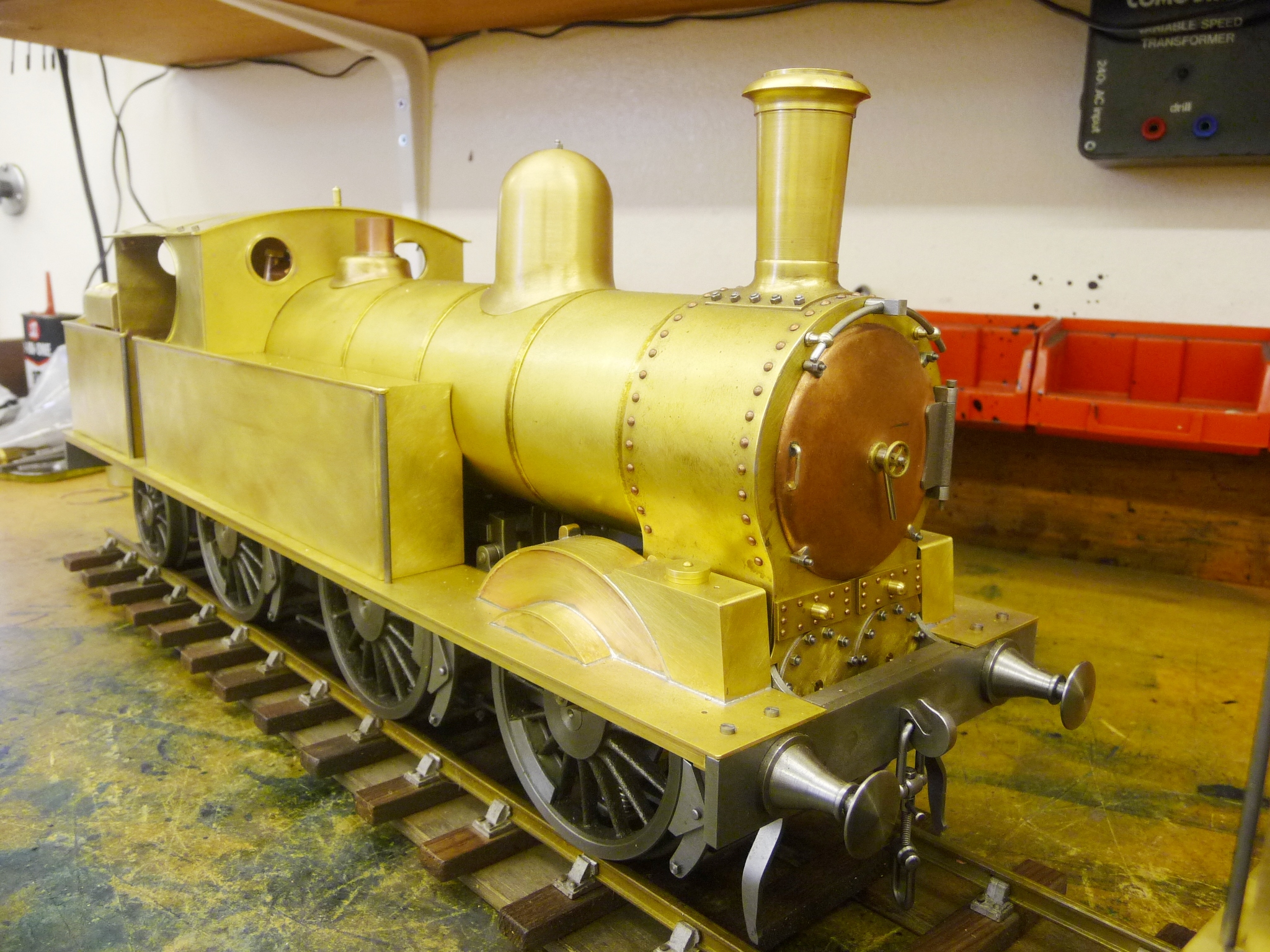
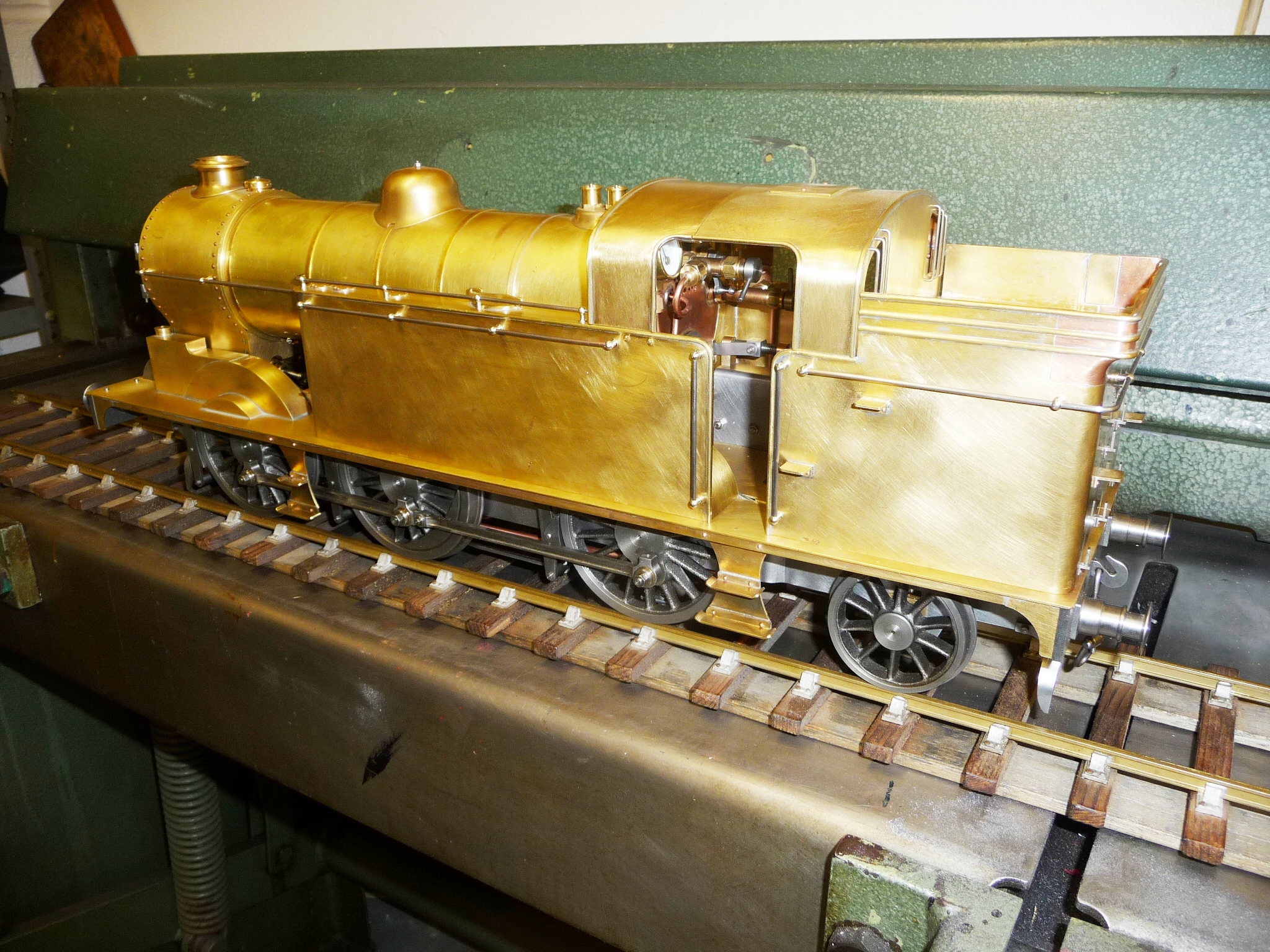
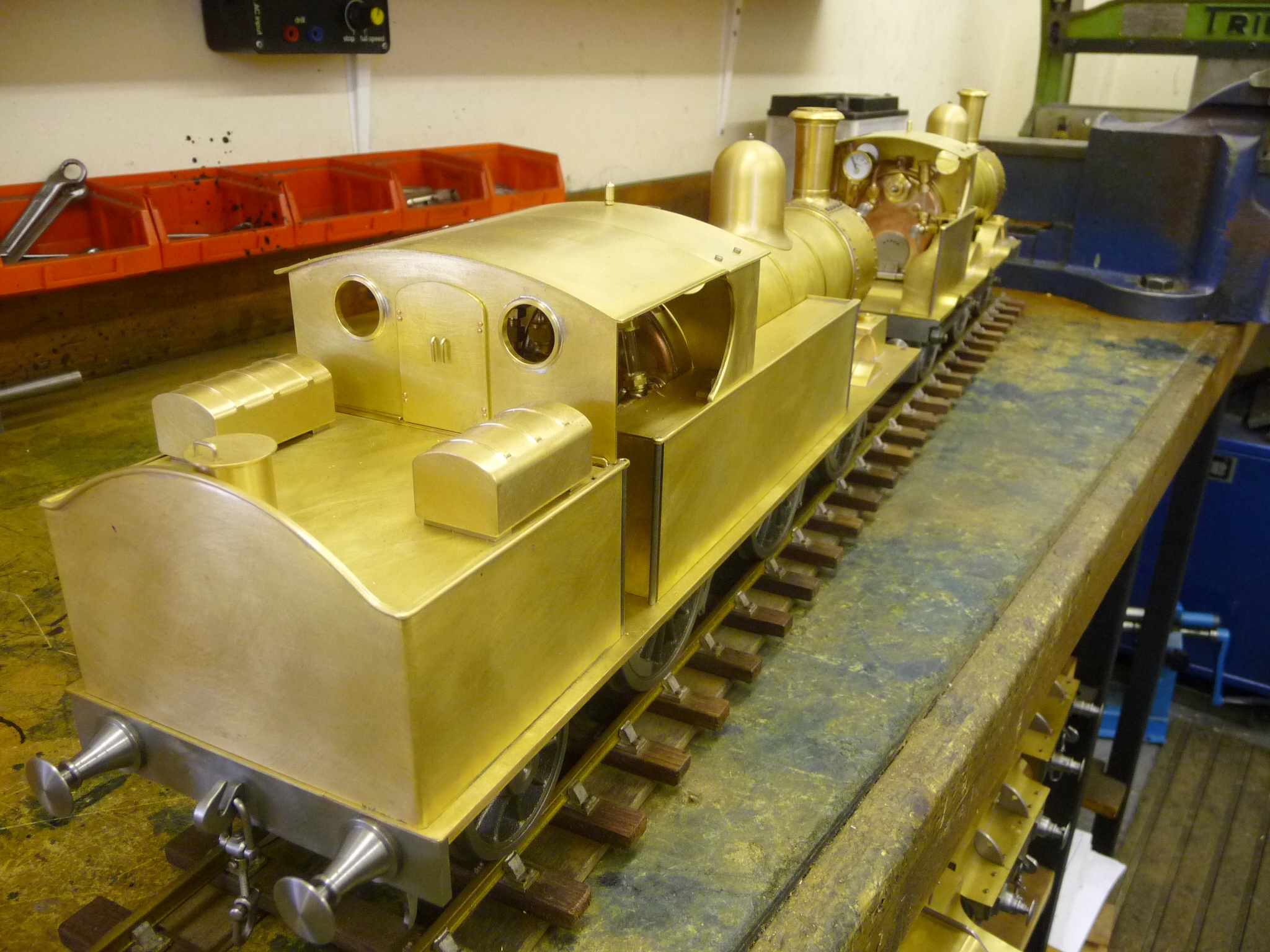
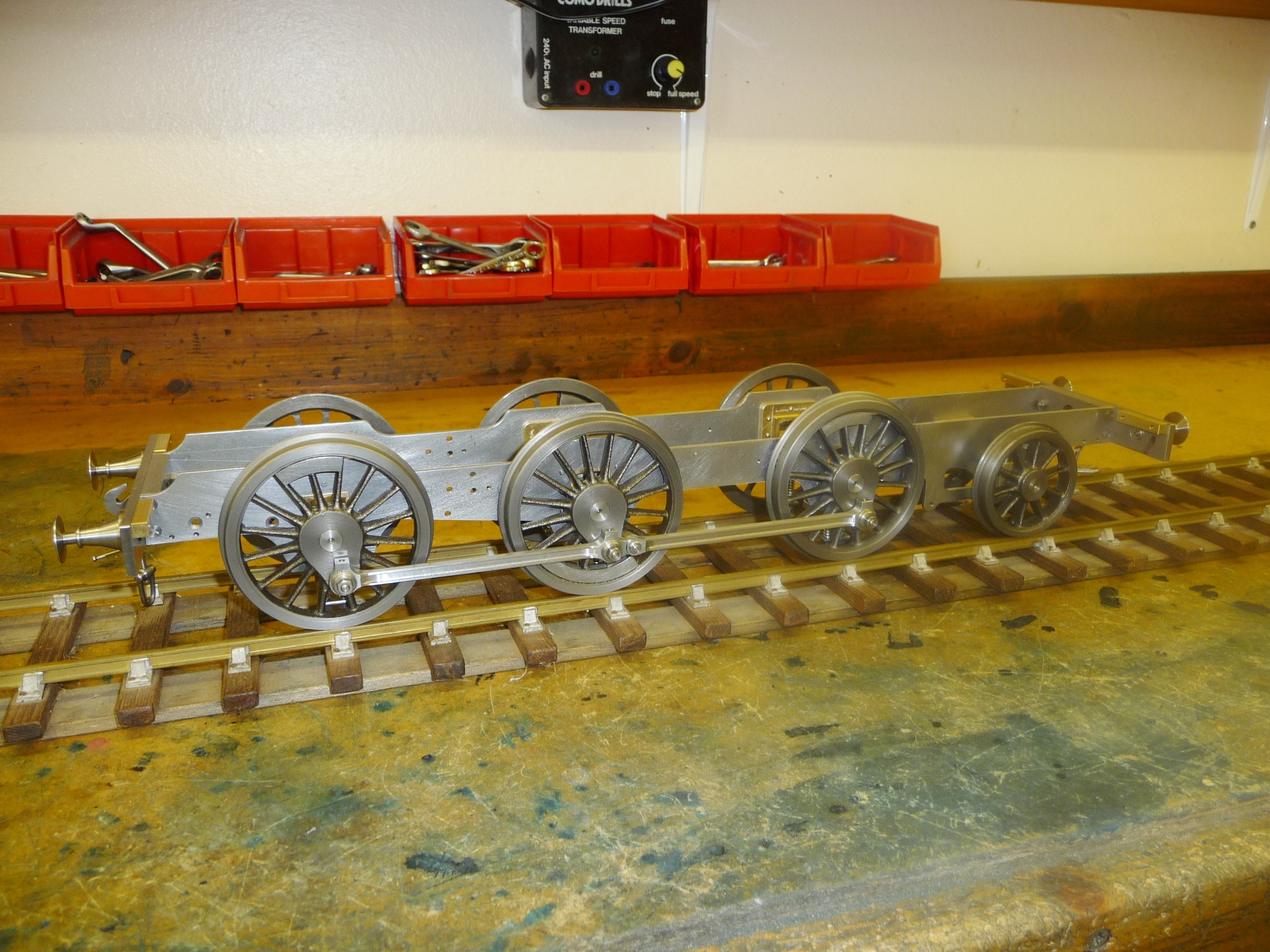
 |
|||||||||||
| The Gauge 3 Locomotives of Mike Pavie -- A Complete Listing (as of August 2011) | |||||||||||
|
Year |
Prototype | Class | Name / Engine No. |
No. of Models |
Remarks: All locomotives are fitted with slide valve cylinders unless otherwise stated. |
Photos |
|||||
| 1994 | LMS 4-6-0 | Patriot | Leicester Regiment #5503 | 1 | Coal fired, 3 cylinders, 3 sets Walschaerts valve gear |
 |
|||||
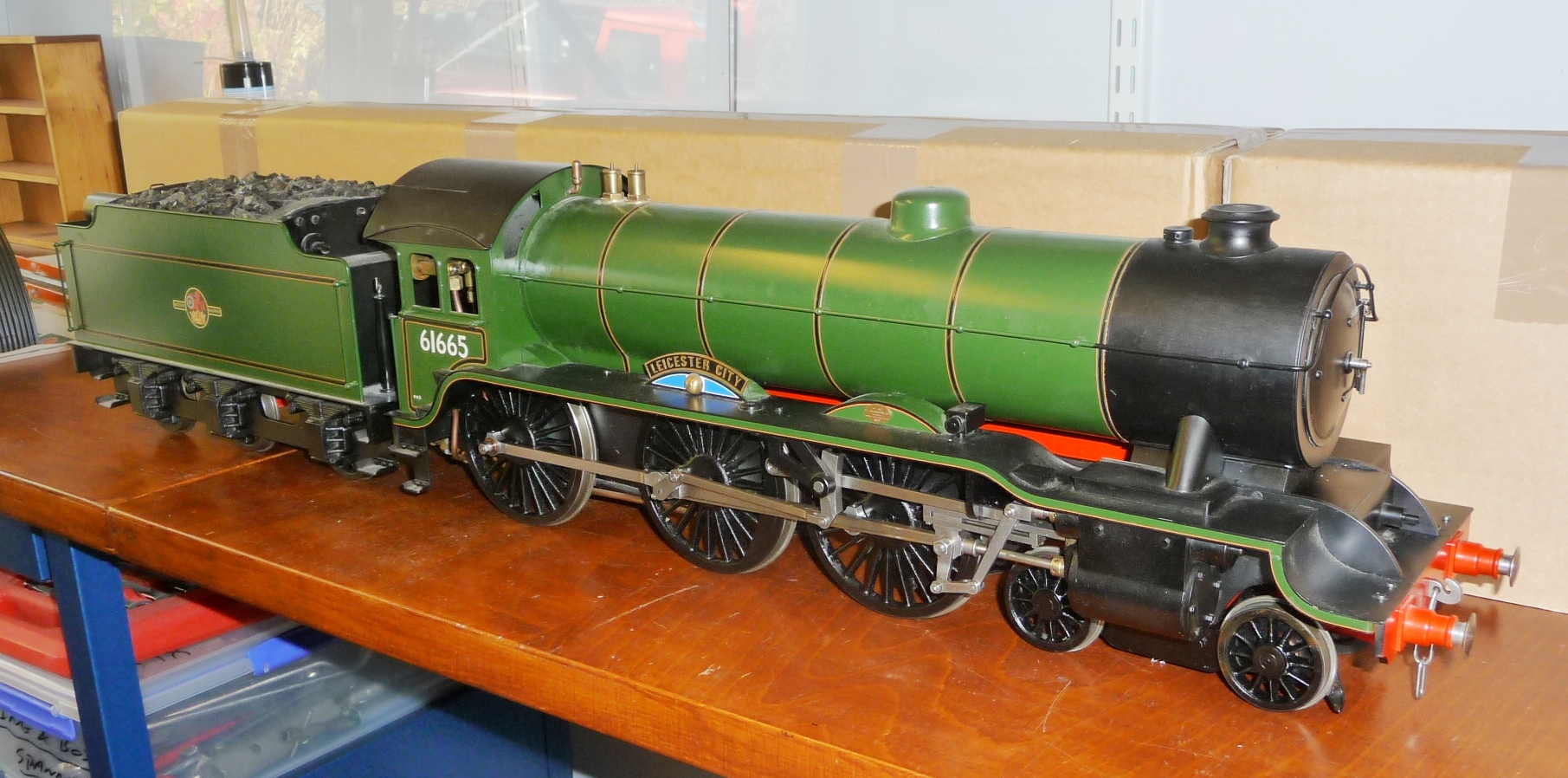
| 1995 | LNER 4-6-0 | B17 | Leicester City | 1 | Coal fired, 2 cylinders, Walschaerts valve gear |
 |
|||||
| 1995 | LMS 4-6-0 | Deeley | 999 | 1 | Coal fired, 2 inside cylinders, Joy valve gear | ||||||
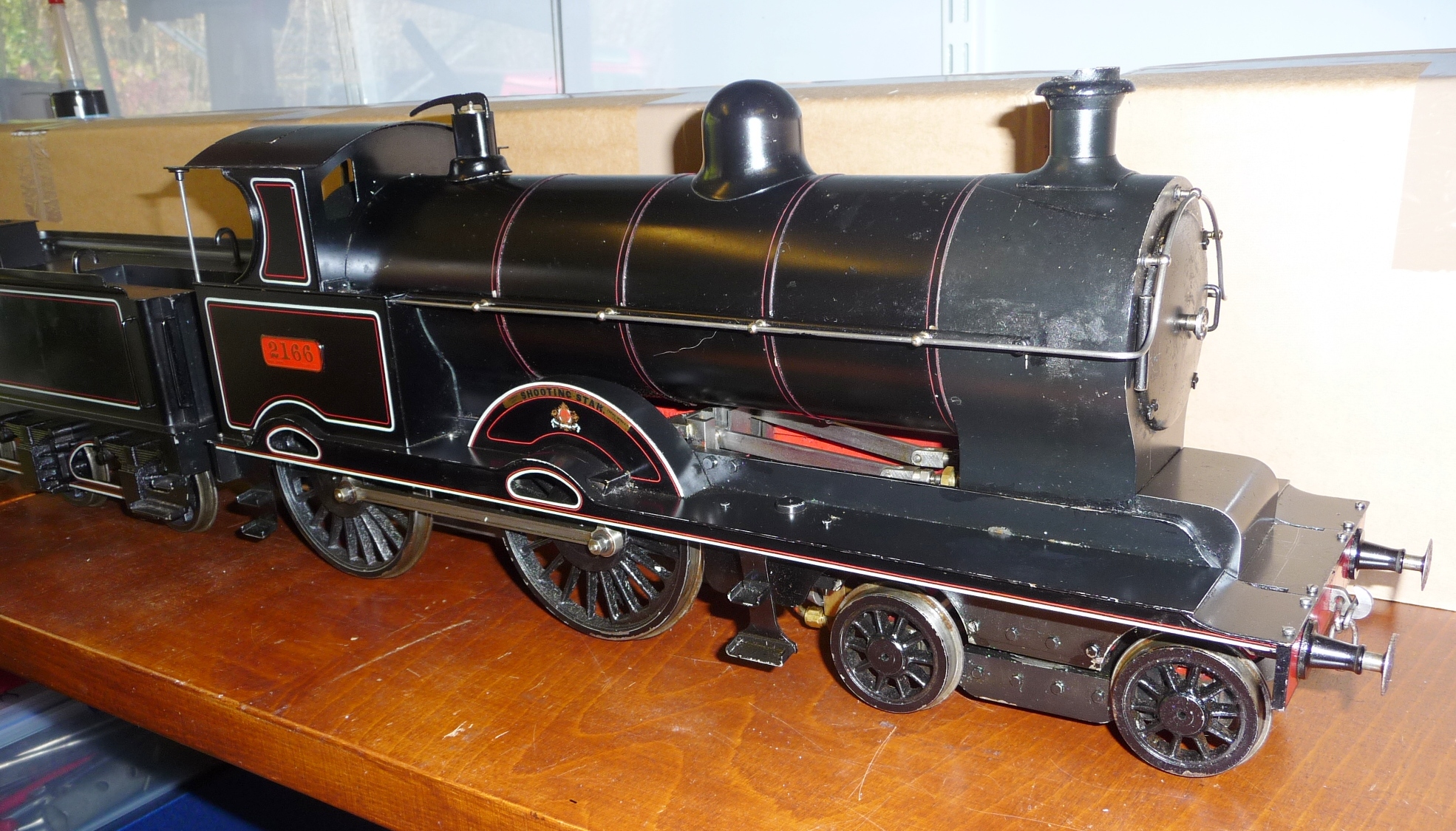
| 1995 | LNWR 4-4-0 | Precursor | Shooting Star | 1 | Coal fired, 2 inside cylinders, Joy valve gear |
 |
|||||
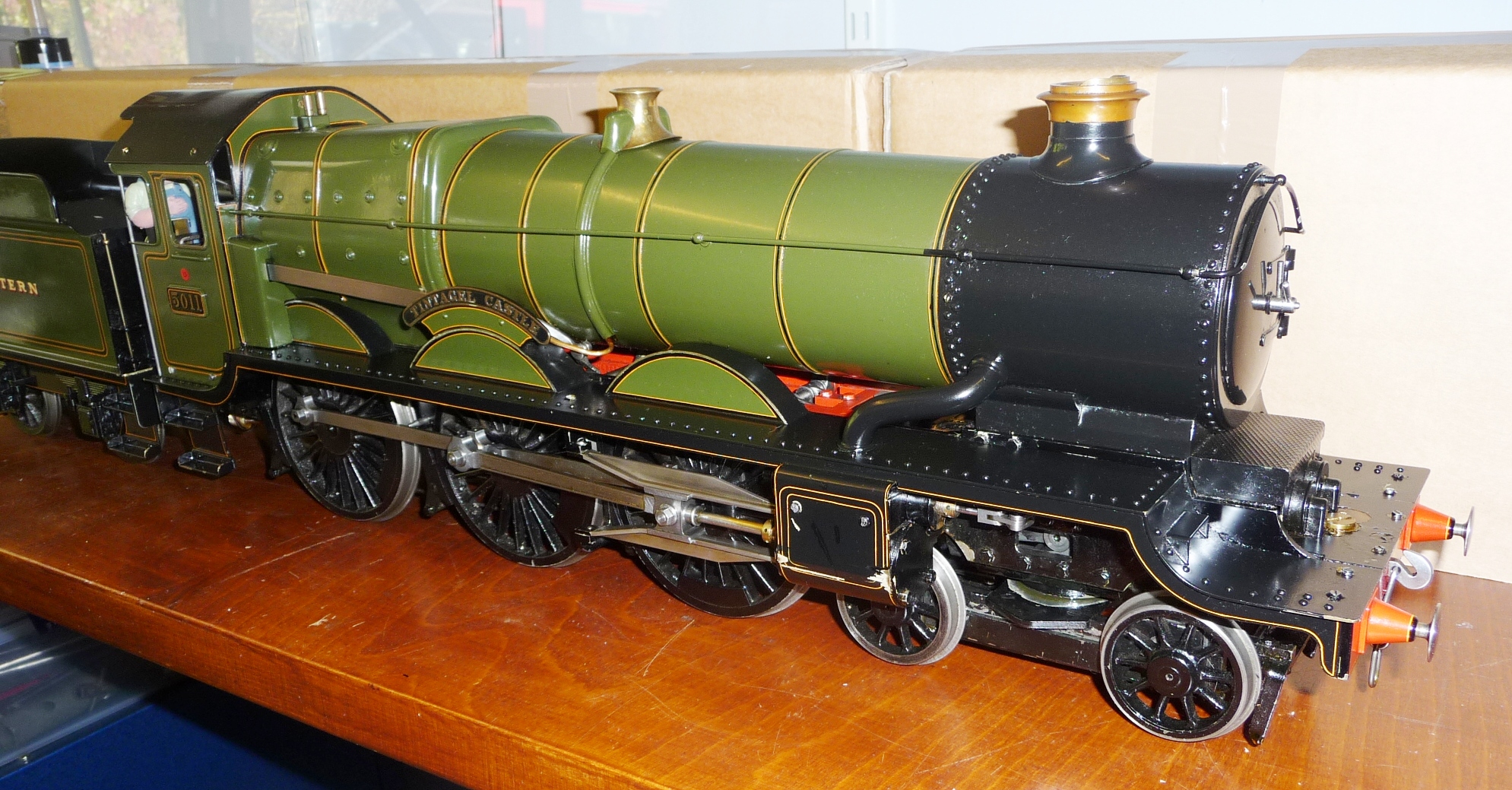
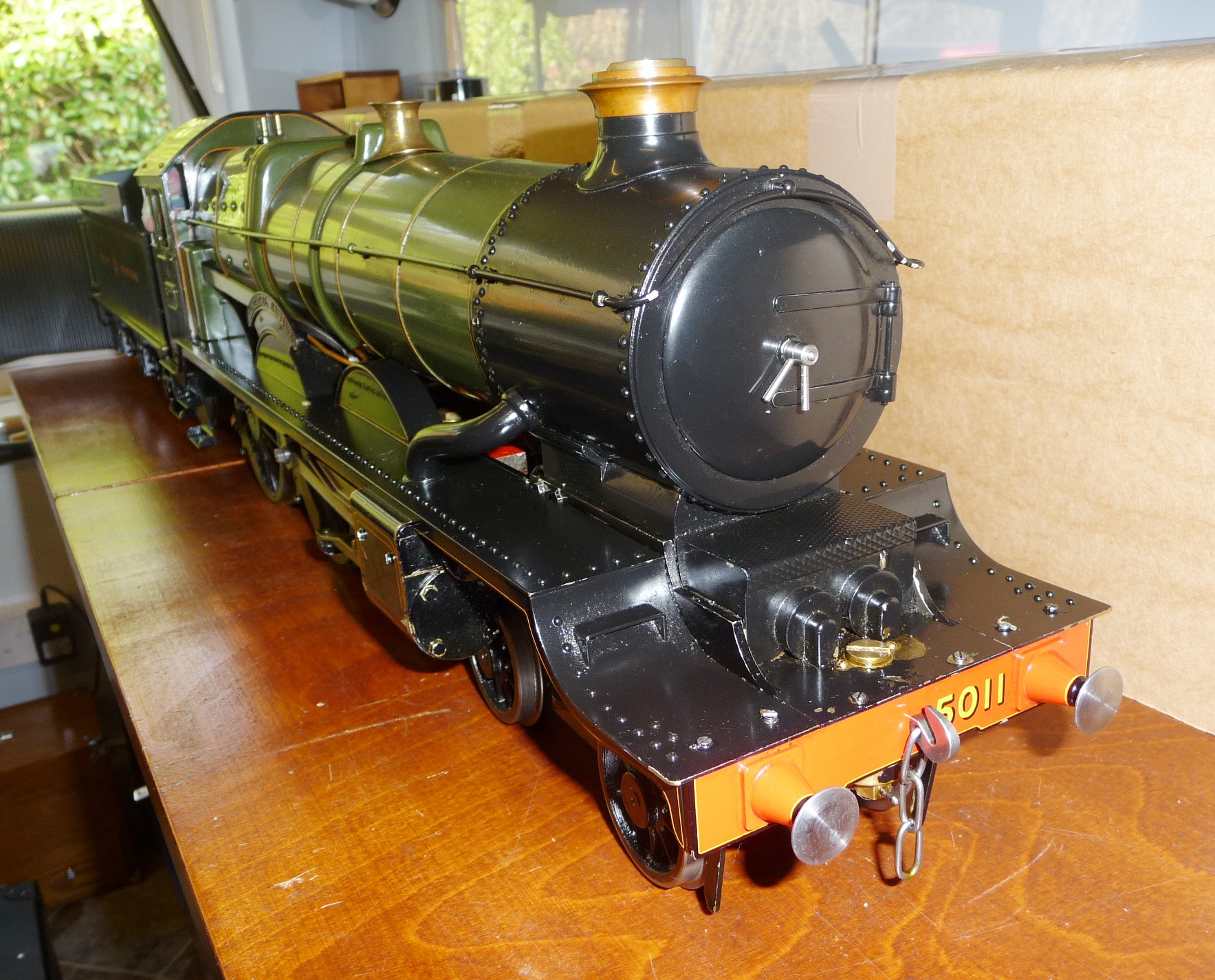
| 1996 | GWR 4-6-0 | Castle Class |
Earl of Plymouth & Tintagel Castle |
2 | Coal fired, 4 cylinders, 2 sets Walschaerts valve gear |
 |
|||||
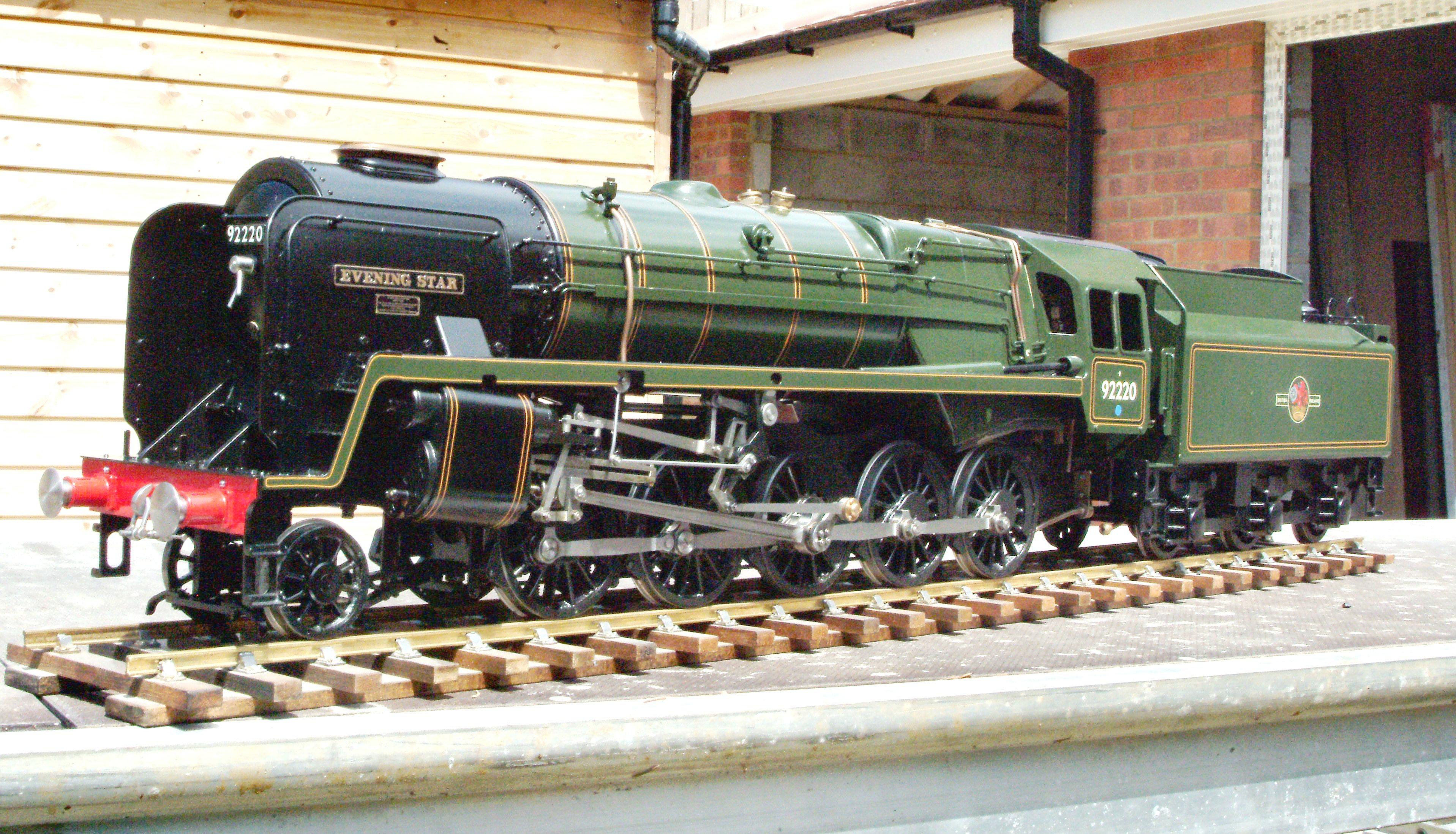
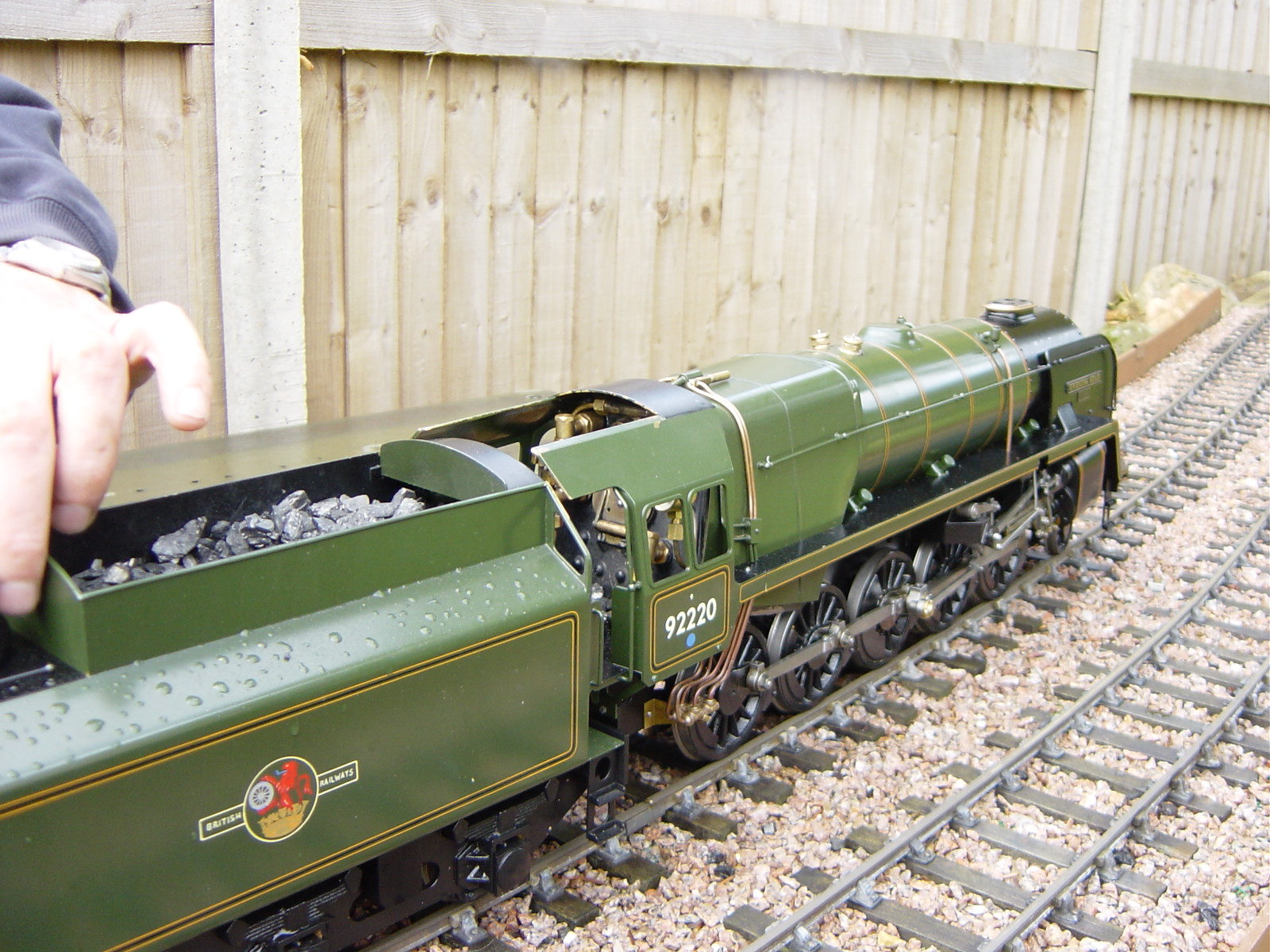
| 1998 |
BR 2-10-0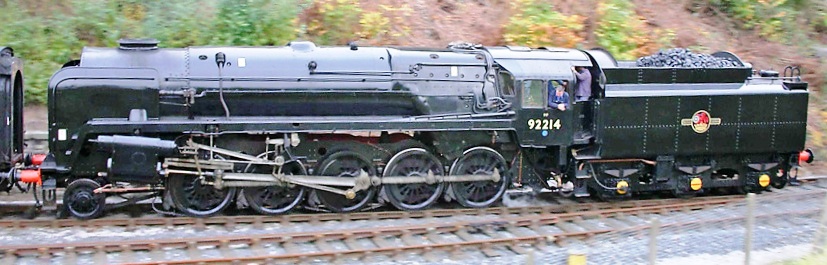 |
Riddles 9F |
Evening Star & unnamed |
2 | Coal fired, 2 piston valve cylinders , Walschaerts valve gear |
 |
|||||
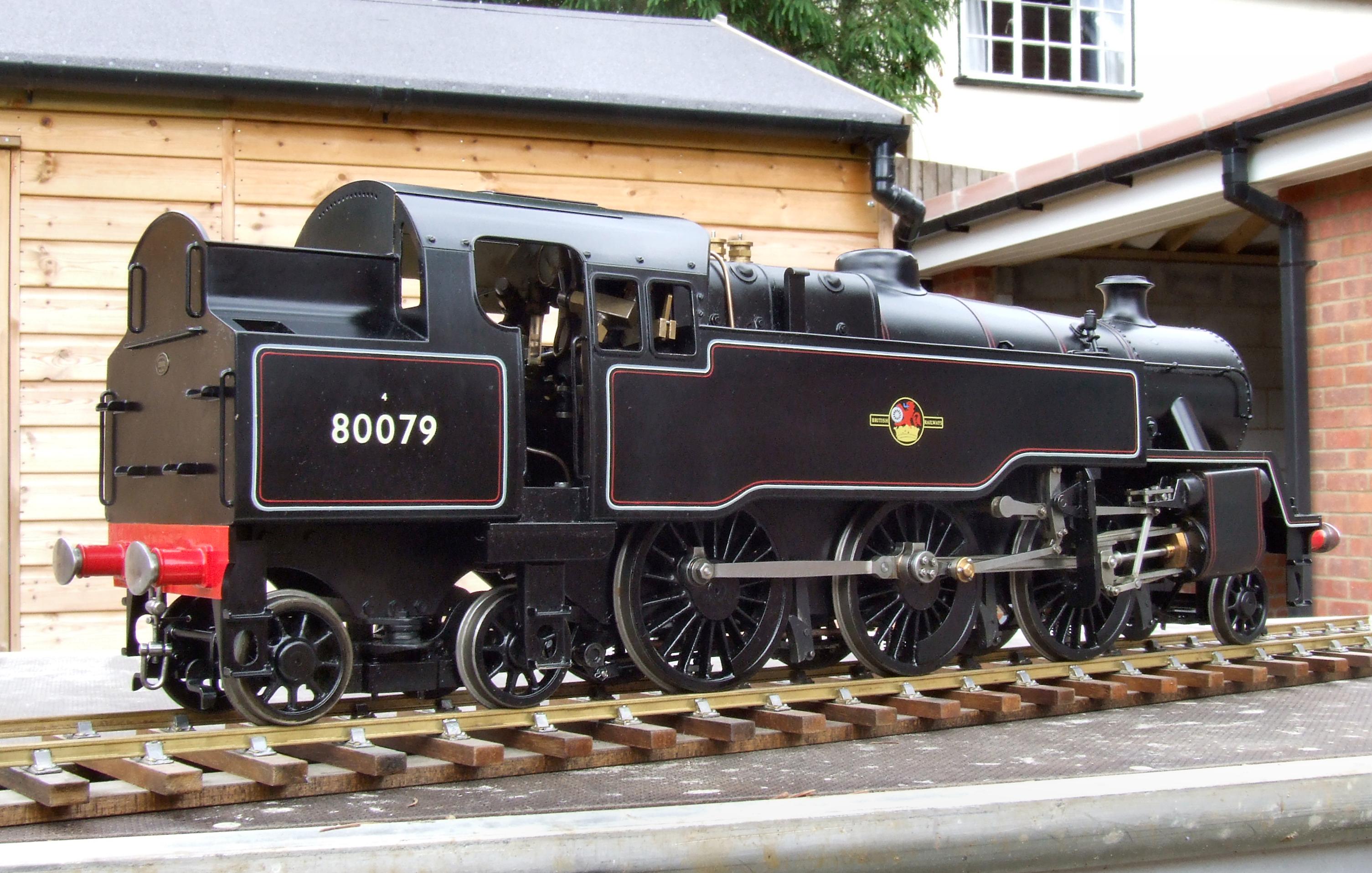
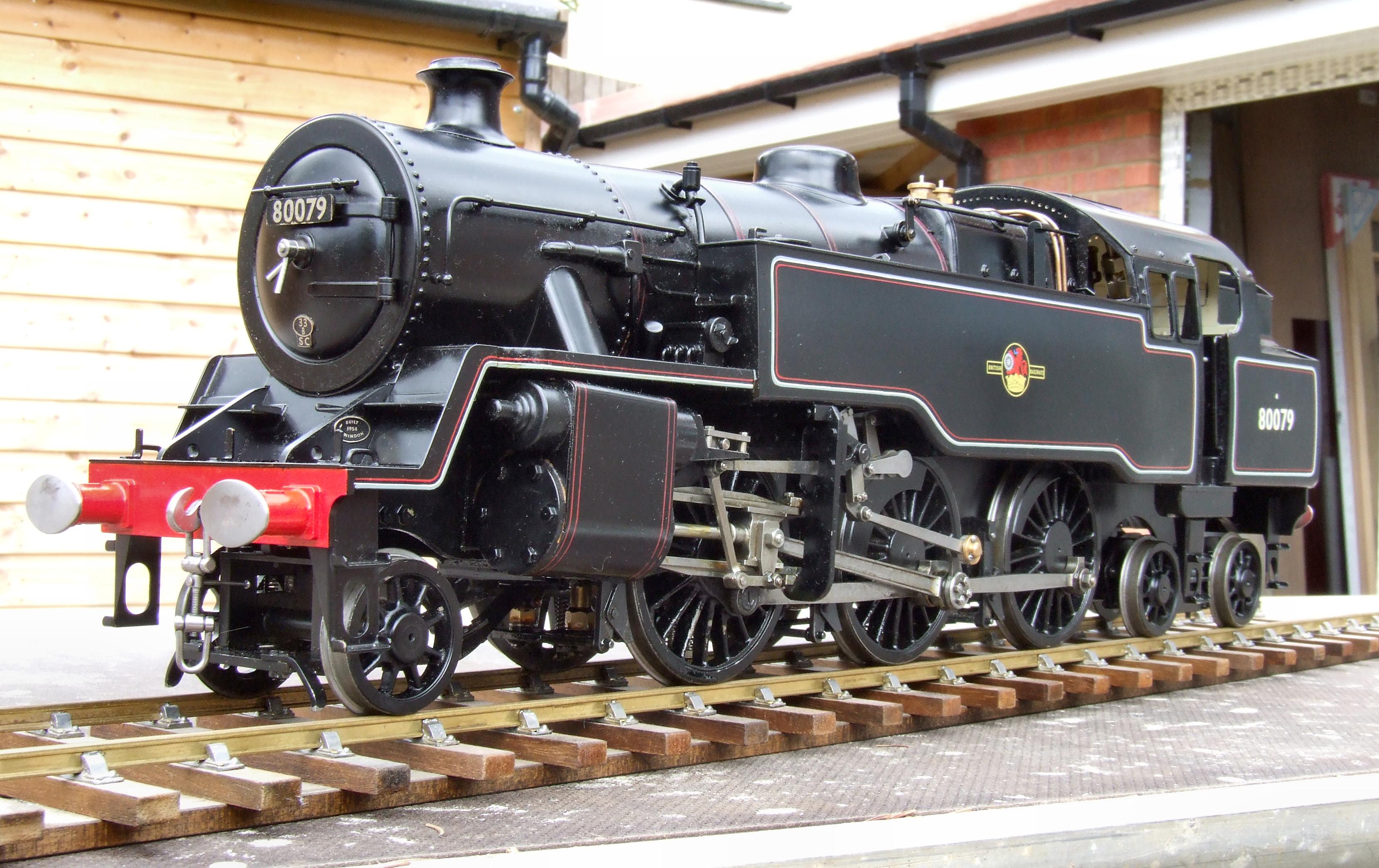
| 1999 | BR 2-6-4 | 4MT Standard Tank | (no #) | 1 | coal fired, 2 cylinders, Walschaerts valve gear |
 |
|||||
| 2002 |
LNER 4-6-2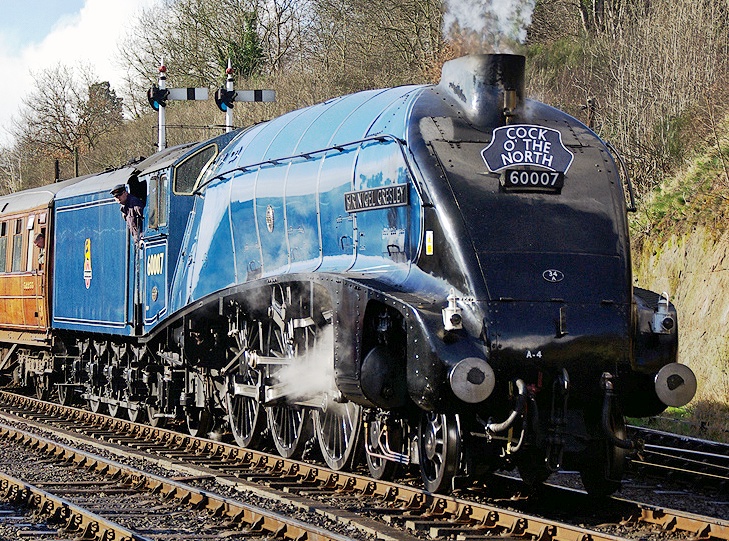 |
Gresley A4 |
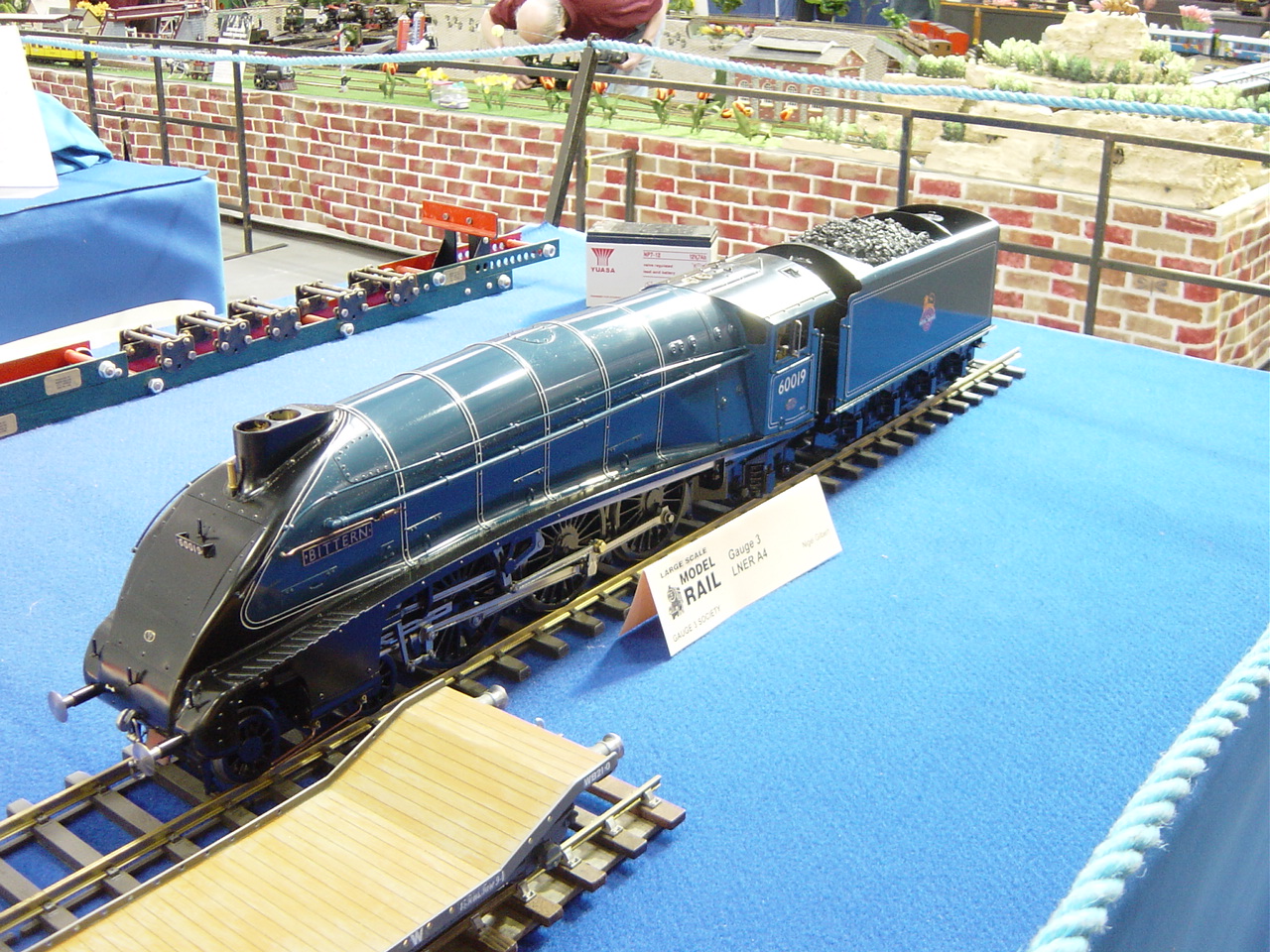
Bittern #60019 Falcon #60025 Sir Nigel Gresley #60007 |
3 | Gas fired, 3 cylinders, Walschaerts / Gresley Holcroft valve gear |
 |
|||||
| 2004 |
LNER 4-6-2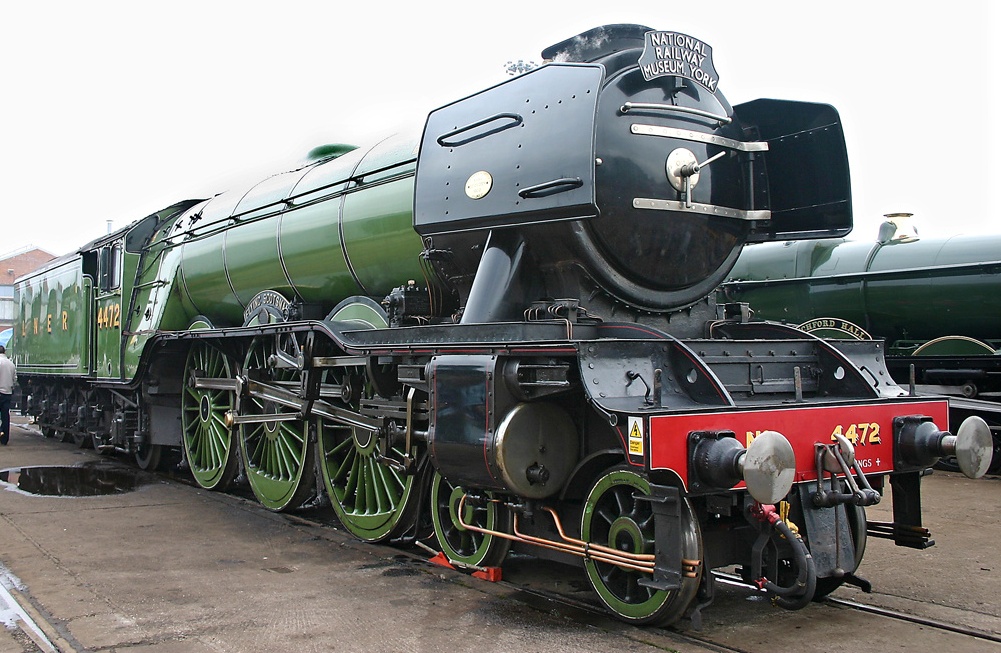
|
Gresley A3 |
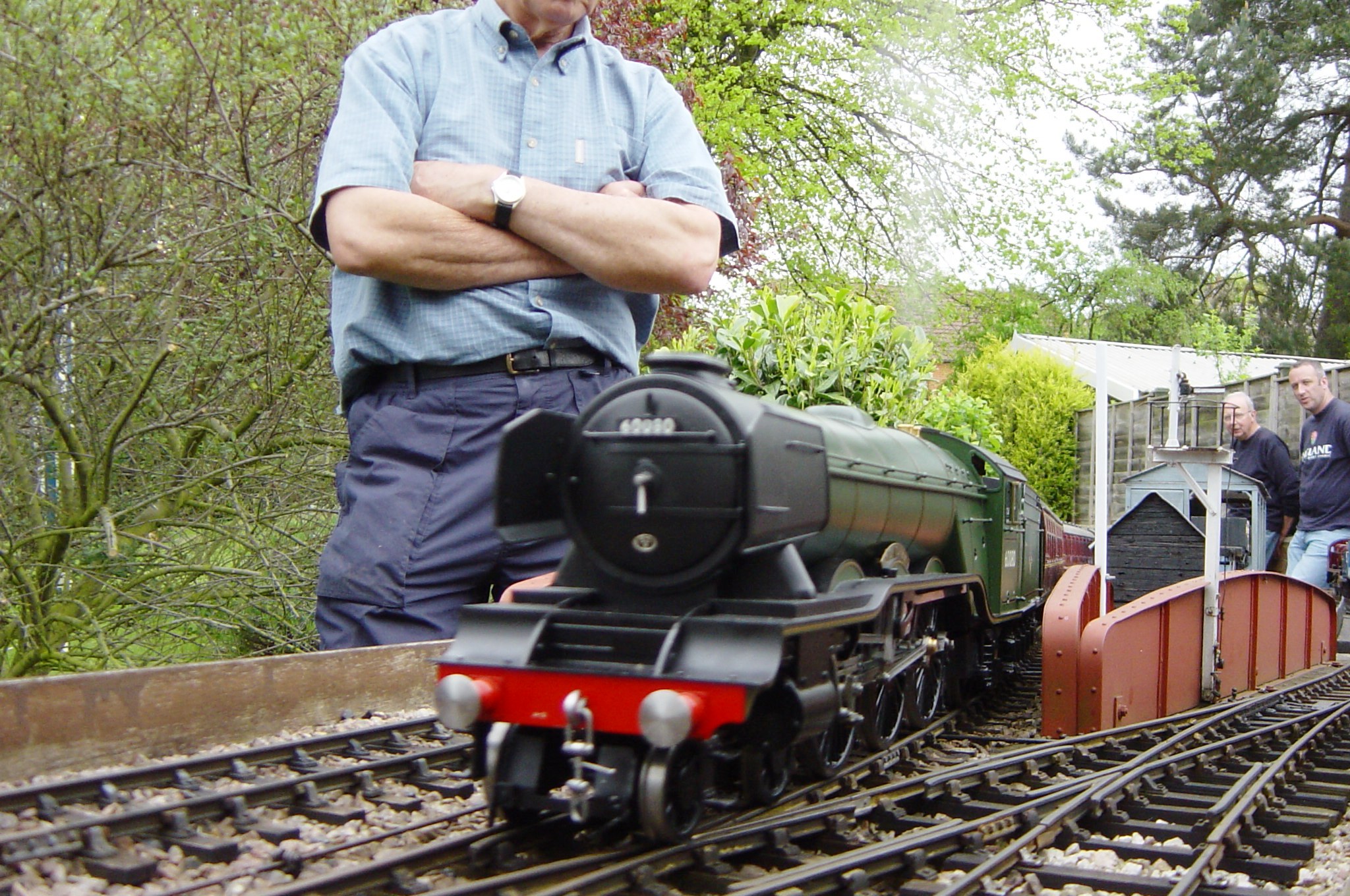
Flying Scotsman #4472 Flying Fox #? Dick Turpin #? |
3 | Coal fired, 3 cylinders, Walschaerts / Gresley Holcroft valve gear |
 |
|||||
| 2004 |
LNER 4-6-2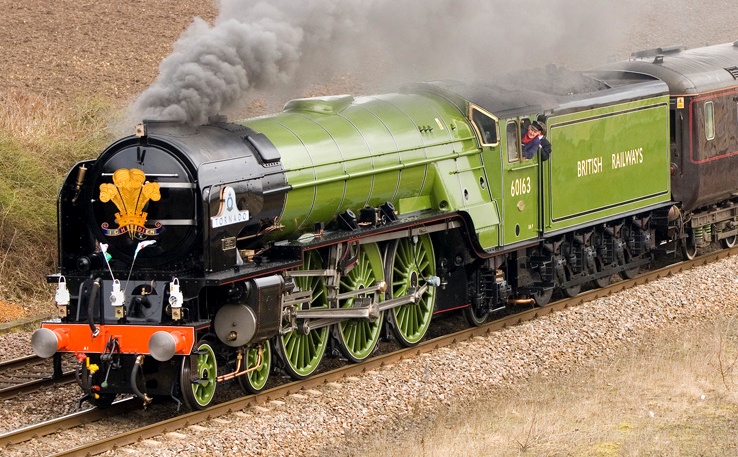
|
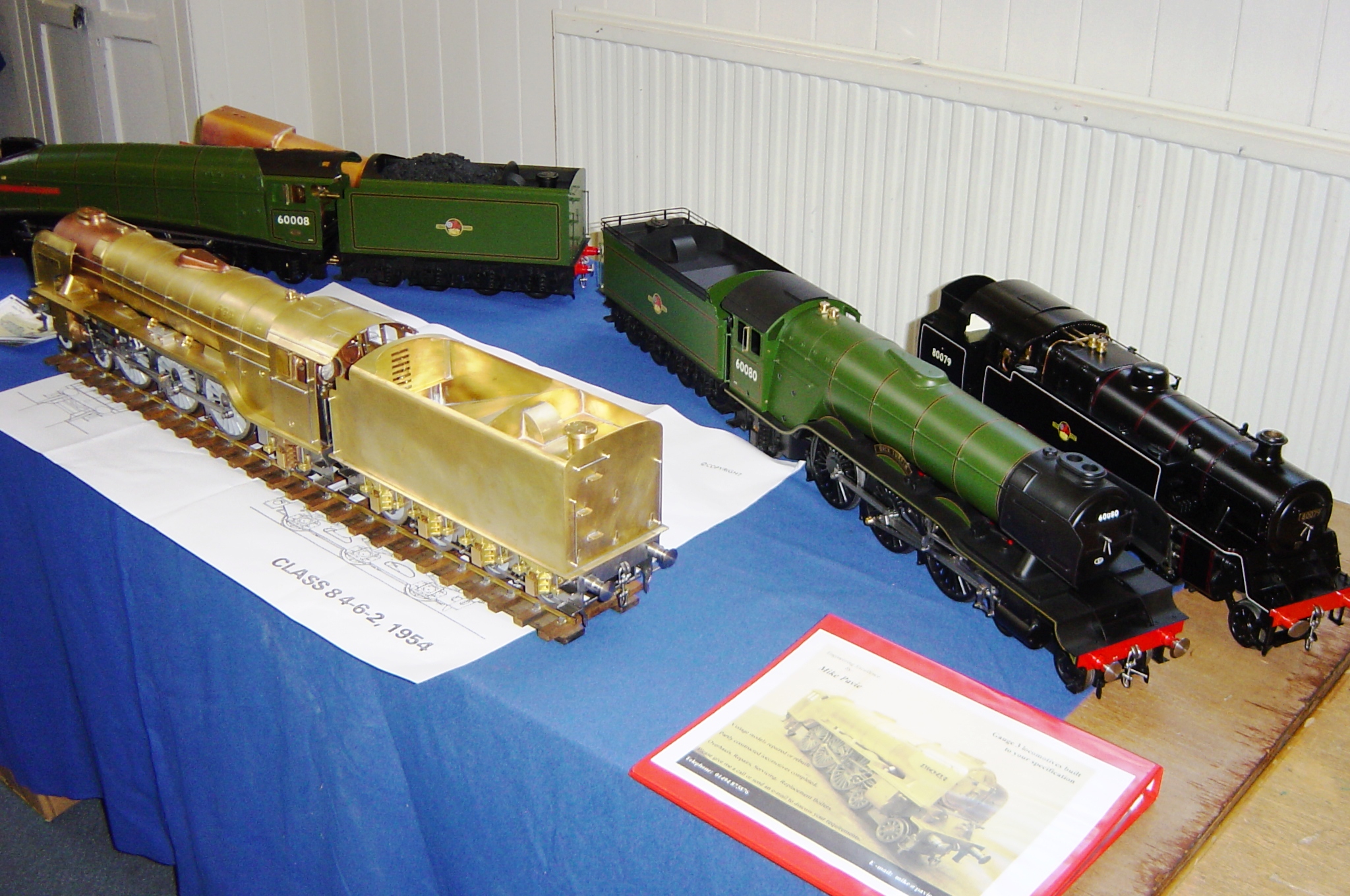
Peppercorn A1 | Alcazar #60136 | 1 | Coal fired, 3 cylinders, Walschaerts / slip eccentric valve gear |
 |
|||||
| 2005 | LNER 0-6-0 | J94 Hunslet Austerity |
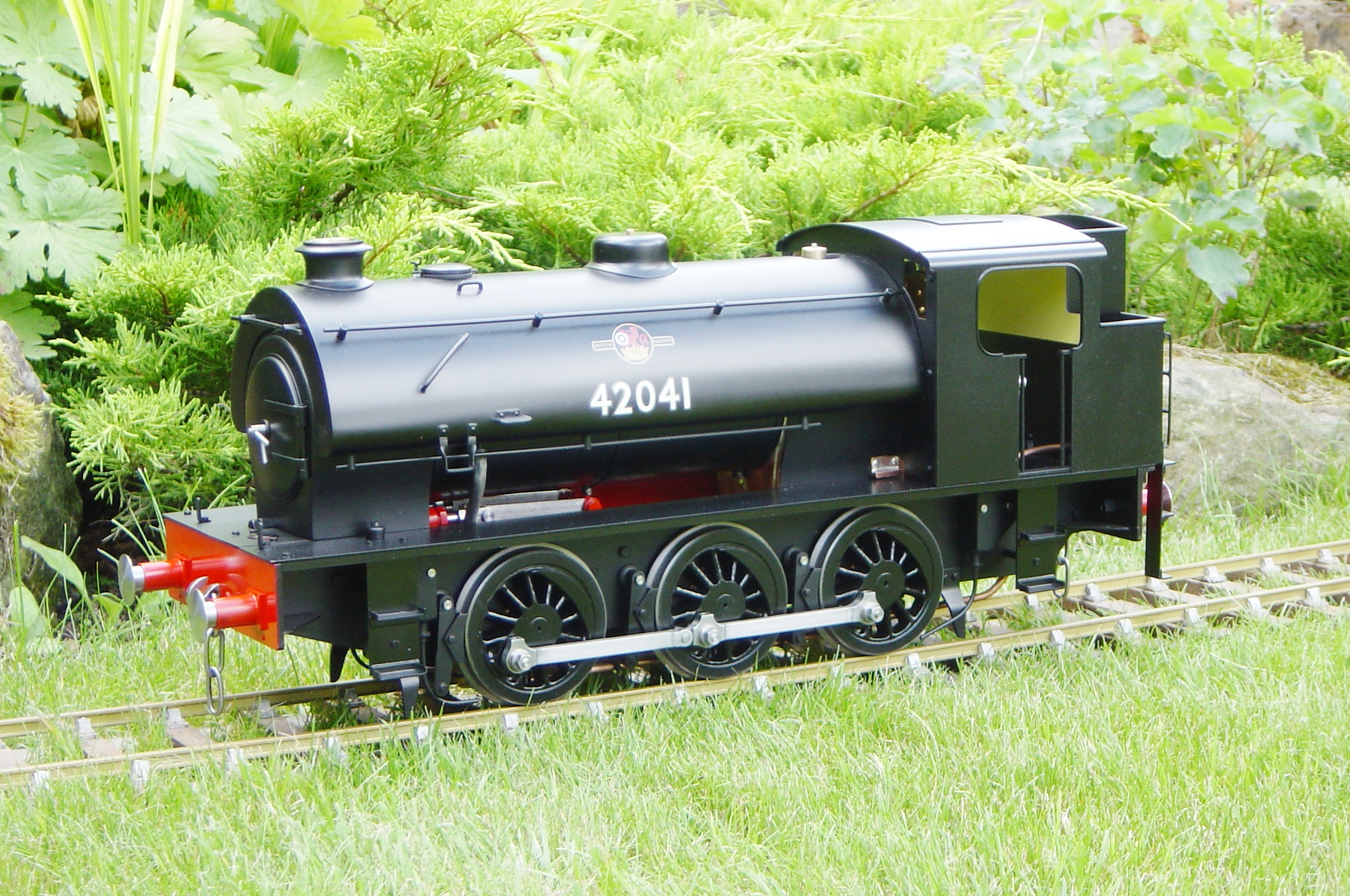
Bridget & #42041 |
2 | Coal fired, 2 inside cylinders, slip eccentric valve gear |
 |
|||||
| 2008 |
SR 4-6-2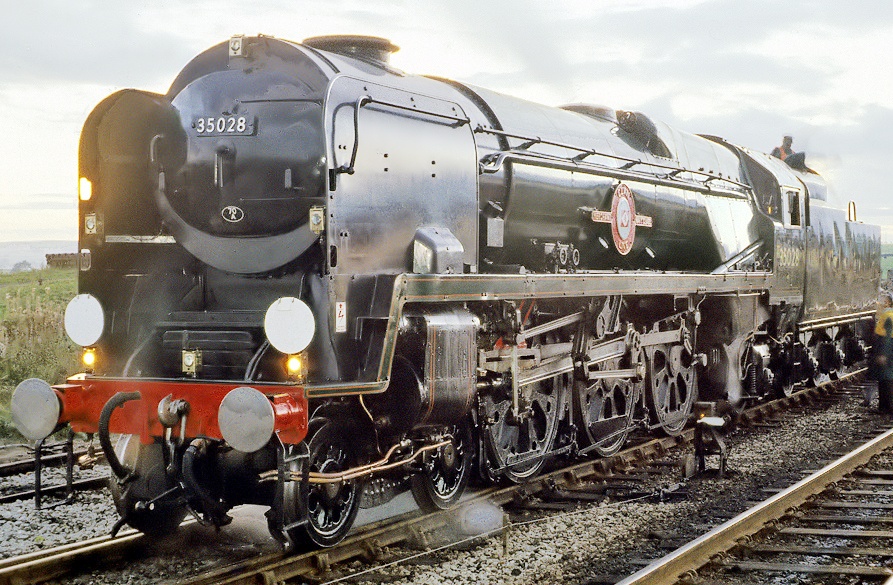
|
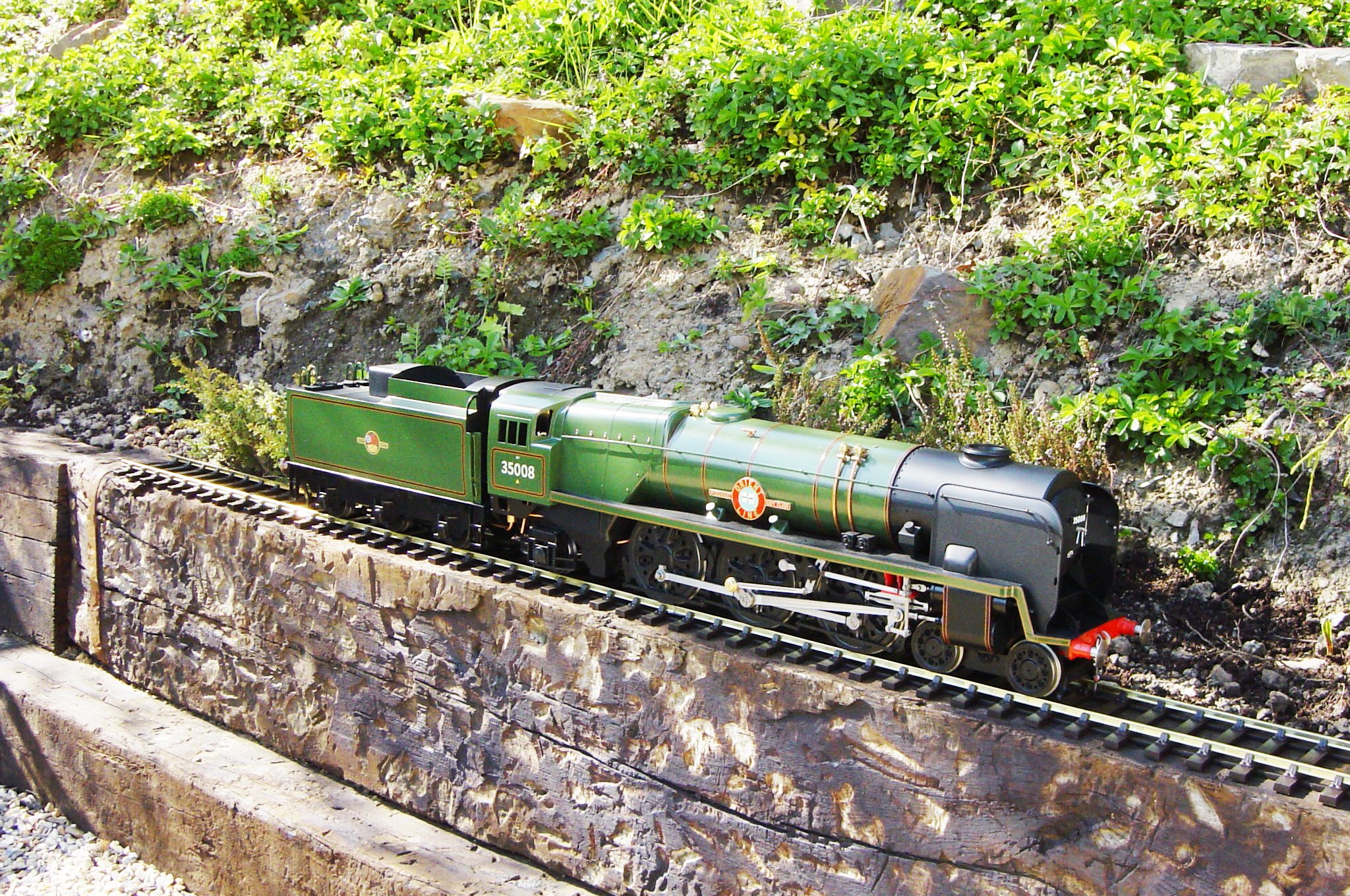
Rebuilt Merchant Navy |
British India Line #35018 British Orient Line #? |
2 | Coal fired, 2 cylinders, Walschaerts valve gear |
 |
|||||
| 2008 |
BR 4-6-2
|
Britannia |
Lord Rowalan #70045 Anzac #70046 |
2 | Coal fired, 2 cylinders, Walschaerts valve gear |
 |
|||||
| 2008 |
BR 4-6-2 |
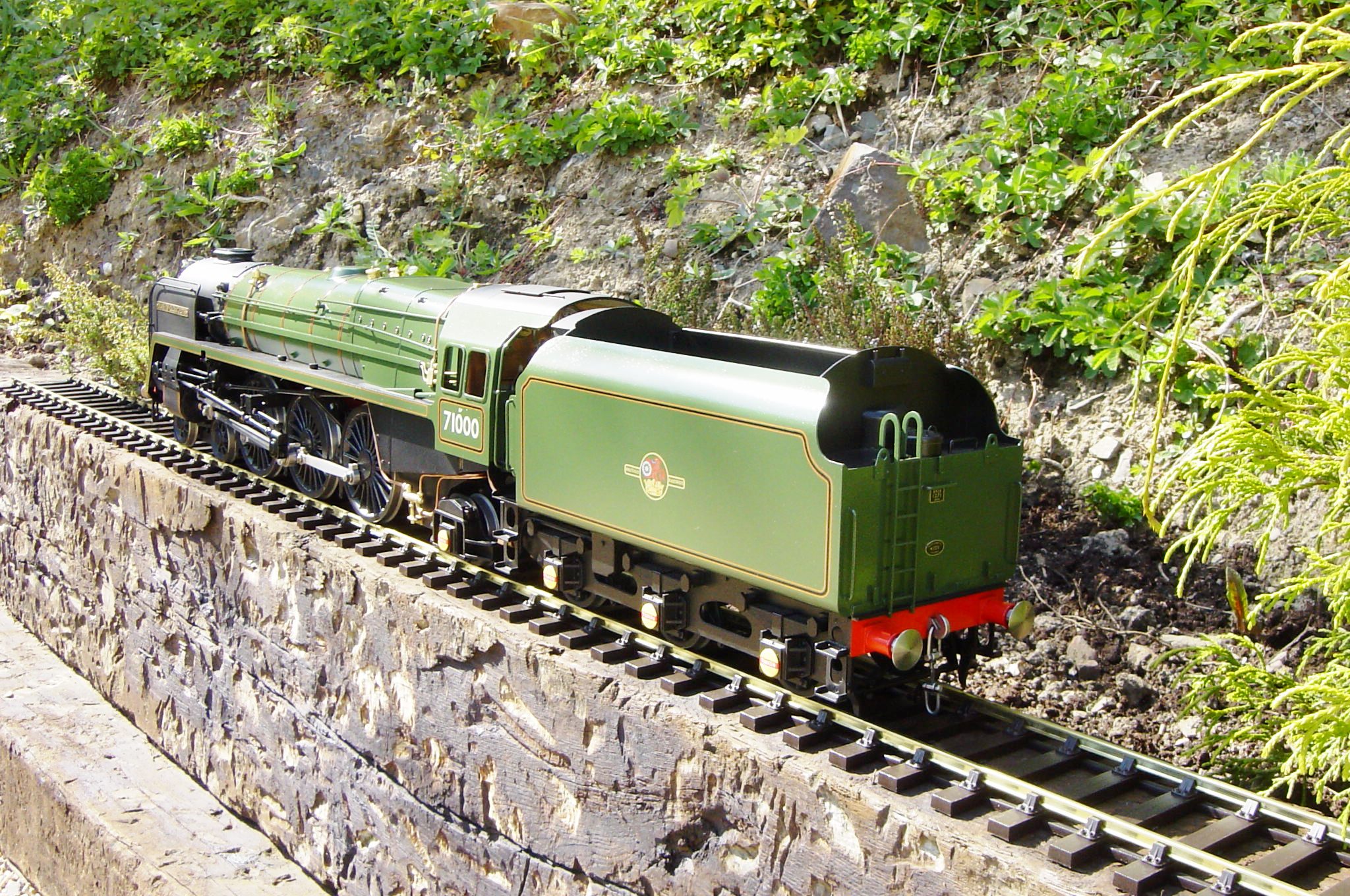
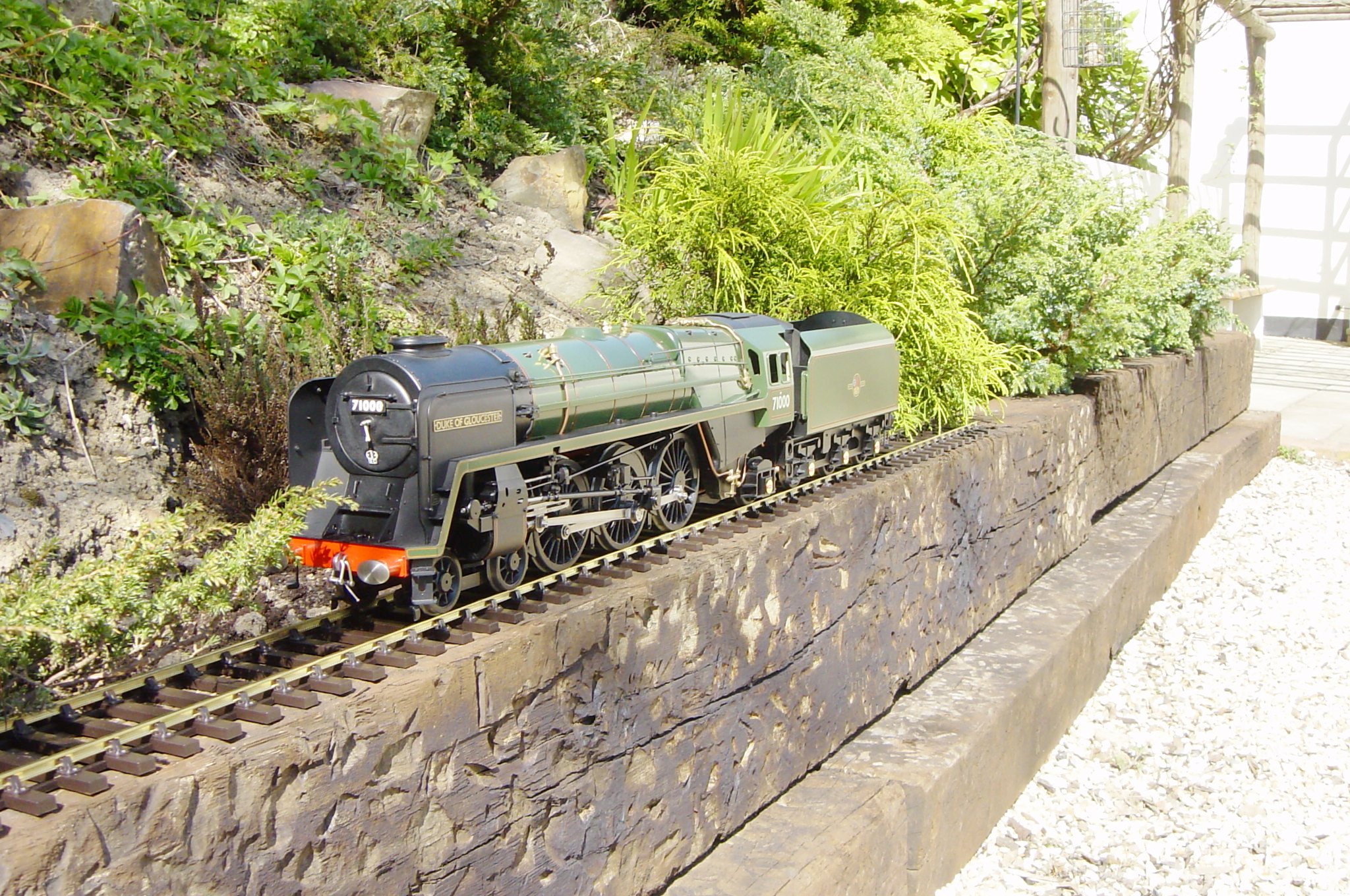
Riddles 8P | Duke of Gloucester | 2 | Coal fired, 2 cylinders, dummy Caprotti gear, inside slip eccentric valve gear |
 |
|||||
| 2008 | GWR 4-6-0 | Modified Hall |
#8669 Burton Agnes Hall #6980 Llanrumney Hall |
2 | Coal fired, 2 cylinders, inside slip eccentric valve gear |
 |
|||||
|
Locomotives Under Construction (June 2008-2011) |
|||||||||||
| 2011 | LNER 2-6-2 | Gresley V2 | Unnamed | 2 | Coal fired , 3 cylinders, Walschaerts / Gresley Holcroft valve gear |
 |
|||||
| 2011 |
 LMS 4-6-2 |
Princess Coronation | Unnamed | 4 | Coal fired, 4 cylinders, Walschaerts valve gear / rocking levers |
 |
|||||
| 2011 | SR 4-6-2 | Bulleid West Country | Bideford | 1 | Coal or gas firing to customer choice, 2 cylinders, inside slip eccentric valve gear |
 |
|||||
| 2011 | LNER 0-6-2T | N2 Tank | Unnamed | 1 | Coal fired, 2 inside cylinders, Joy valve gear |
 |
|||||
| 2011 | LNWR 0-6-2T | Watford Tank | Unnamed | 1 | Coal fired, 2 inside cylinders, Joy valve gear |
|
|||||
| 2011 | LNWR 0-6-0 | Cauliflower | Unnamed | 1 | Coal fired, 2 inside cylinders, Joy valve gear |
 |
|||||
| Total Number of Gauge 3 Locomotives Constructed: | 36 | ||||||||||
|
Articles & Resources by Mike: |
|||||||||||
|
Last update: 8 December 2011
|
|||||||||||
| Copyright 2004-2009 CumberlandModelEngineering.com. All Rights Reserved |
.jpg)
 A
History of Mike's Locomotives
A
History of Mike's Locomotives.jpg) When I joined the society, most of the locomotives running were LBSC
designed passenger haulers hauling a train of several coaches (a much
lighter duty than they were intended for!). This is not the ideal motive
power due to their excess weight and power being unsuitable for the scale
track.
When I joined the society, most of the locomotives running were LBSC
designed passenger haulers hauling a train of several coaches (a much
lighter duty than they were intended for!). This is not the ideal motive
power due to their excess weight and power being unsuitable for the scale
track..jpg)
.JPG)
 I
should mention that the superb paint job on these models is nothing to do
with me! Les Richards in the Isle of Wight paints all my models.
I
should mention that the superb paint job on these models is nothing to do
with me! Les Richards in the Isle of Wight paints all my models..jpg)
.jpg) Construction
Photographs
Construction
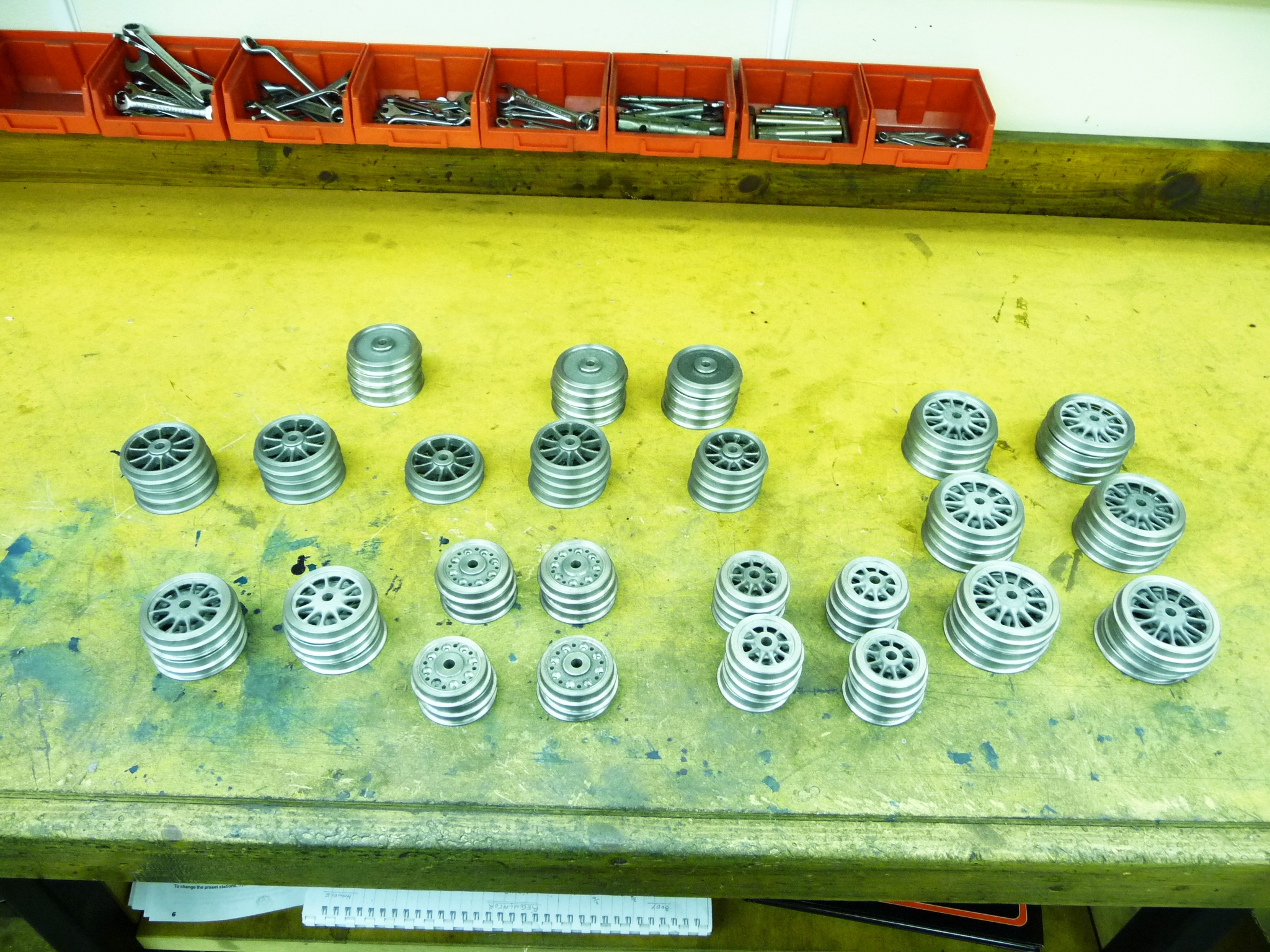
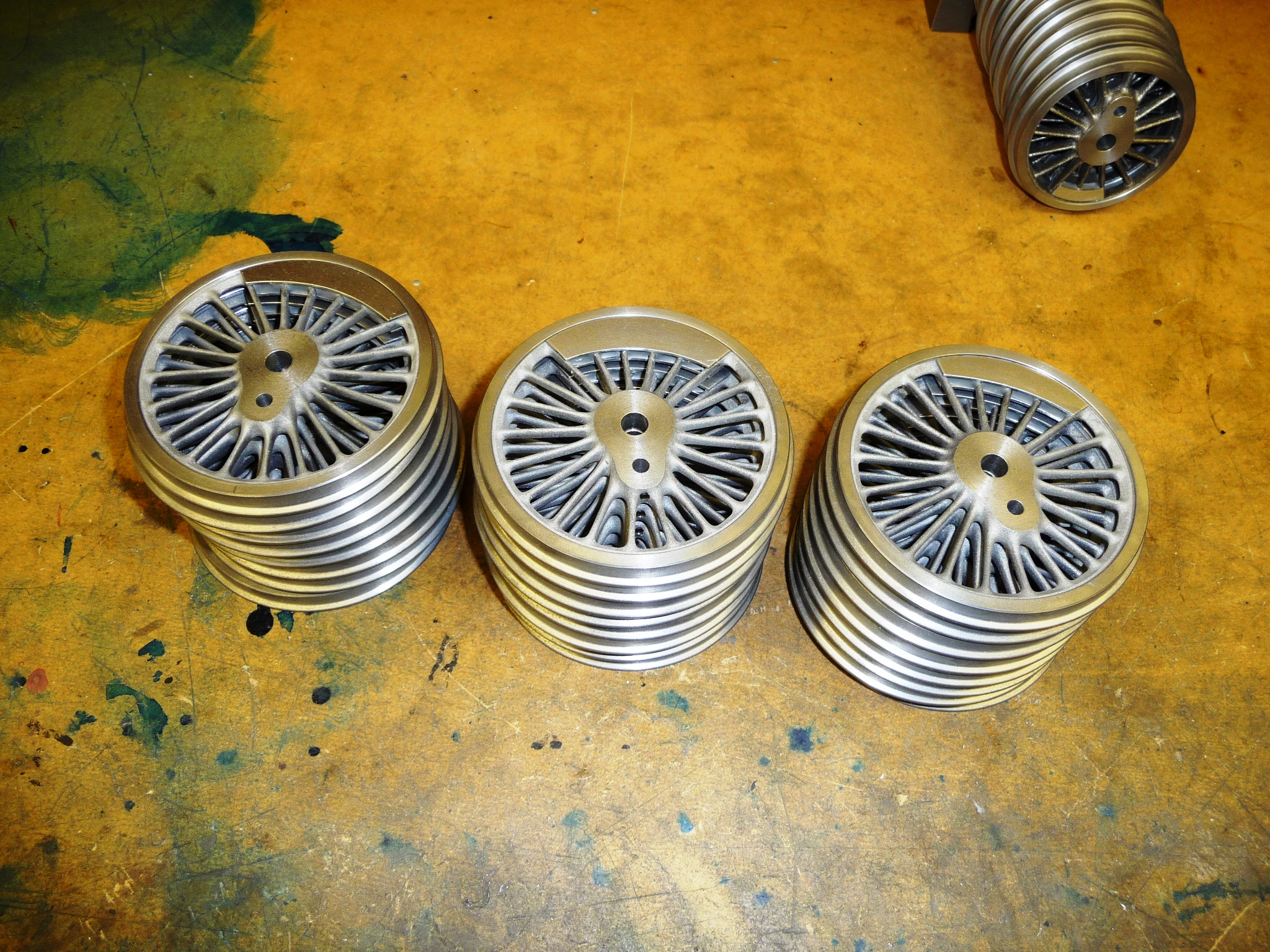
Photographs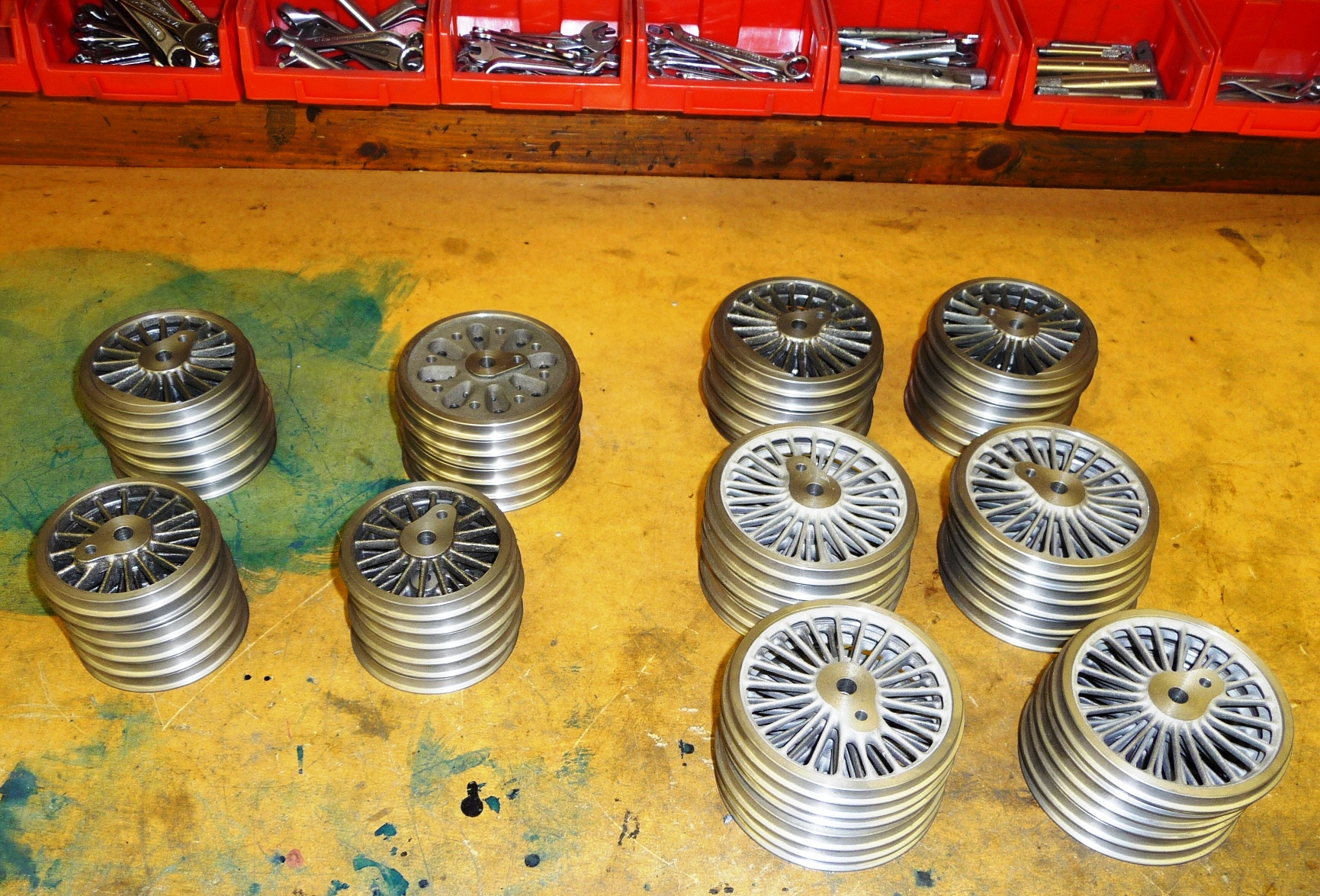
.jpg)
.jpg)
.JPG) Machining
Reverse Links & Rods: Manual milling requires a good deal of
ingenuity--tricks of the trade--in order to produce
anything other than basic pockets and square blocks. A case in point is
reverse links (those things that rock back and forth in the middle of a
Walschaerts vale gear). Mike makes his by first turning the right diameter
of steel disk on his lathe, cuts grooves into it (only
a rotary milling table I suspect) and then uses a slitting saw (at right) to
separate each link from the next. Fluted main rods are made by running a
Woodruff key seat cutter against a length of steel held in a custom made jig
(far right).
Machining
Reverse Links & Rods: Manual milling requires a good deal of
ingenuity--tricks of the trade--in order to produce
anything other than basic pockets and square blocks. A case in point is
reverse links (those things that rock back and forth in the middle of a
Walschaerts vale gear). Mike makes his by first turning the right diameter
of steel disk on his lathe, cuts grooves into it (only
a rotary milling table I suspect) and then uses a slitting saw (at right) to
separate each link from the next. Fluted main rods are made by running a
Woodruff key seat cutter against a length of steel held in a custom made jig
(far right).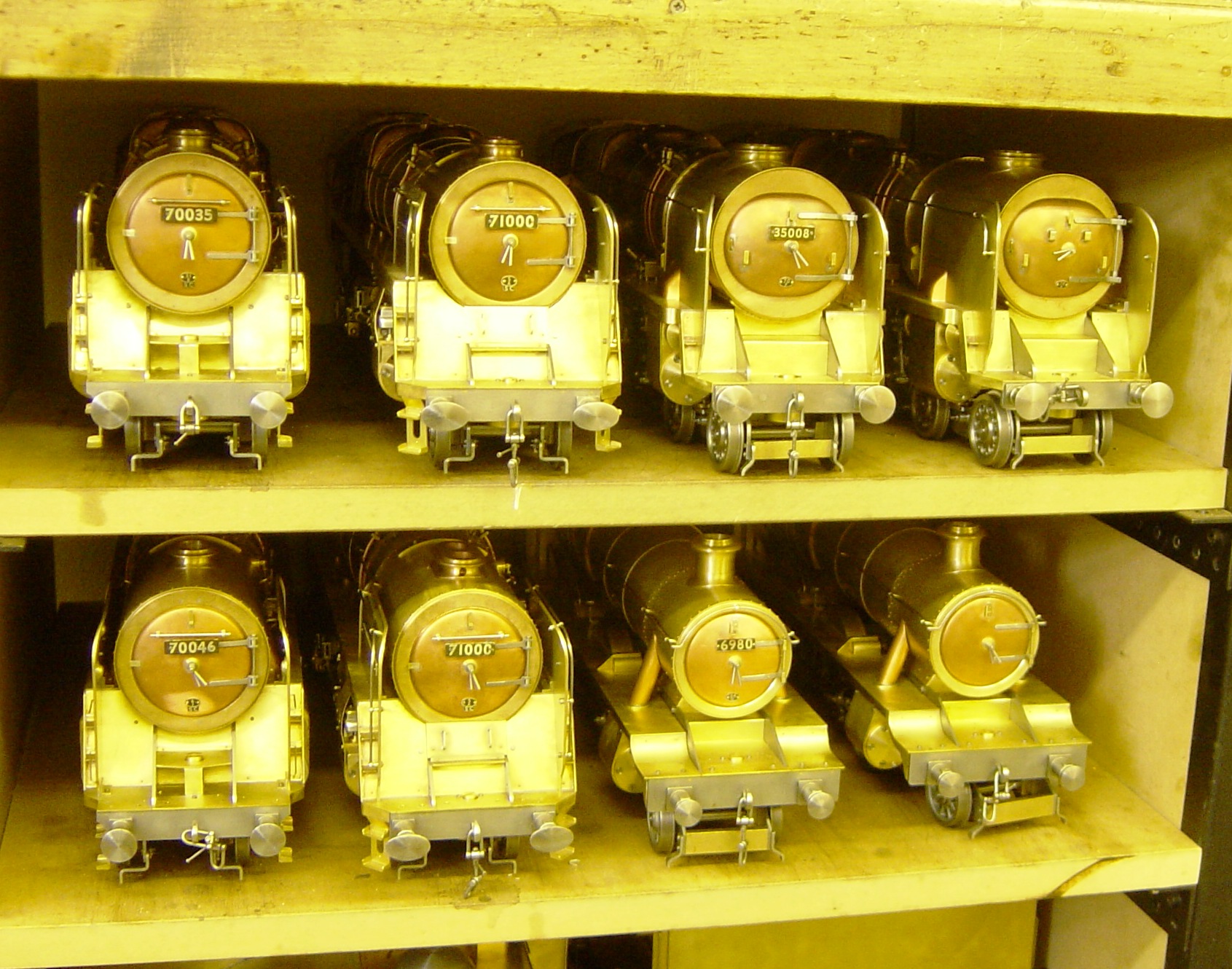


.JPG) Since
June of 2008 Mike has been working on another batch of locomotives.
There are ten in all, pictured at left:
Since
June of 2008 Mike has been working on another batch of locomotives.
There are ten in all, pictured at left: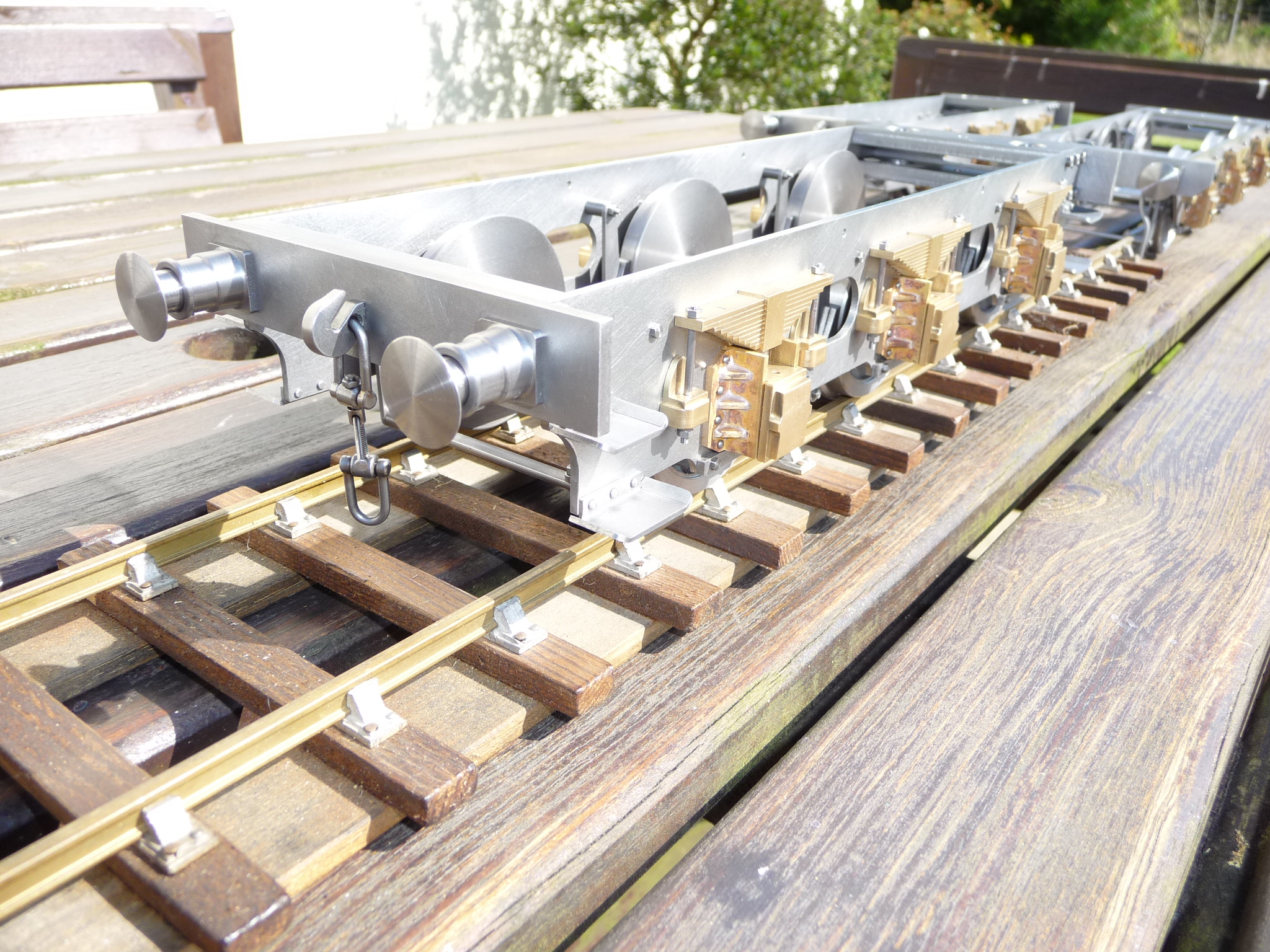


.JPG) LMS Coronation Princess (non-streamlined or
"Duchess" Class) 4-6-2:
LMS Coronation Princess (non-streamlined or
"Duchess" Class) 4-6-2: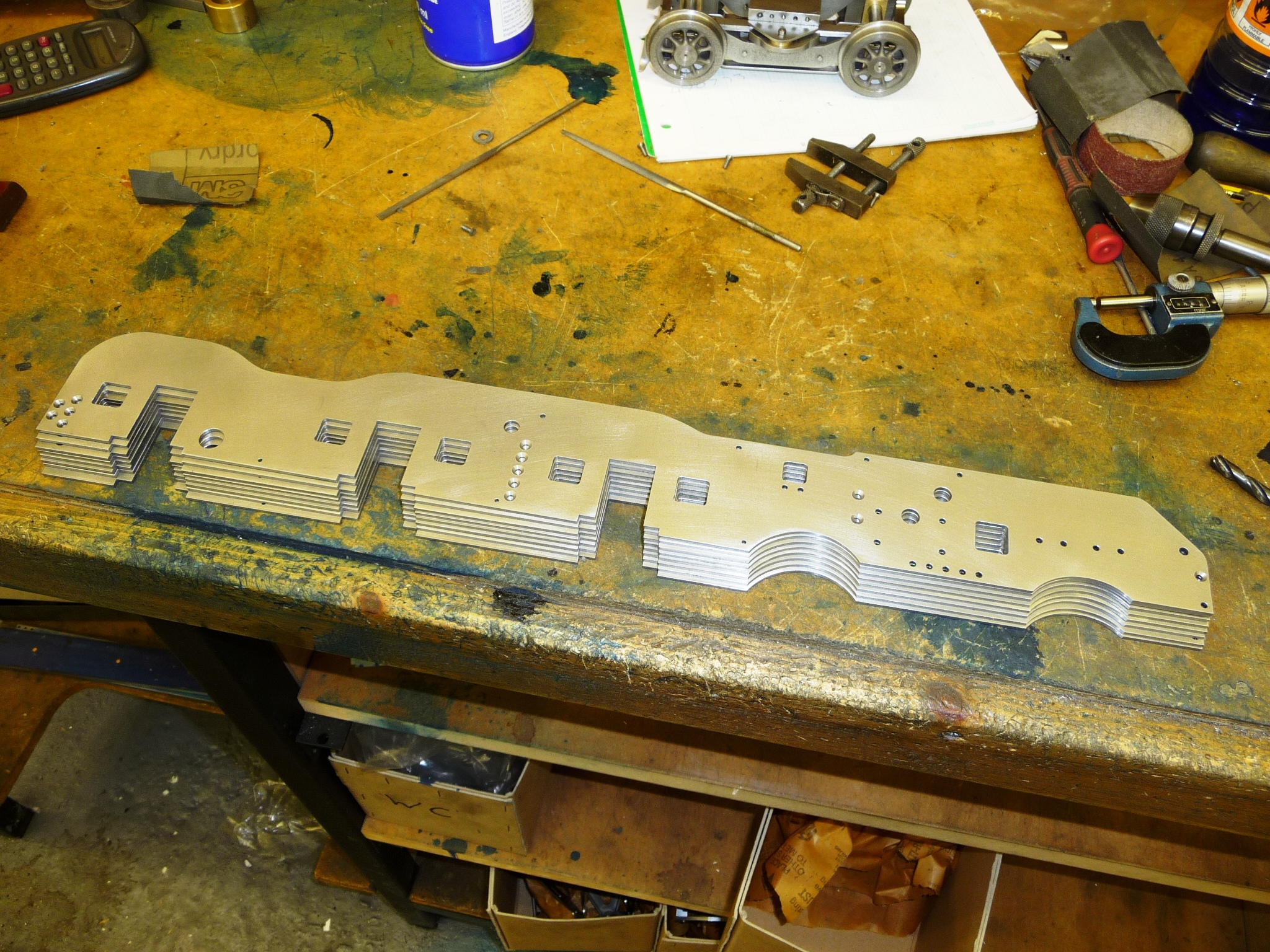




 LNER Gresley V2 2-6-2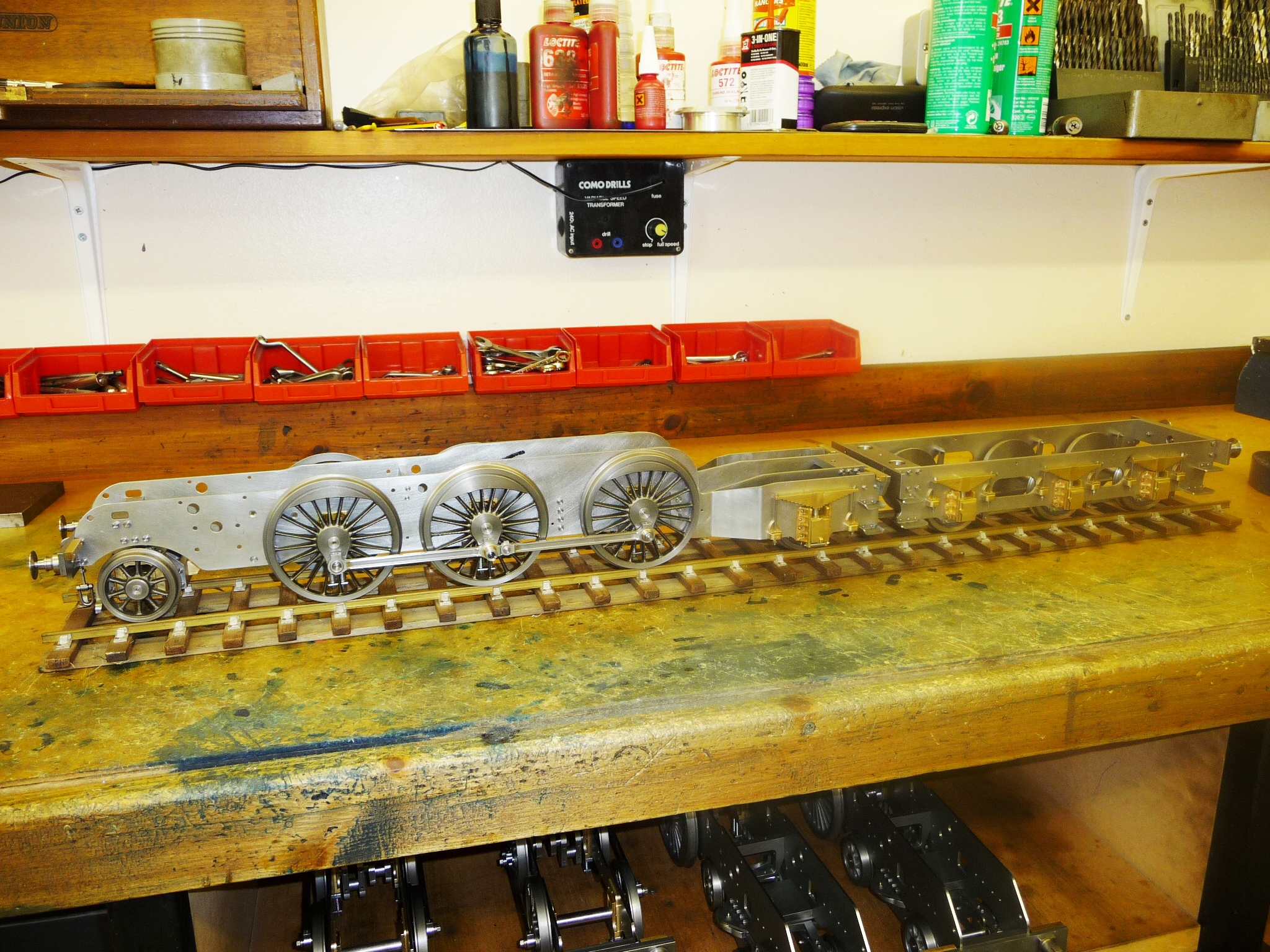

.JPG) SR Bulleid West Country 4-6-2
SR Bulleid West Country 4-6-2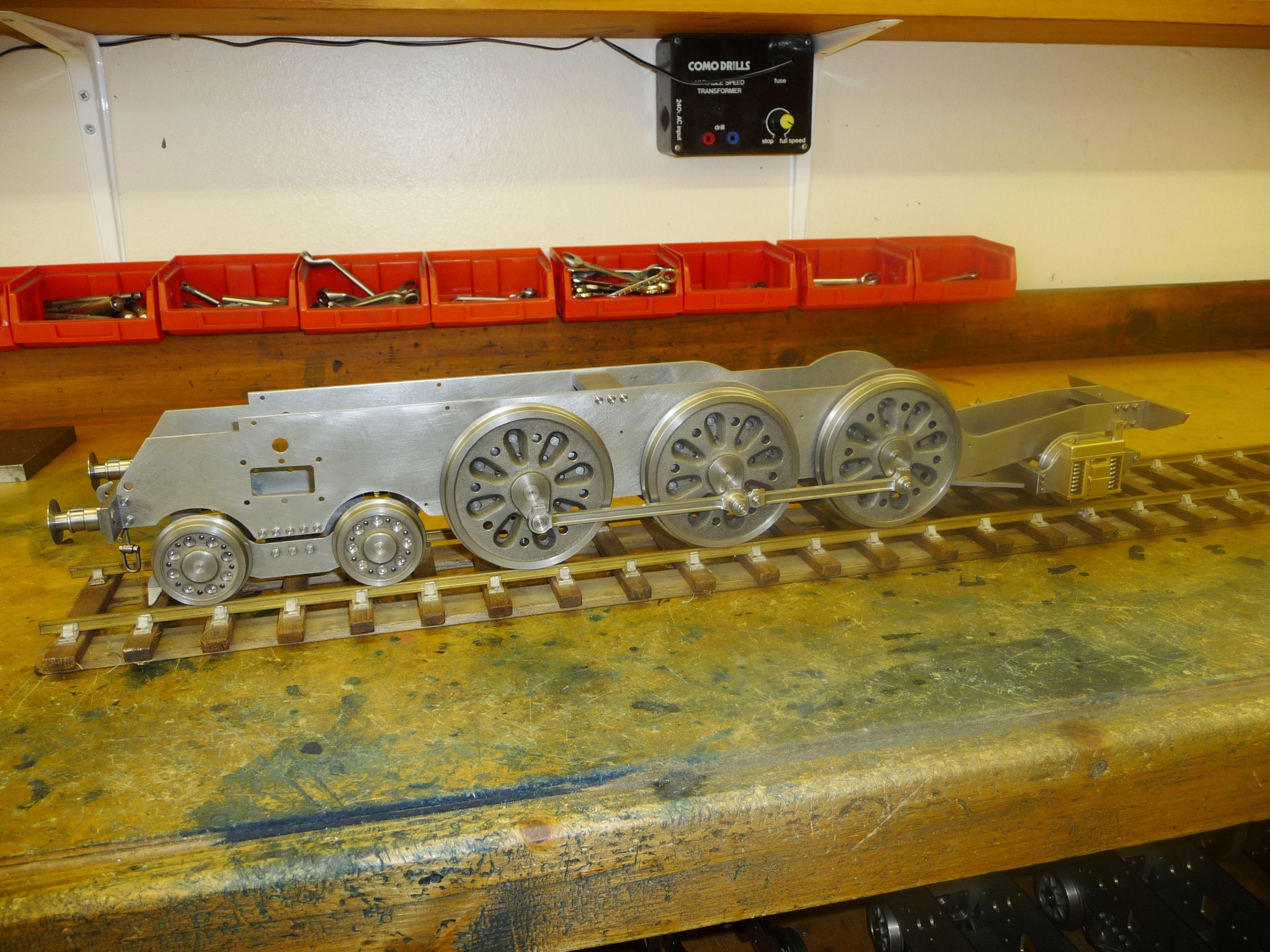

.JPG) Gresley
LNER A4 4-6-2
Gresley
LNER A4 4-6-2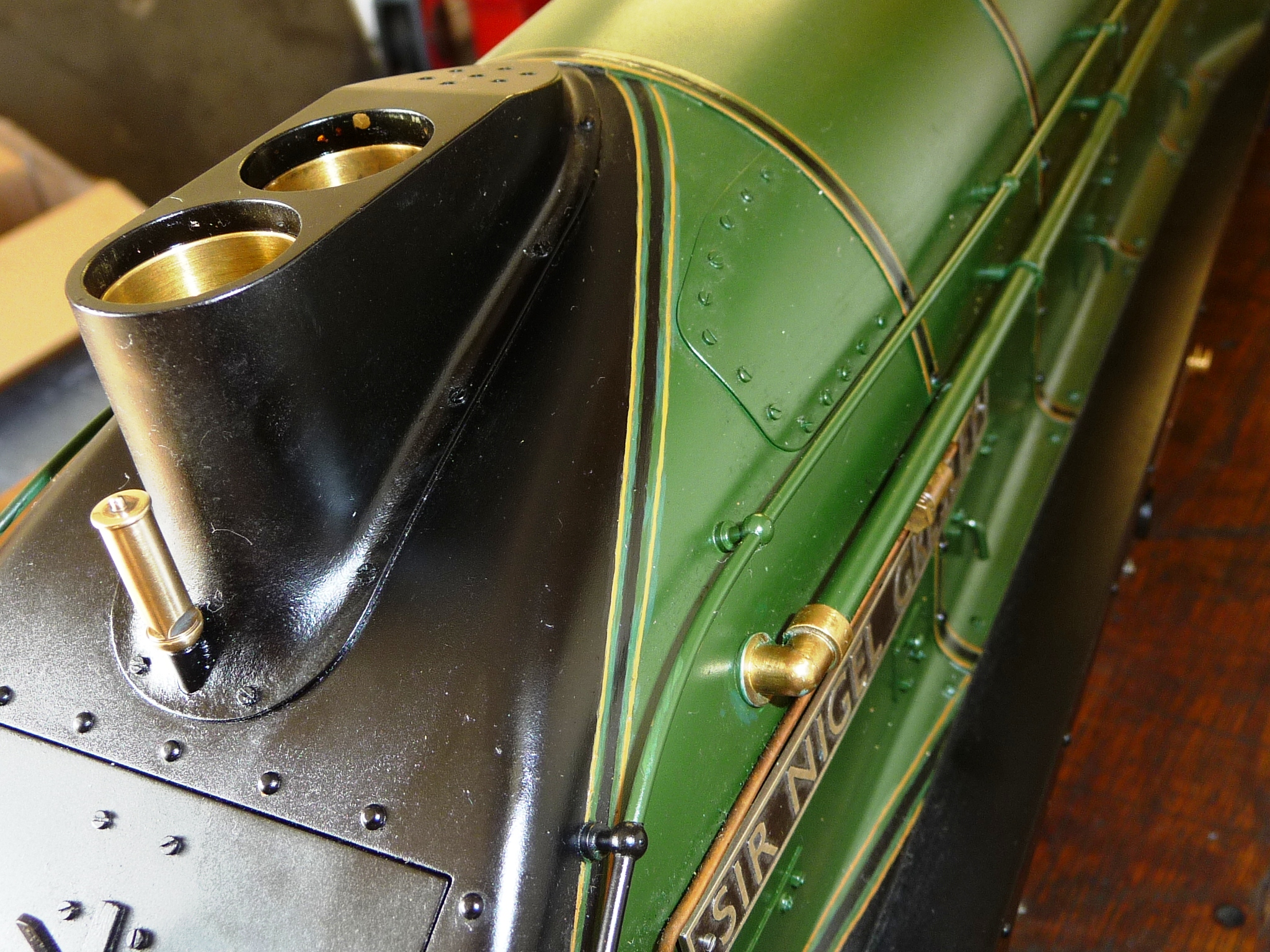
.JPG) LMS
Patriot 4-6-0
LMS
Patriot 4-6-0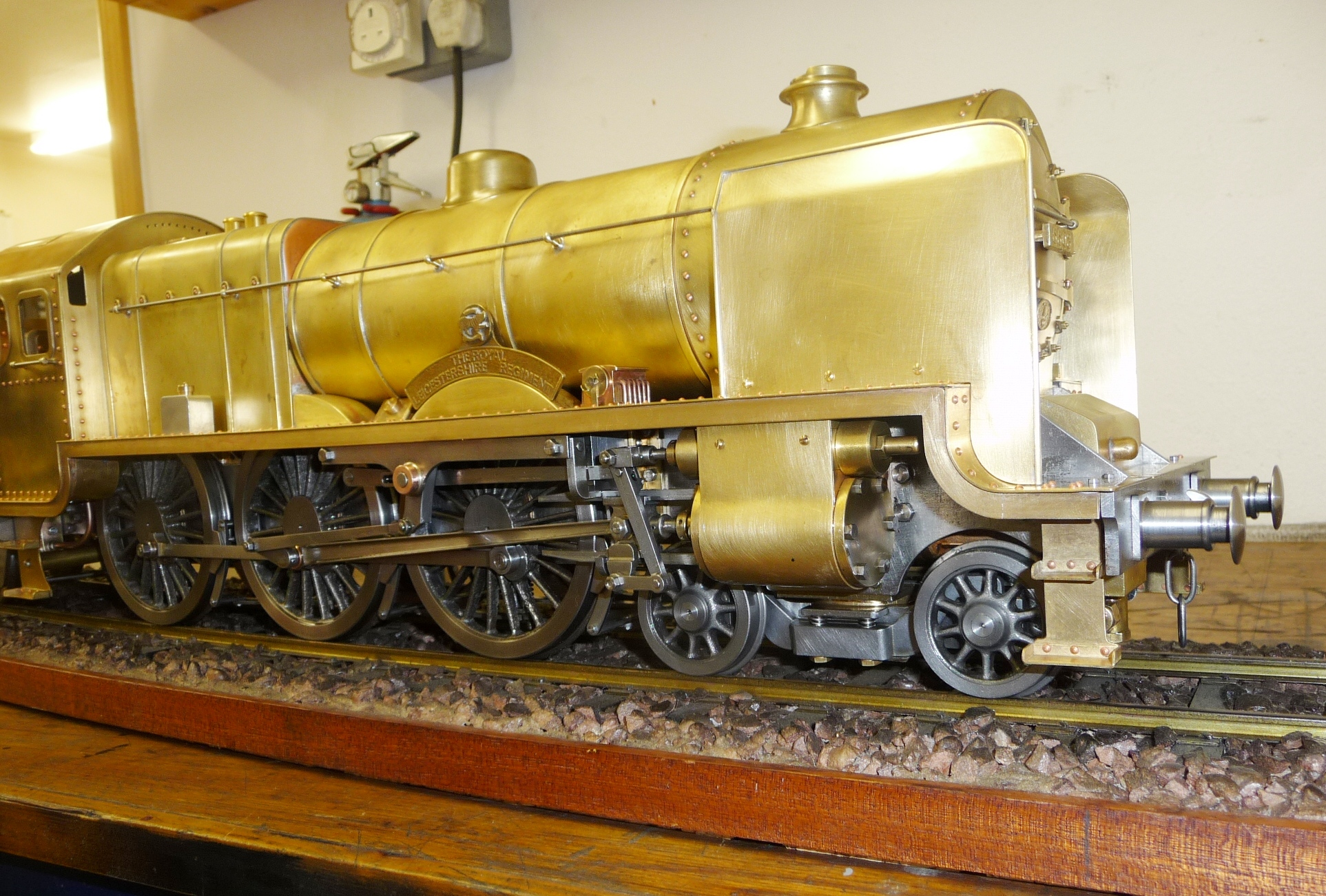
.JPG)
.JPG)